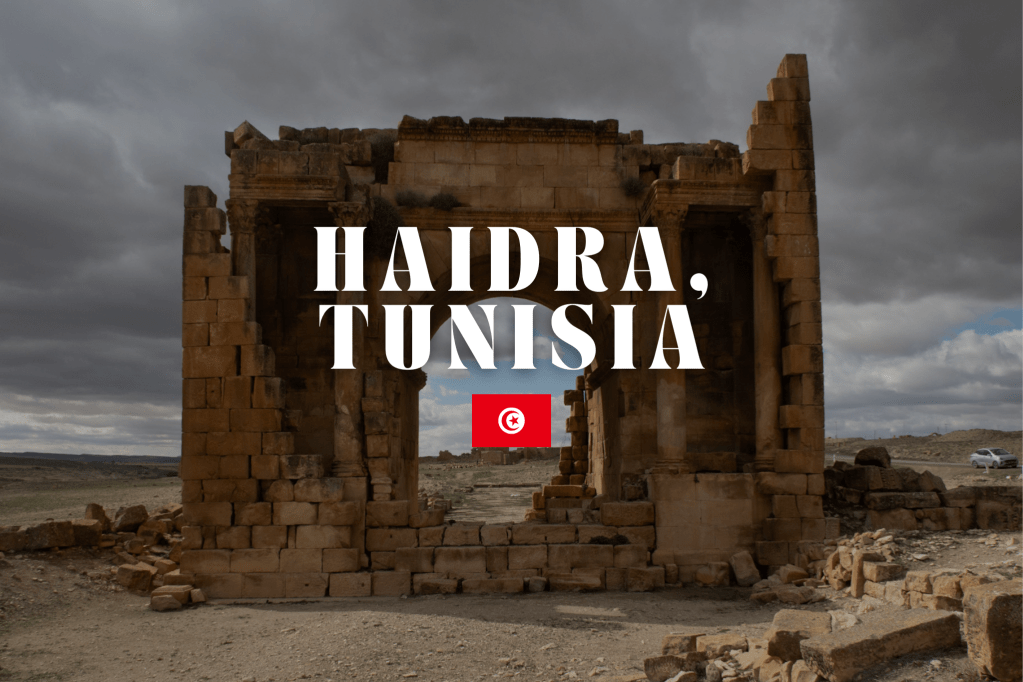

Travelers who want to seriously get off the beaten path in Tunisia should head to the archaeological Roman city of Haidra. Located in western Tunisia near the Algerian border, Haidra is the modern name for the ancient city of Ammaedara, one of the very first Roman cities in all of Africa.
This guide breaks down everything you need to know when you visit Haidra today.

Why is the city called Haidra?
First, let’s clear up a potential mix-up you may have: Haidra has nothing to do with Hydra, the multi-headed serpent creature from Greek mythology slain by Hercules. (For every head Hercules cut off, two more grew back — a metaphor for the multiplying problems of life…)
The name Haidra is a modern adaptation that likely evolved from Ammaedara, the Roman name for this settlement. While the exact meaning of Ammaedara is still debated, many historians agree it was a Romanized version of a Numidian (Berber) name that was hard to transliterate. They aren’t entirely sure when or how Ammaedara morphed into Haidra, but like many places across North Africa, names were Arabized or simplified over centuries.
Some people think the name Haidra might come from the Arabic root ḥ-ḍ-r, which can be connected to the word hadra, meaning “presence” or “settlement.” Others think it could be related to the word ḥaḍra, meaning something like “green place” or “civilized area.”
Why did the Romans come to Haidra?
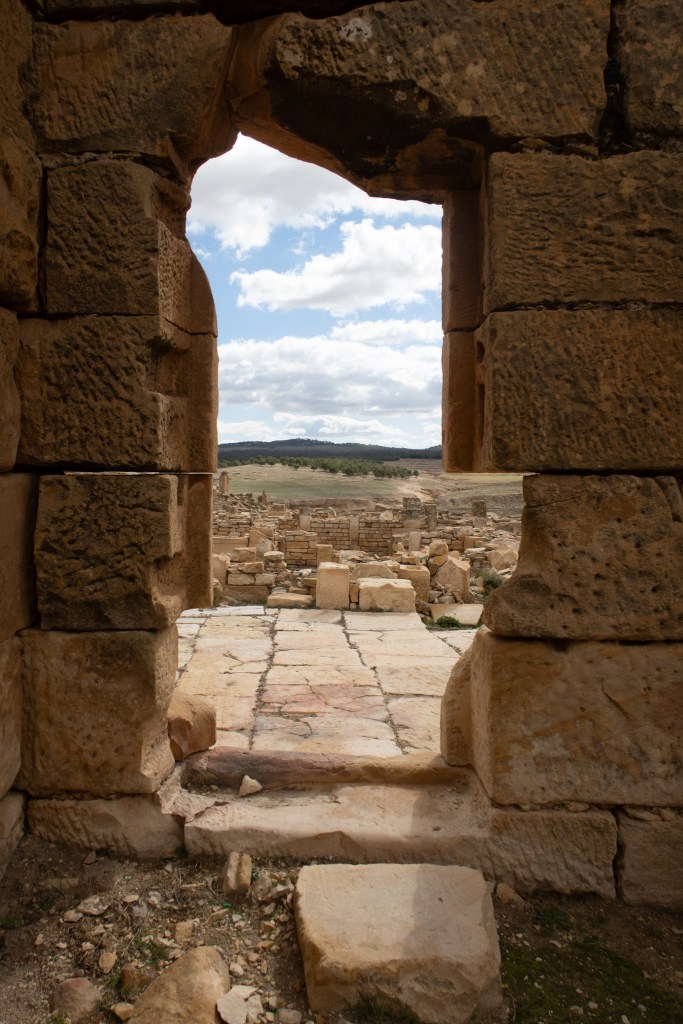
The Romans came to Haidra for one reason: military control. In the 1st century B.C., they founded Ammaedara as their original military headquarters in North Africa. From this strategic location, Roman legions could monitor tribal movements and dominate the main road networks across the region.
When the legion later relocated, Rome handed the site over to retired soldiers. These veterans transformed the old military base into a full-fledged Roman city with temples, baths, and civic structures. Then, over time, the city evolved again, this time into a major Byzantine fortress.
Its past as a Roman garrison, a veteran settlement, and a Byzantine stronghold makes Haidra one of the most compelling ancient sites in Tunisia!

What to See at Haidra: Forts, Tombs, and Churches
The ruins of Haidra are vast and not fully excavated, giving a sense that you yourself are some sort of archaeologist.
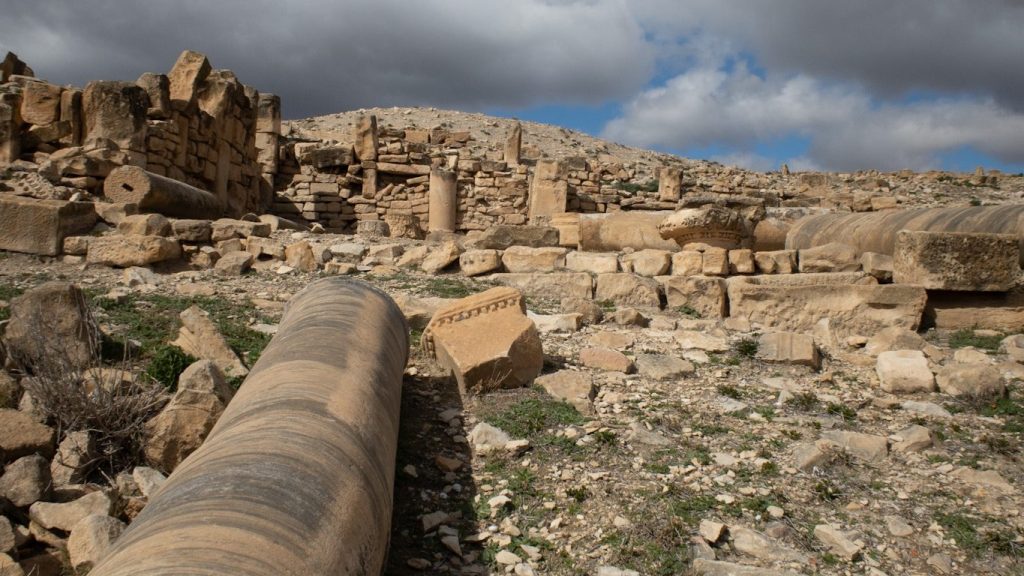
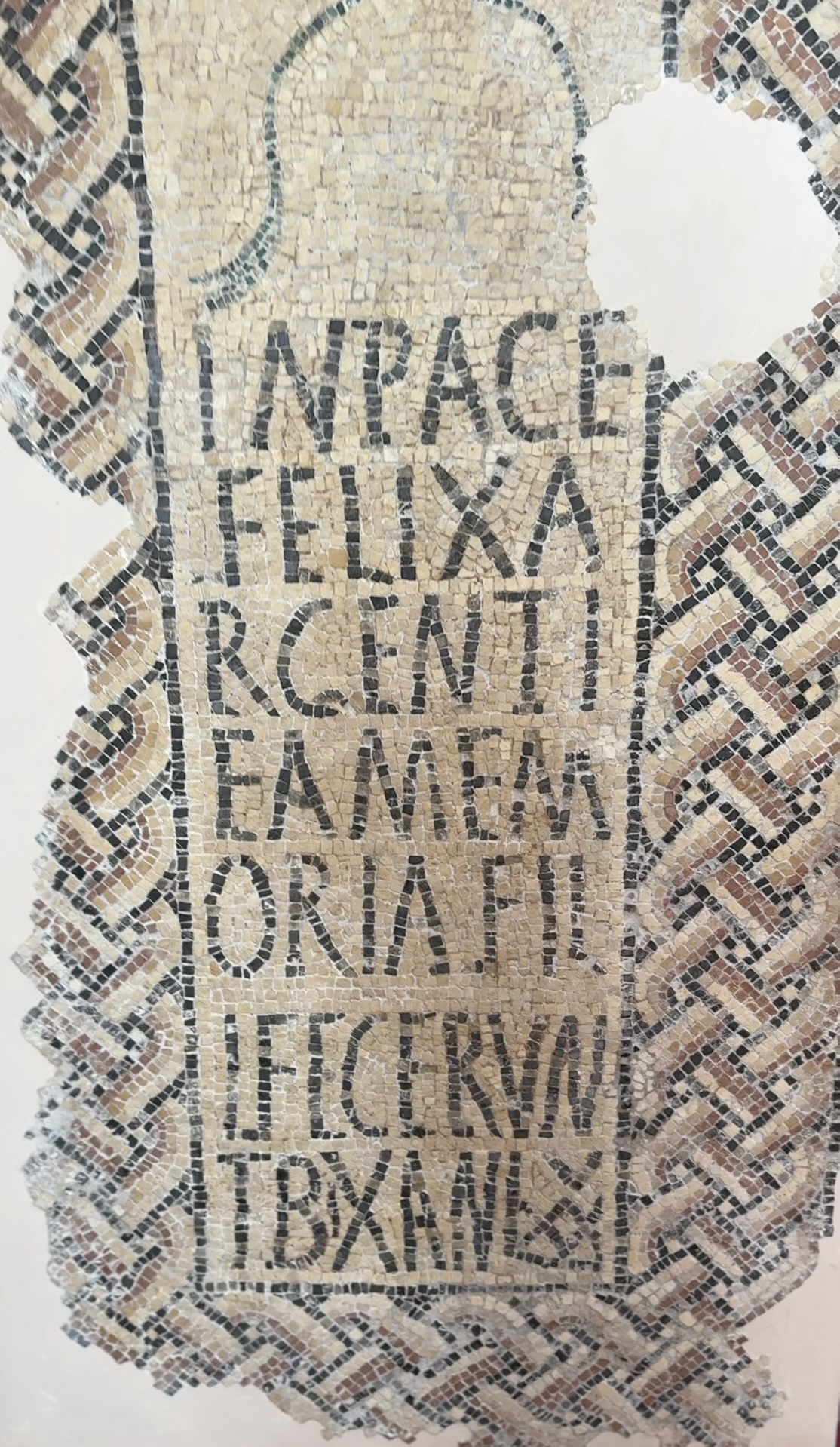
There is very little signage. A small on-site museum helps provide some context for the ruins and also showcases some beautiful mosaics, but you’re mostly on your own.
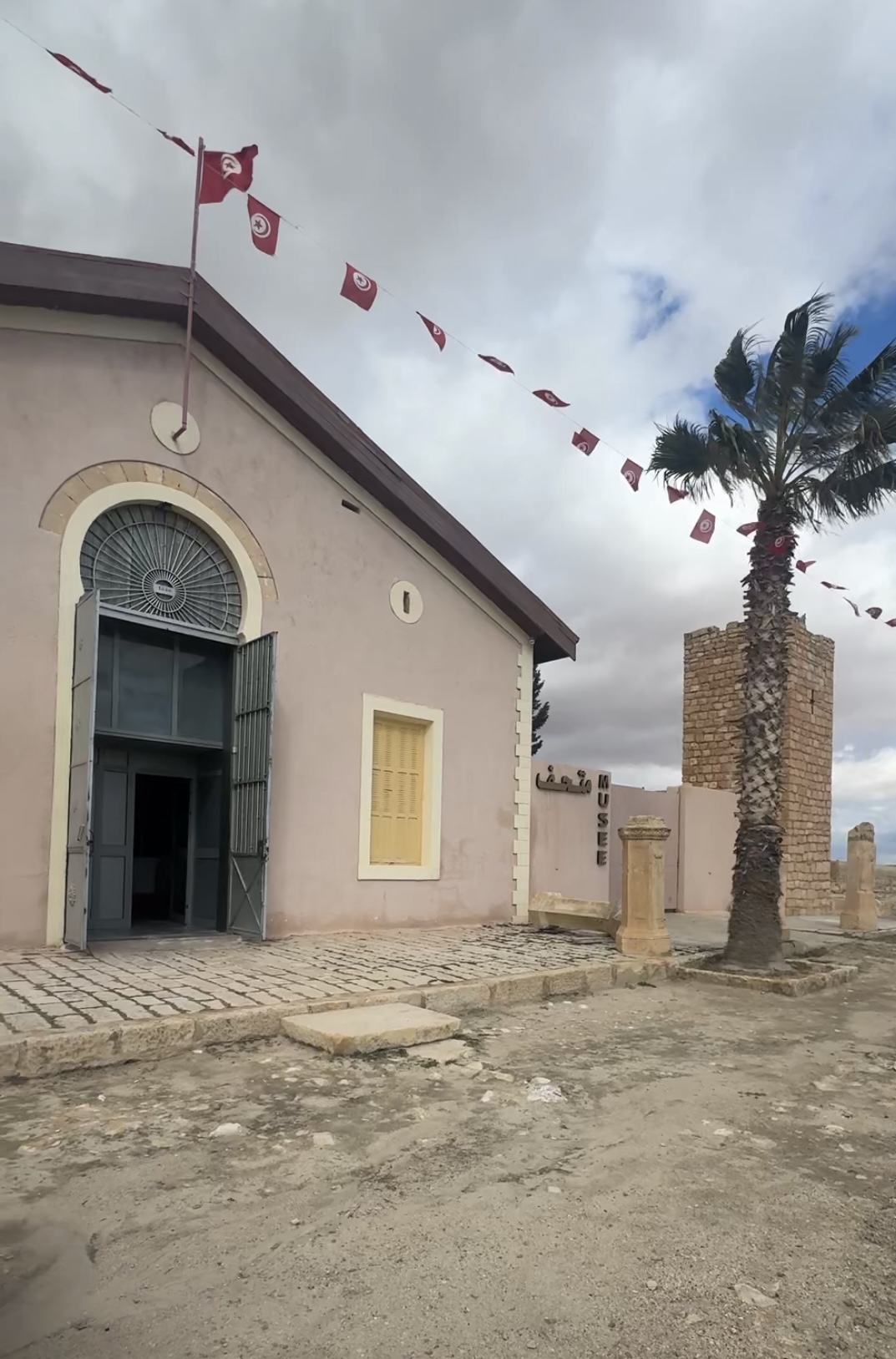
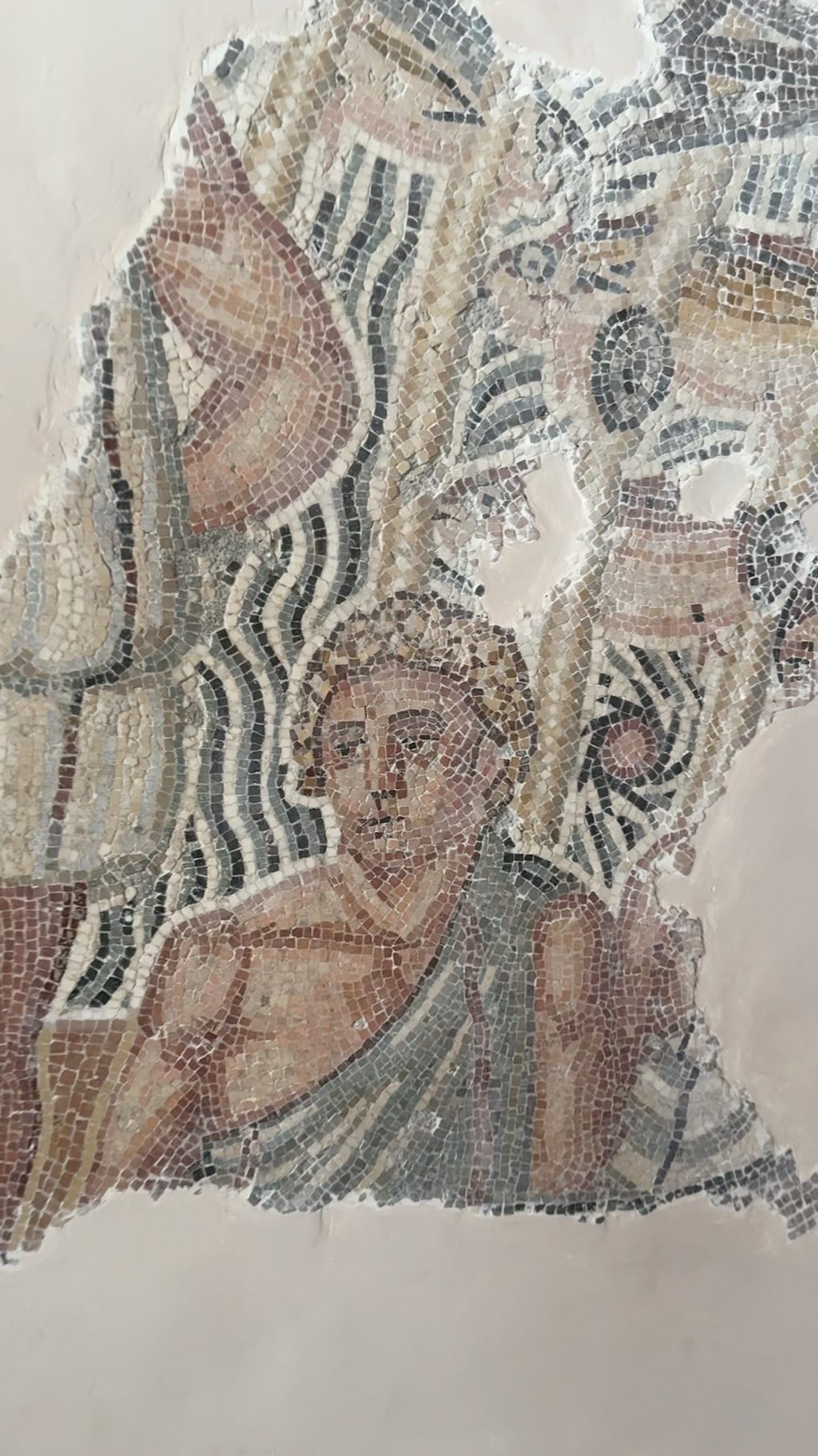
This lack of modern tourism is part of Haidra’s unique charm, in many ways. It’s a very different feel from more popular sights such as Bulla Regia and Dougga. It feels extremely abandoned.
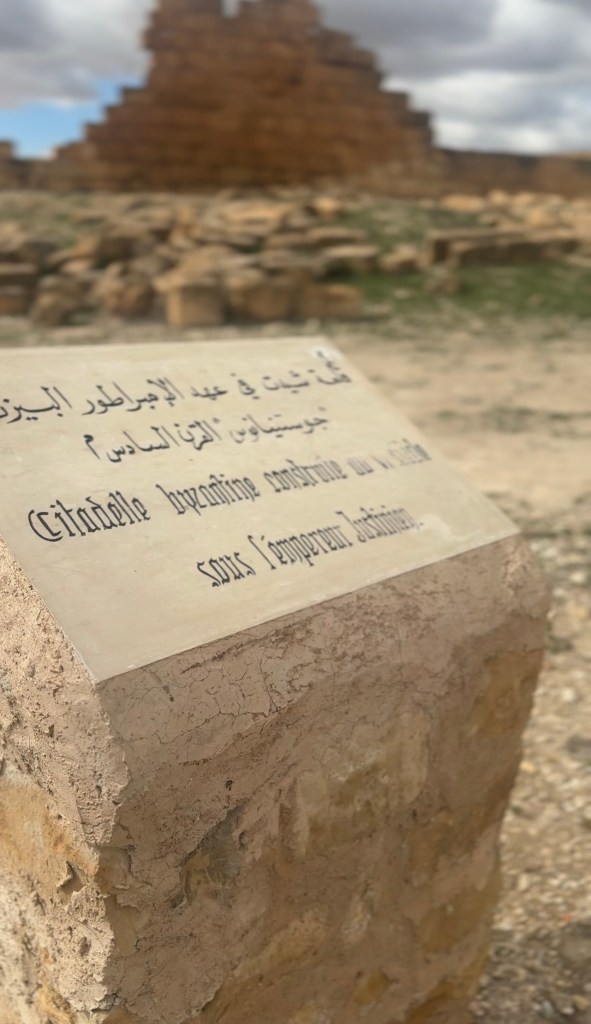

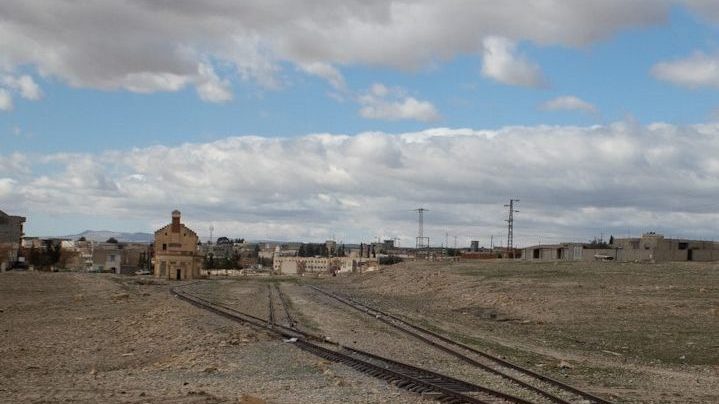
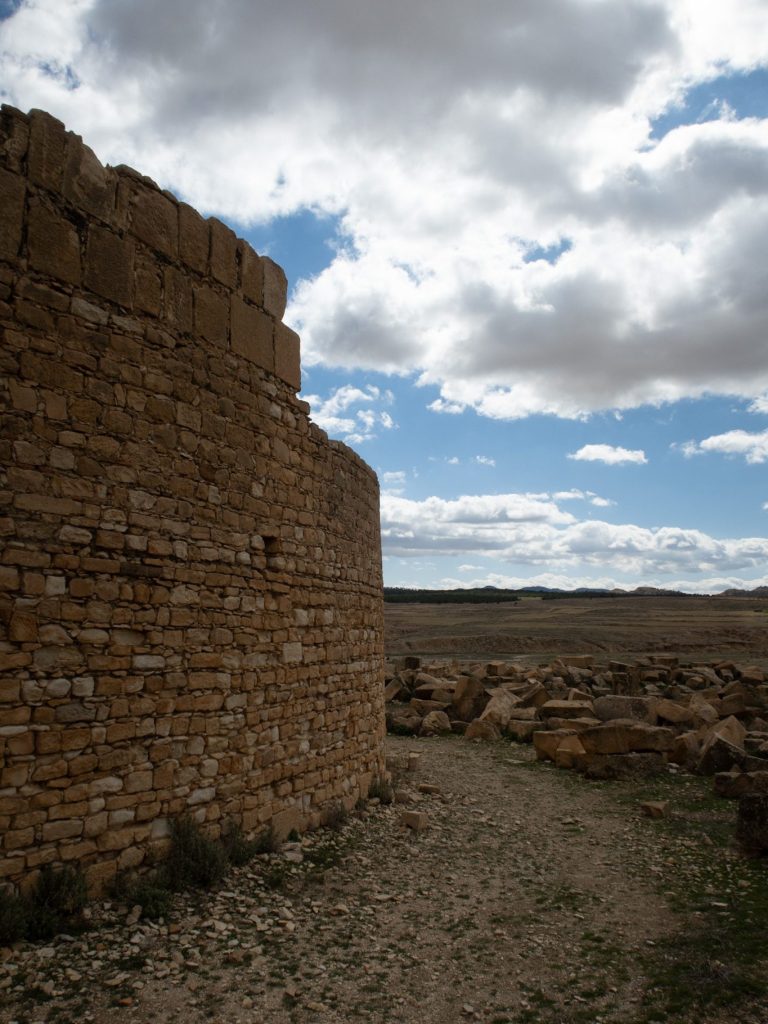
One thing you’ll notice amongst the ruins is huge remains of a Byzantine Fortress dominating the site. Emperor Justinian ordered its construction in the 6th century, and today, it stands as one of the largest and best-preserved Byzantine forts in all of North Africa.
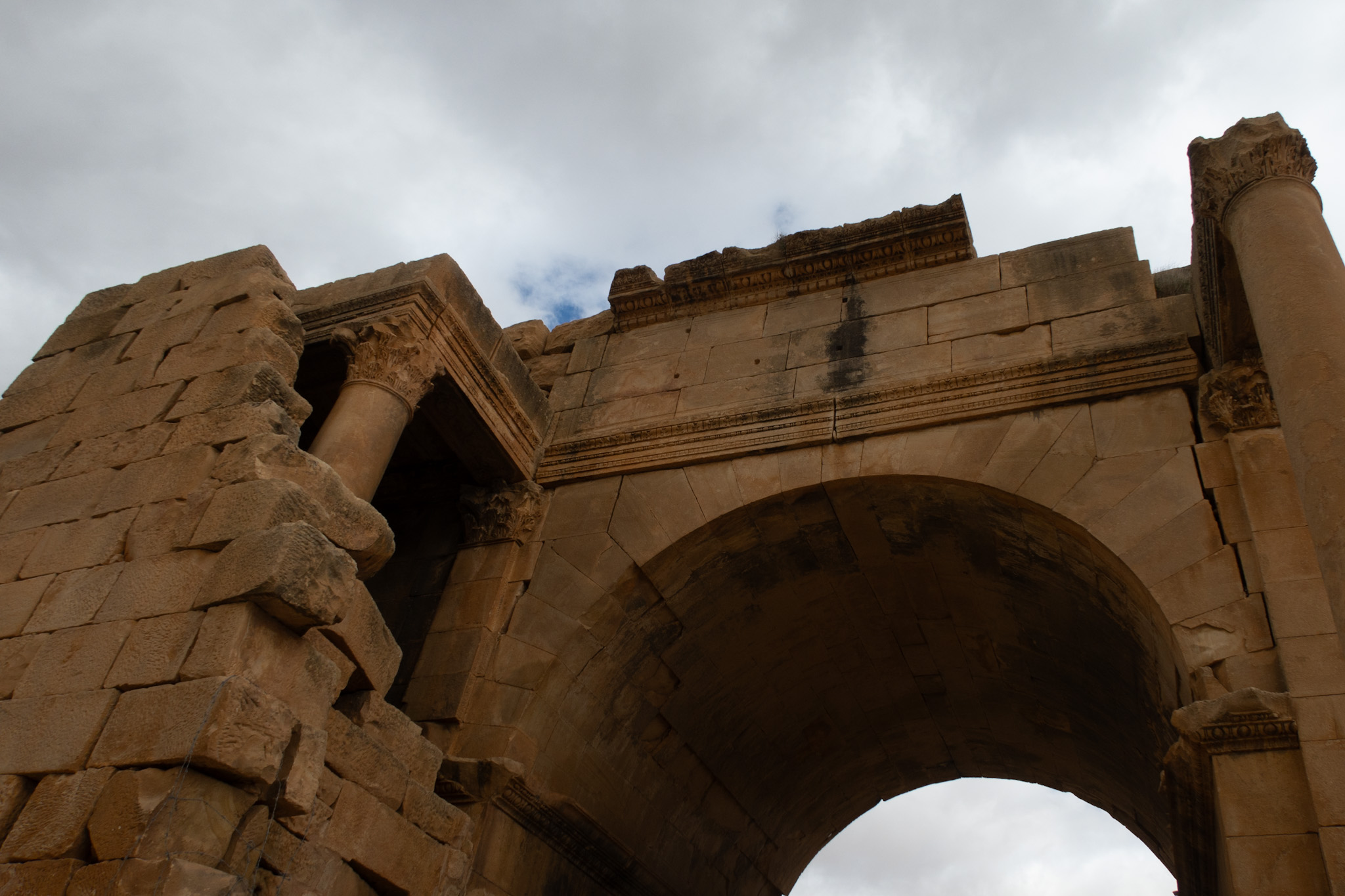
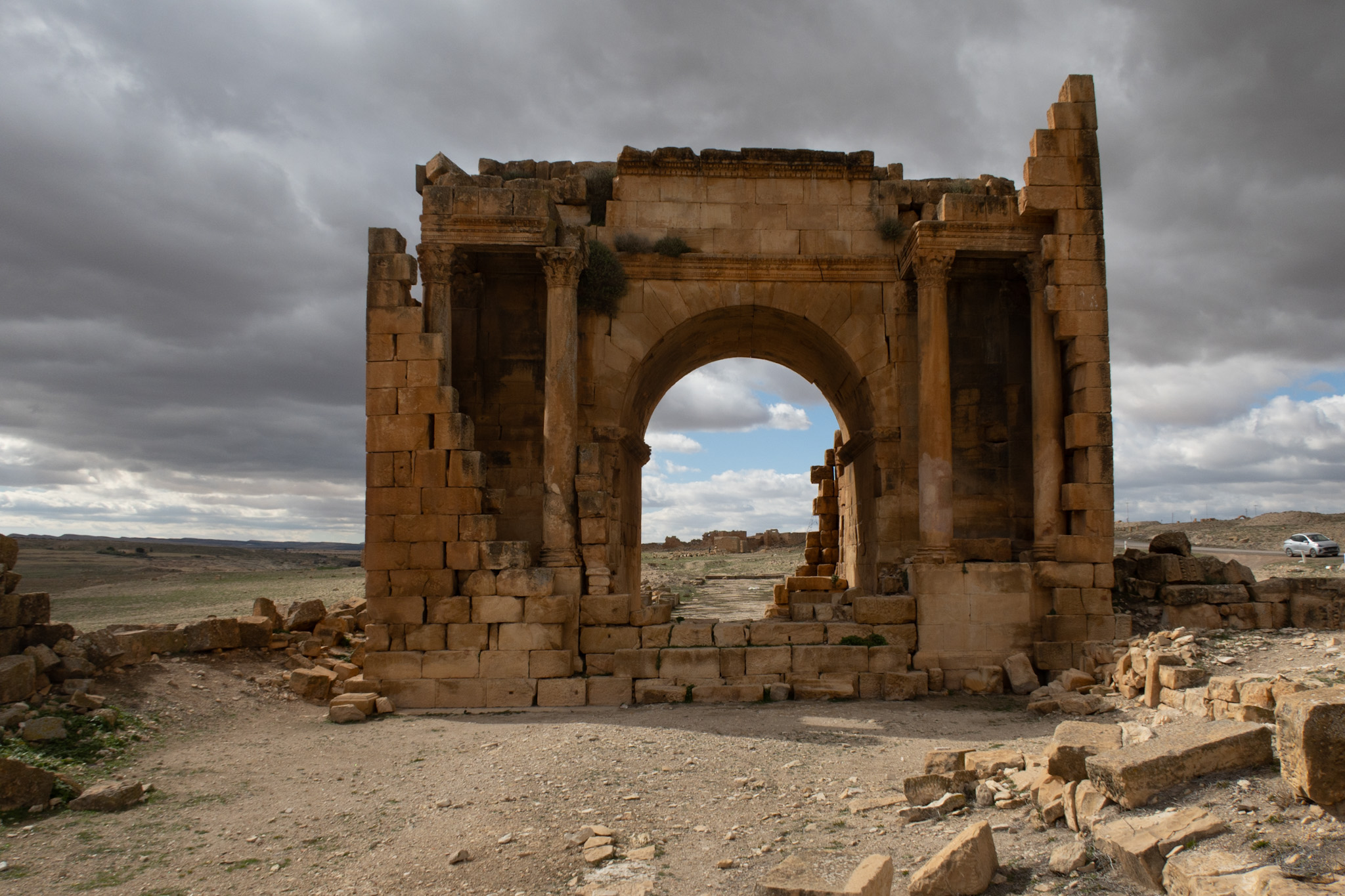
You’ll also walk beneath the Arch of Septimius Severus, built in 195 A.D., which once marked the formal gateway into the Roman city (and no, this Severus isn’t the Potions Master at Hogwarts…)

Haidra also has several tower-like mausoleums/tombs that stand in excellent condition. These were the elaborate burial places for the city’s wealthy Roman families.
As a major Christian center after the Roman period, Haidra also has remains of several churches. The most interesting is the Basilica of Melleus, where you can see tombs of Vandal and Byzantine-era bishops set into the floor.
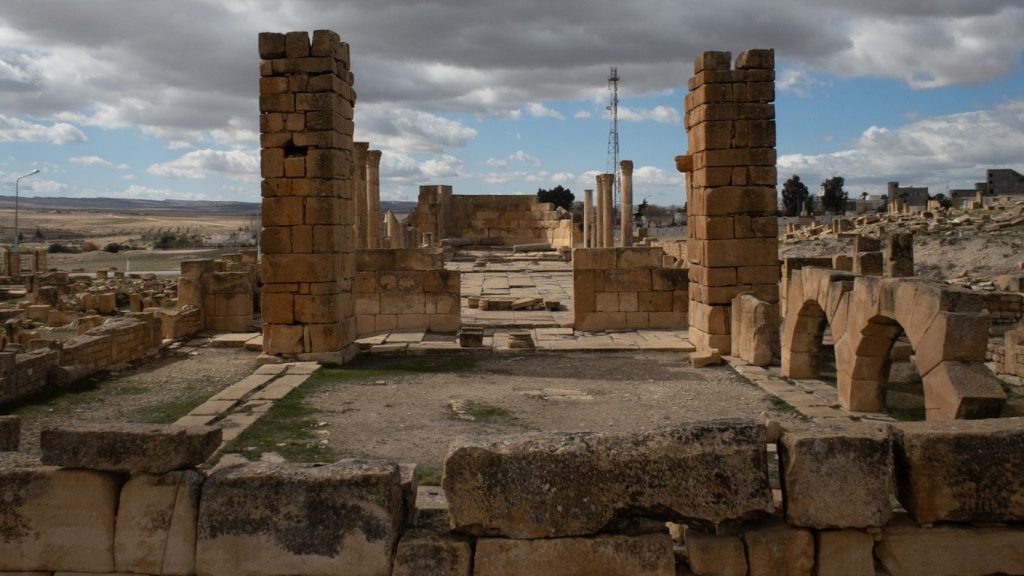
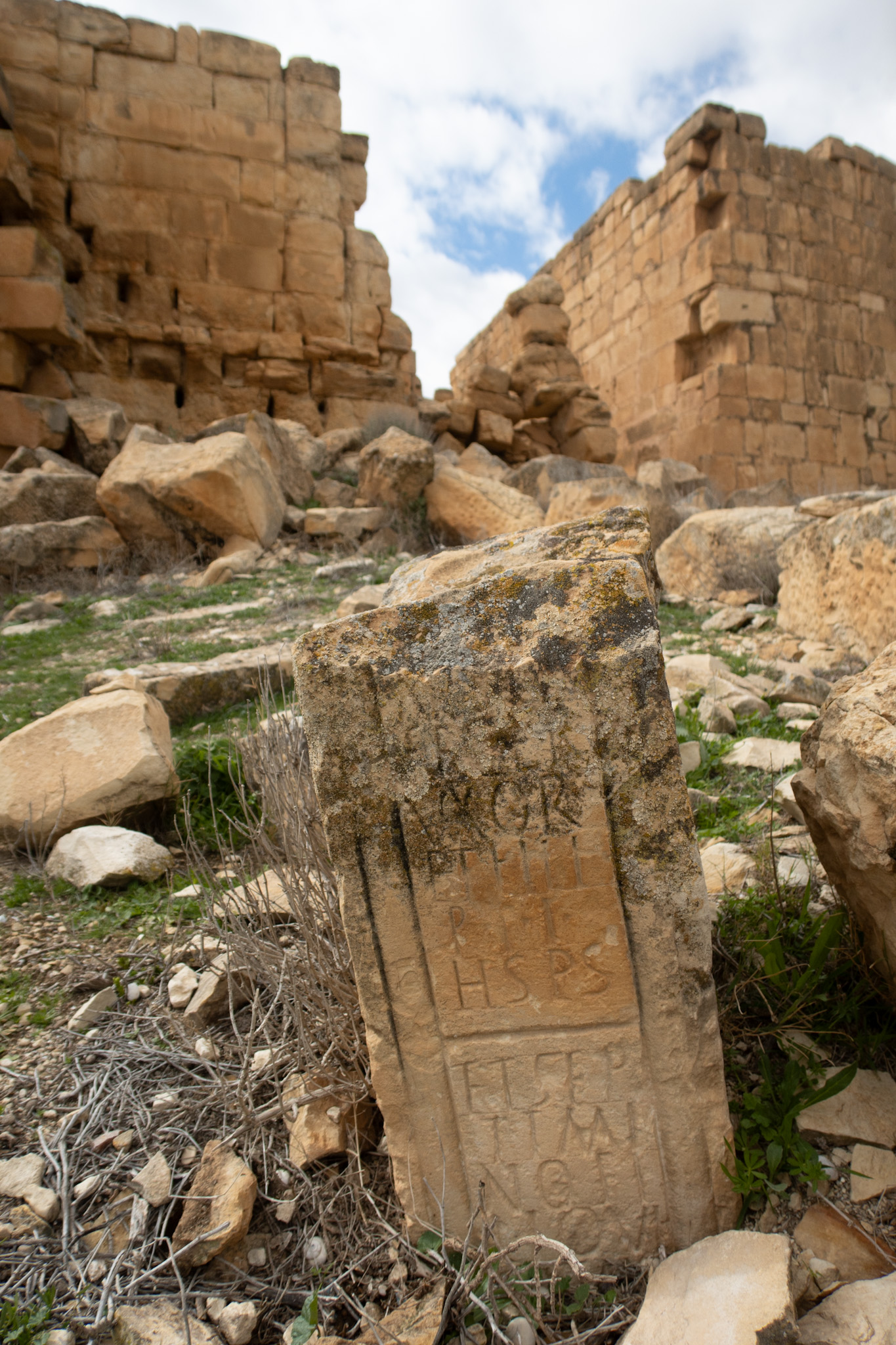
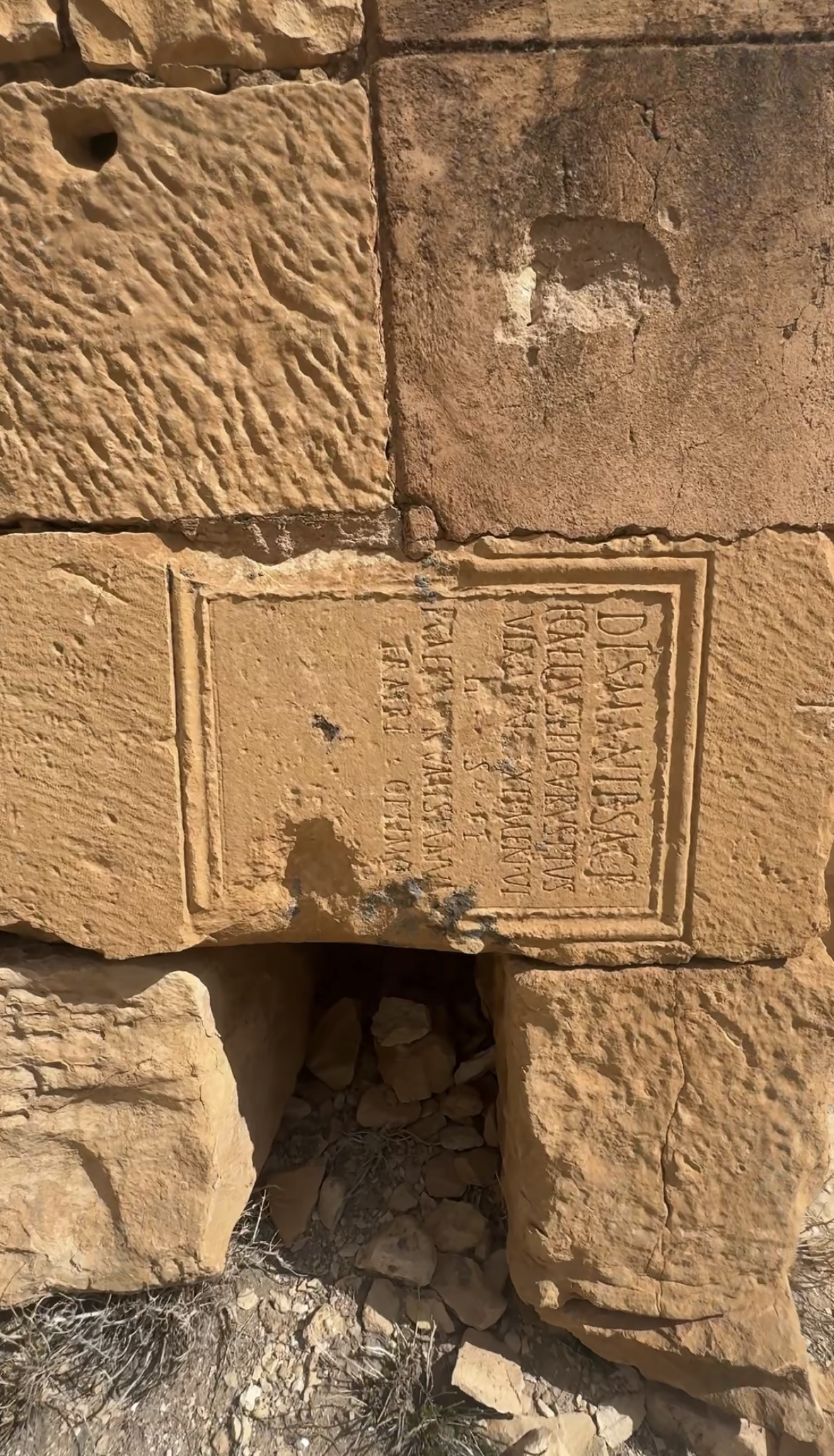
The entire structure functions as a vast open-air museum. One fun thing we did when exploring was use generative AI to try translating some of the ancient Latin inscriptions on the stones! And it worked!
2025 Travel Guide: Know before you go to Haidra
Visiting Haidra is far from the main tourist hubs.
Location: Haidra is in the Kasserine Governorate of western Tunisia, very close to the border with Algeria, which borders right down the road.
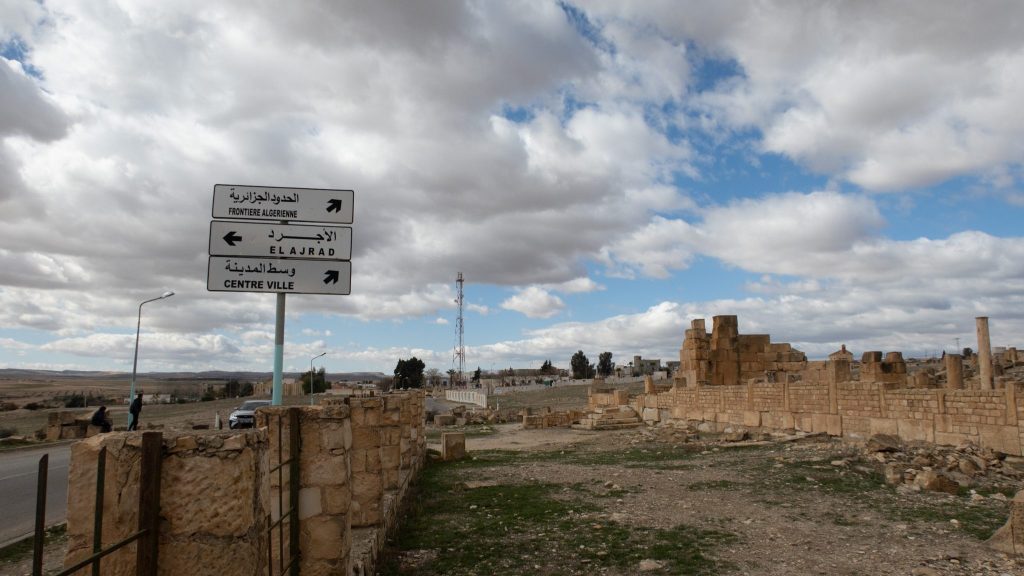
How to Get There: To visit Haidra, it’s advised that you hire a private car and driver or join a specialized historical tour, as public transport isn’t a realistic option for tourists. Consider booking through a trusted platform such as WildyNess, which connects travelers with experienced local guides. You’ll support sustainable tourism and directly contribute to the local economy, while gaining deeper context about Haidra!
Travel note: While American and Canadian travel advisories recommend avoiding areas near the Algerian border, the reality on the ground is more stable than those notices suggest. That said, Haidra is remote, and traveling with a local guide is recommended for both logistics and peace of mind.
Interested in visiting Haidra?
Reach out to me! I am happy to help create your dream Tunisia trip itinerary for you. Just comment below or send a note via “Contact Me.”

Leave a comment