Tag: douz

  • Mos Espa: A guide to the abandoned Star Wars film set in the Tunisian desert

    Mos Espa: A guide to the abandoned Star Wars film set in the Tunisian desert


    While Tunisia is famous for its Mediterranean beaches and ancient historical ruins, it’s also home to a site known by sci-fi fans around the world: Mos Espa, the hometown of Anakin Skywalker! This film set for the Star Wars prequel movies is a historical ruin in itself, currently left standing in the middle of the desert.

    For fans of the Star Wars movies or travelers looking for a unique photo opportunity, a trip to the Mos Espa set is an adventure into “a galaxy far, far away,” Tunisian style.

    Why did Star Wars film in Tunisia, and what scenes were filmed here?

    George Lucas first chose Tunisia as the backdrop for the planet Tatooine in 1977, during the filming of Star Wars: A New Hope. Inspired by the town of Tataouine in southern Tunisia, Lucas saw the country’s salt flats, sand dunes, and rugged terrain as the perfect stand-in for a planet on the edge of the galaxy. He ended up naming the iconic planet Tattooine after that town!
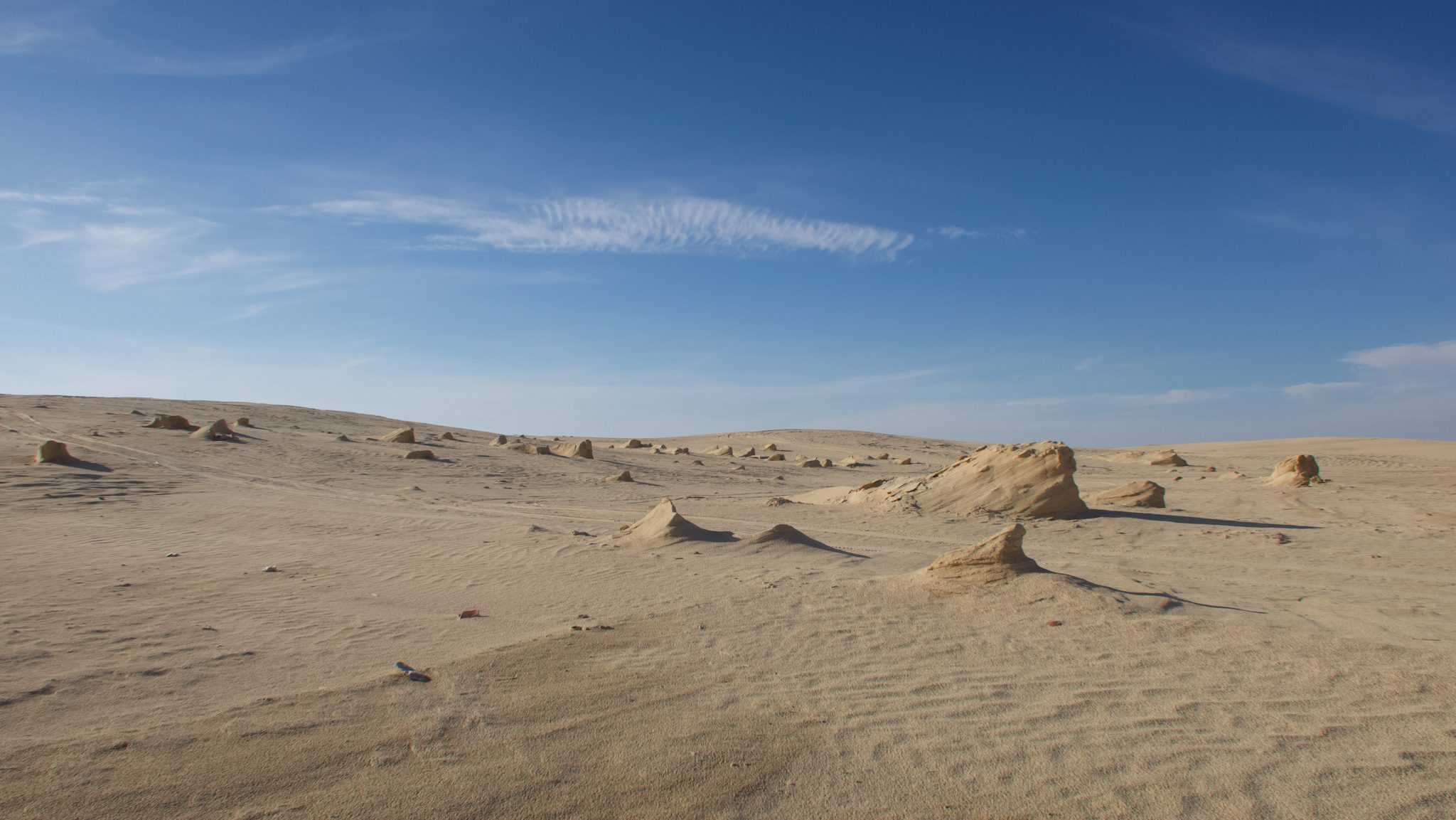
    A vast desert landscape in the Tunisian Sahara featuring scattered rock formations under a blue sky with wispy clouds.

    When it came time to film Episode I: The Phantom Menace in the 1990s, Lucas returned to Tunisia. He and his crew built the Mos Espa set in an isolated stretch of desert outside Nefta, a small oasis town in the south near Tozeur.

    The crew constructed a desert streetscape, featuring Anakin Skywalker’s childhood neighborhood, Watto’s junk shop, the podrace hangar used by Sebulba, and more. These settings served as important scenes in the film, including young Anakin’s first meetings with Qui-Gon Jinn, Padmé Amidala, and Jar Jar Binks.
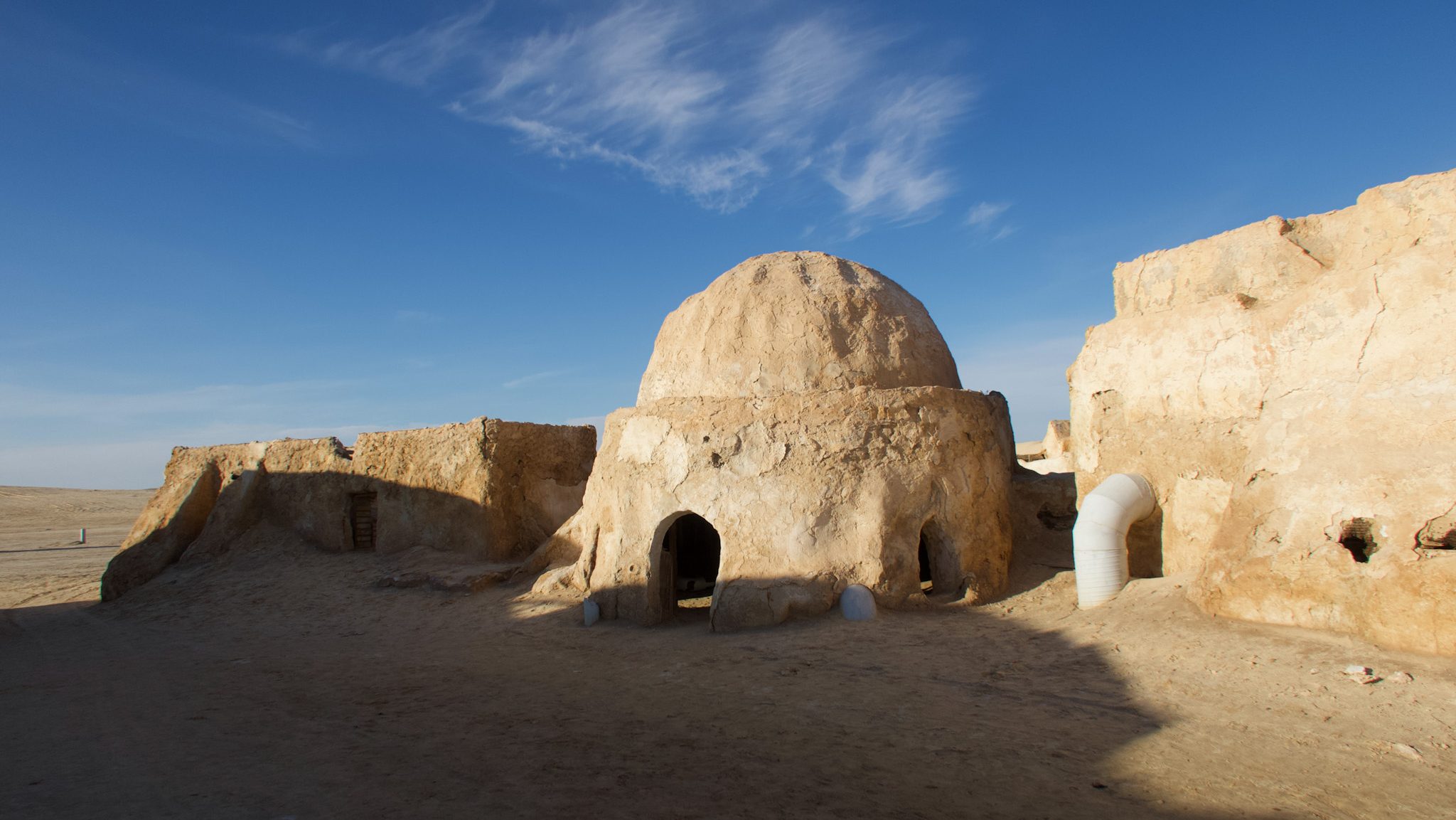
    Desert landscape featuring dome-shaped structures from the Star Wars Episode I: The Phantom Menace Mos Espa set.

    Rather than dismantle the set once filming wrapped, Lucasfilm just decided to leave it behind. Since then, the site has transformed into somewhat of a pilgrimage spot for Star Wars fans!

    What exactly can you see at the Mos Espa film set today?

    Visiting Mos Espa feels feels like a surreal collision of sci-fi, Roman ruin aesthetics, and traditional Berber/Amazigh architecture all at the same time.

    You’ll find dozens of buildings that are not technically real, but rather hollow movie props made of plaster, fiberglass and wood. You’ll also see the iconic Tattooine moisture vaporators still standing around, affixed to the ground.
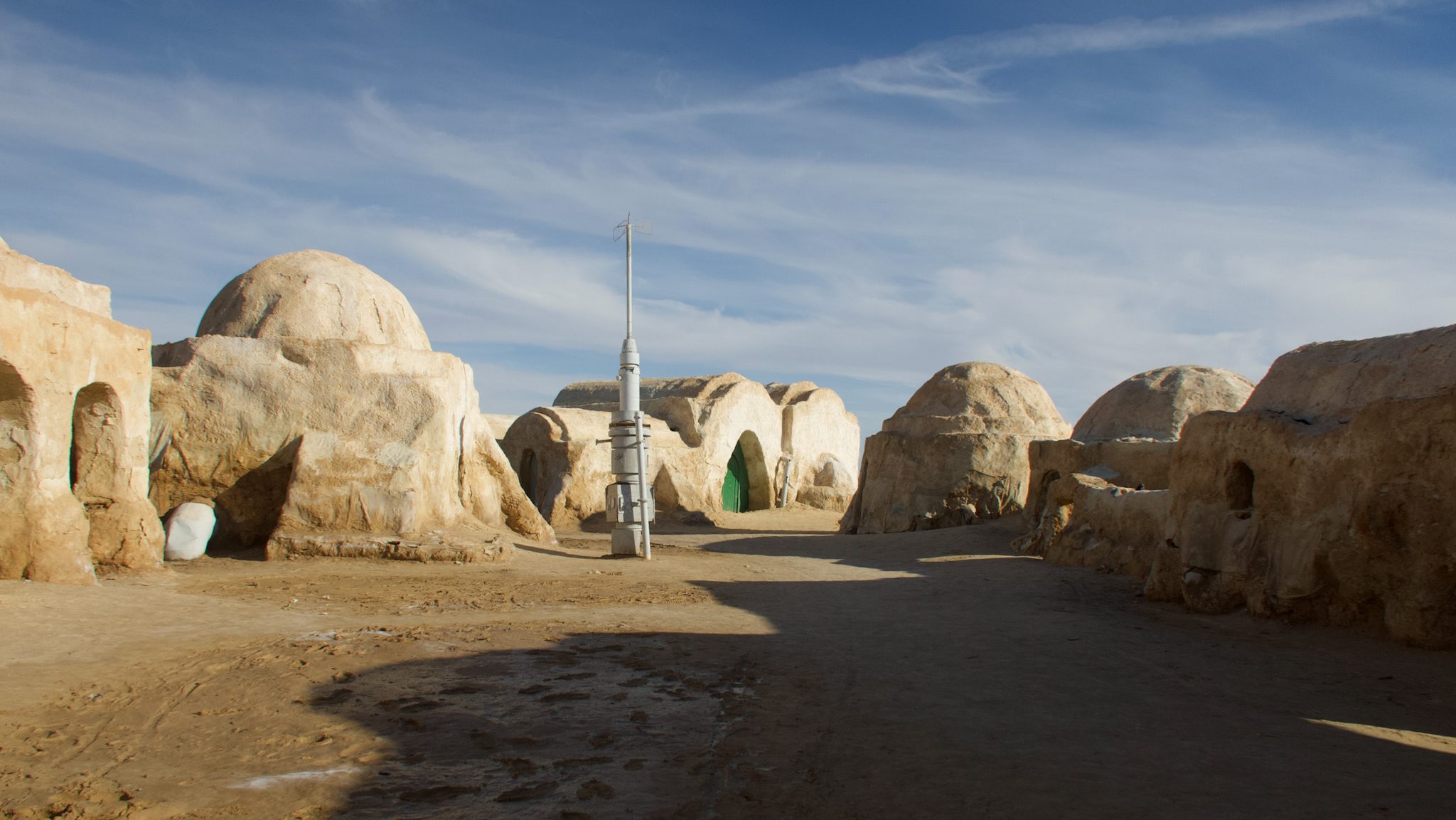
    A desert landscape intending to be the planet Tattooine in Star Wars, featuring a series of dome-shaped structures from the Mos Espa set and moisture vaporizers under a blue sky with wispy clouds.

    Overall, this is truly a deserted movie set set in a harsh desert environment. There are no people living here, no shops, and no facilities.
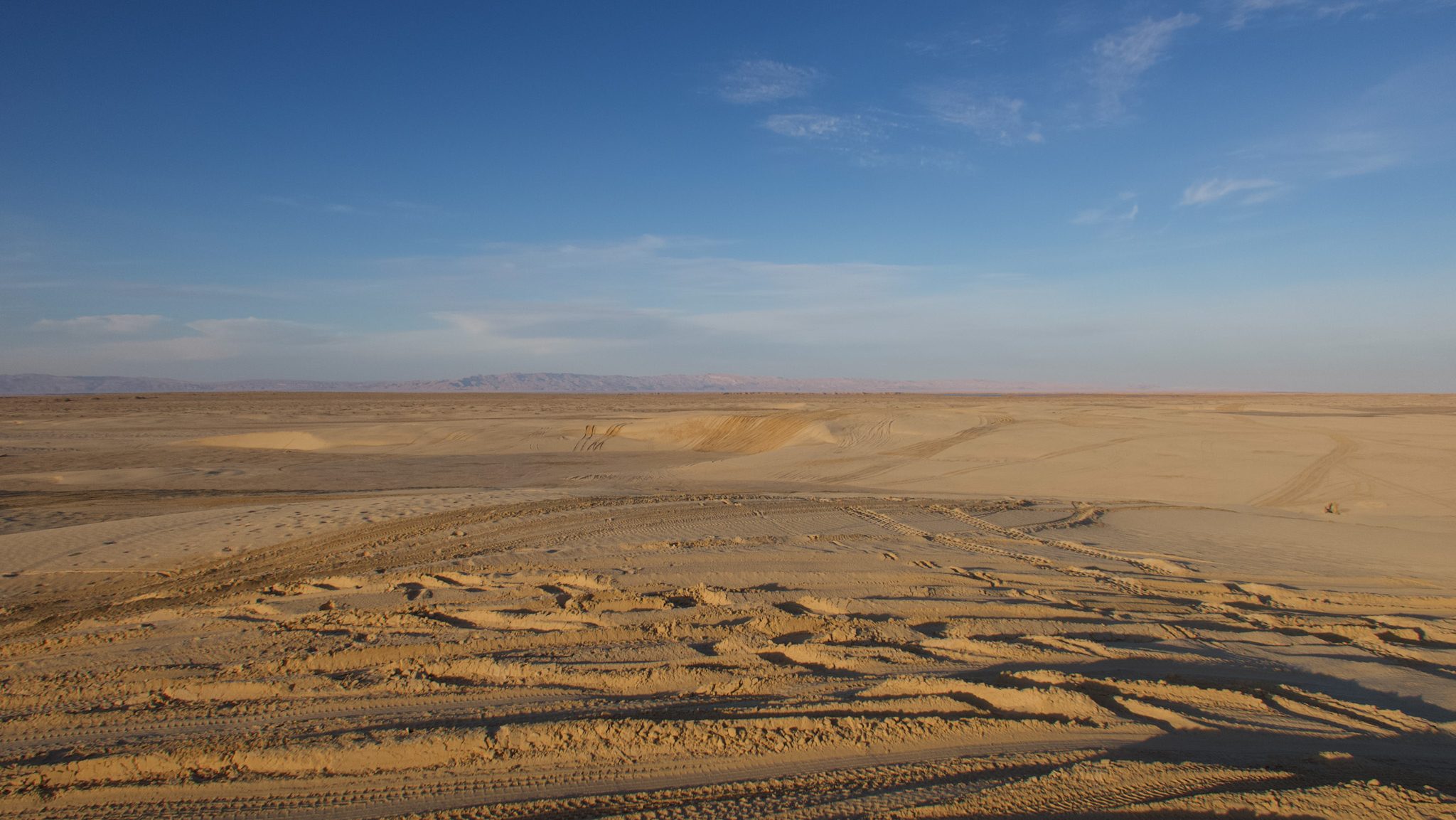
    A vast desert landscape heading towards Ong Jemel in Tunisia, with clear blue skies and gentle curves of sand dunes, featuring tire tracks across the sandy terrain.

    Still, the area is filled with local guides offering camel rides, trinkets, and ATV trips to the nearby rock formation of Ong Jemel, so be prepared for that.

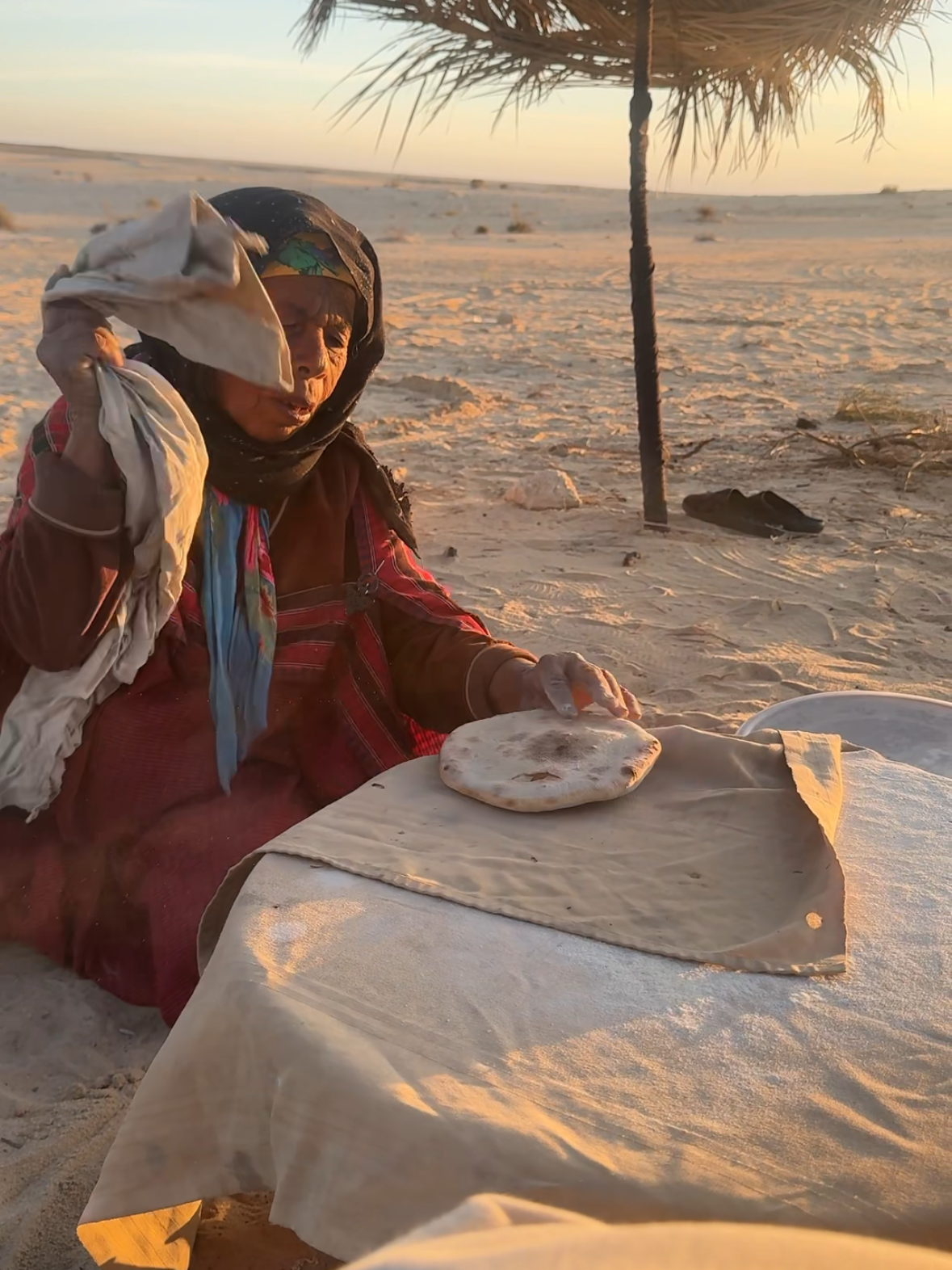
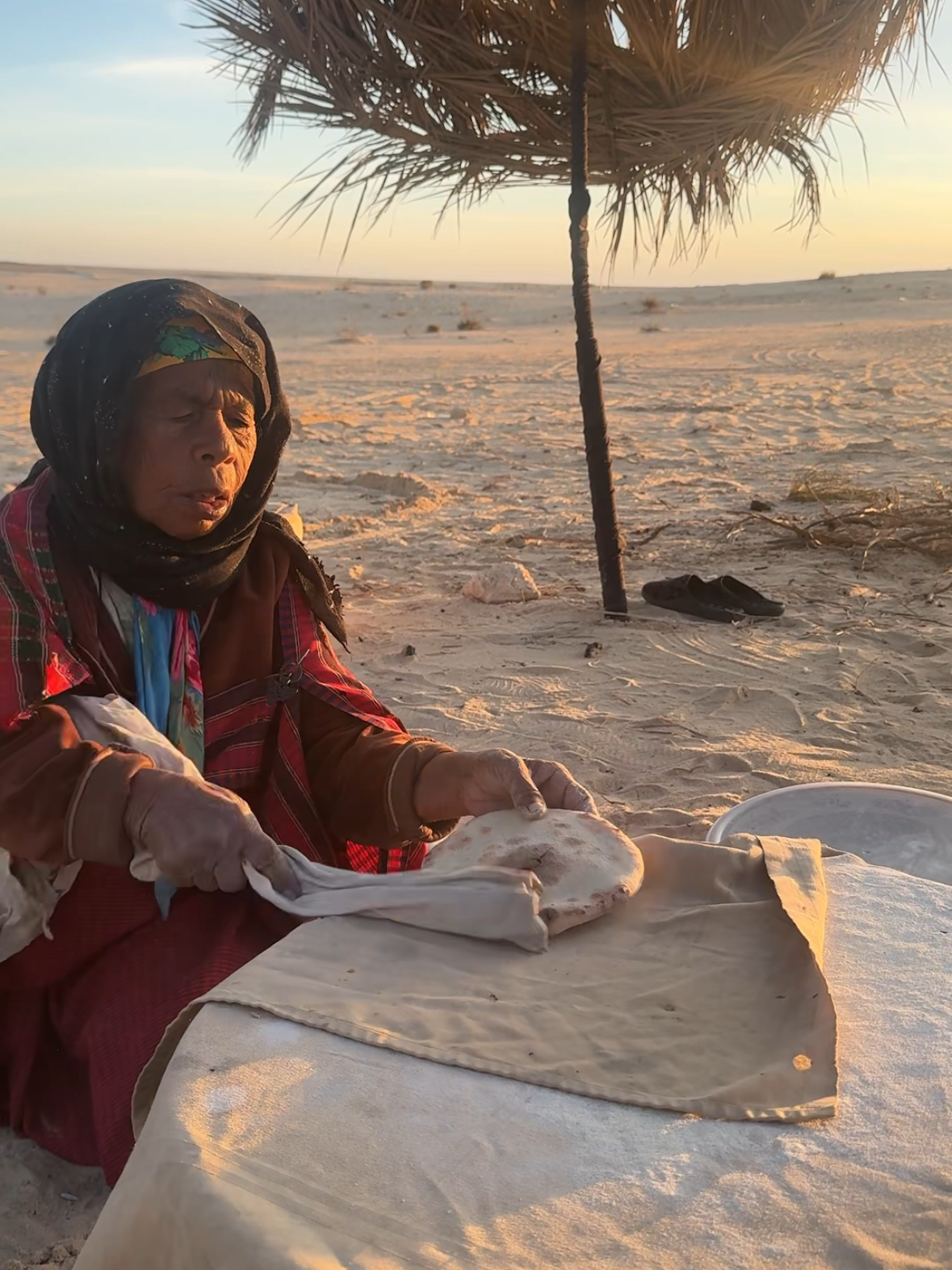
    One fun surprise for us: About 15 minutes back toward Nefta, just outside the film set, we spotted a sign for desert-baked bread and pulled over. A Berber/Amazigh woman was chatting with her friends around a fire and invited us to join them. She baked the bread directly in the sand in the traditional style of the region and offered it to us with olive oil. We ended the day sharing good company and warm bread as the sun started setting!
    Know before you go to Mos Espa

    A trip to Mos Espa requires planning, as it is truly in the middle of nowhere.

    Cost: Visiting Mos Espa is completely free, as it’s an abandoned movie set with no entry fees or official management. However, expect to be approached by self-appointed “guides” offering tours. These are usually locals hoping to make some quick money from tourists, and their information may be vague or embellished. You’re free to explore on your own without paying anyone.

    Location: The set is located in the Chott el-Gharsa, a dry salt flat region in the desert outside of the cities of Tozeur and Nefta. There is one main road that you can use to drive there.

    How to Get There: While it is possible to go with a normal sedan, it’s probably better to go with a 4×4 vehicle, especially if you want to ride around in the sandy desert terrain and enjoy a true desert experience. But you’re fine going in your normal car, too.


    Interested in visiting Mos Espa?

    Reach out to me! I am happy to help create your dream Tunisia trip itinerary for you. Just comment below or send a note via “Contact Me.”

    ,
  • Your guide to Douz, Tunisia’s gateway to the Sahara Desert

    Your guide to Douz, Tunisia’s gateway to the Sahara Desert


    The city of Douz marks where the Sahara Desert of Tunisia truly begins, which is why this peaceful oasis town is known as the “Gateway to the Sahara.”

    Located just south of the vast Chott el-Djerid salt flat, Douz lets travelers experience some of the country’s most authentic desert experiences and gives a taste of local desert life.

    Why is the city called Douz?

    Douz takes its modern name from the oasis town that grew around the traditions of the Mrazig people. While ancient records mention little about its early history, the Mrazig tribe settled here centuries ago. Their nomadic roots and desert knowledge turned Douz into a main stop along trans-Saharan caravan routes.

    What makes Douz special?

    Douz offers a direct and authentic connection to the Sahara Desert. The town borders the Grand Erg Oriental, a massive area of soft, rolling sand dunes. This is the classic “sea of sand” desert landscape that many people think of when they think of the desert.

    A vast desert landscape just outside of Douz, Tunisia with rolling sand dunes under a cloudy blue sky.

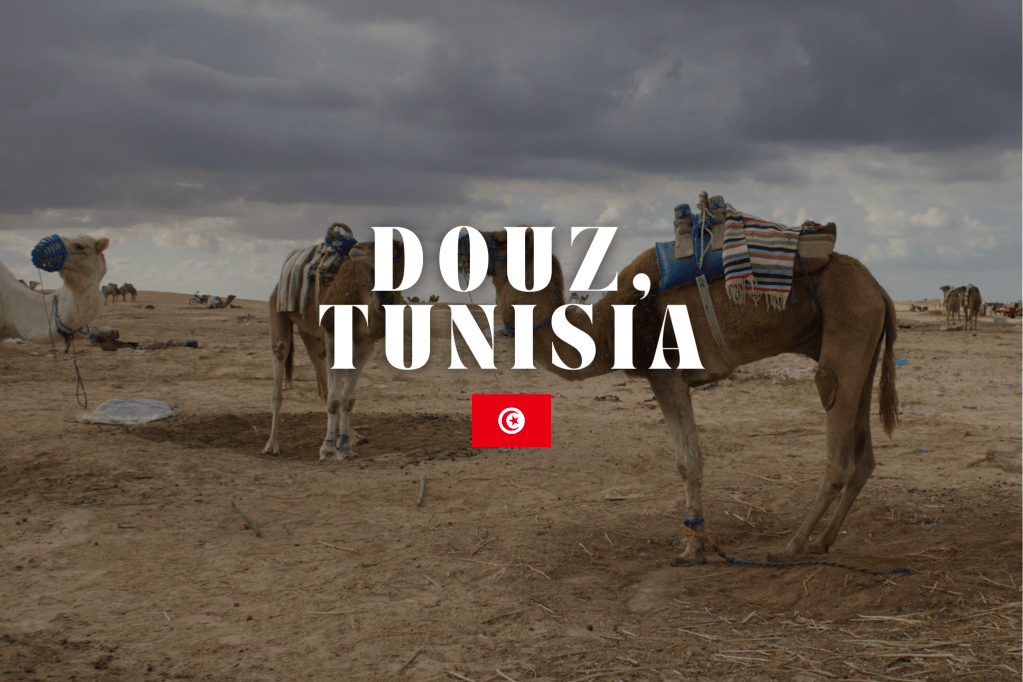
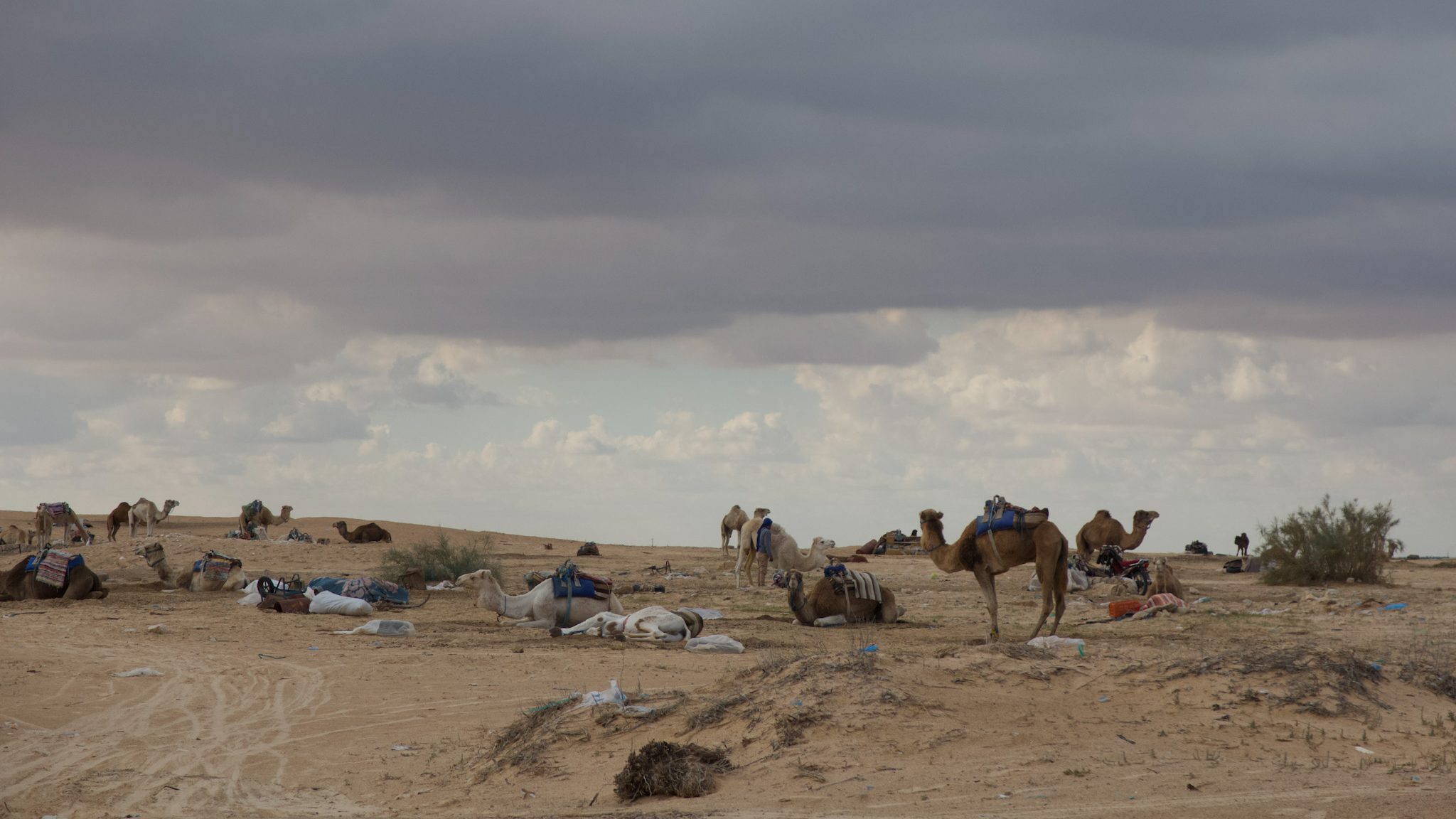
    Douz is famous for its camel market and is one of the best places in Tunisia to experience a traditional camel trek. The Mrazig people are renowned for their camel breeding and expertise.

    A group of camels resting on sandy terrain under a cloudy sky in Douz, Tunisia.
    What to see and do in Douz

    The town of Douz itself has a dusty, frontier feel. It’s a real, working town where the desert is a part of daily life.

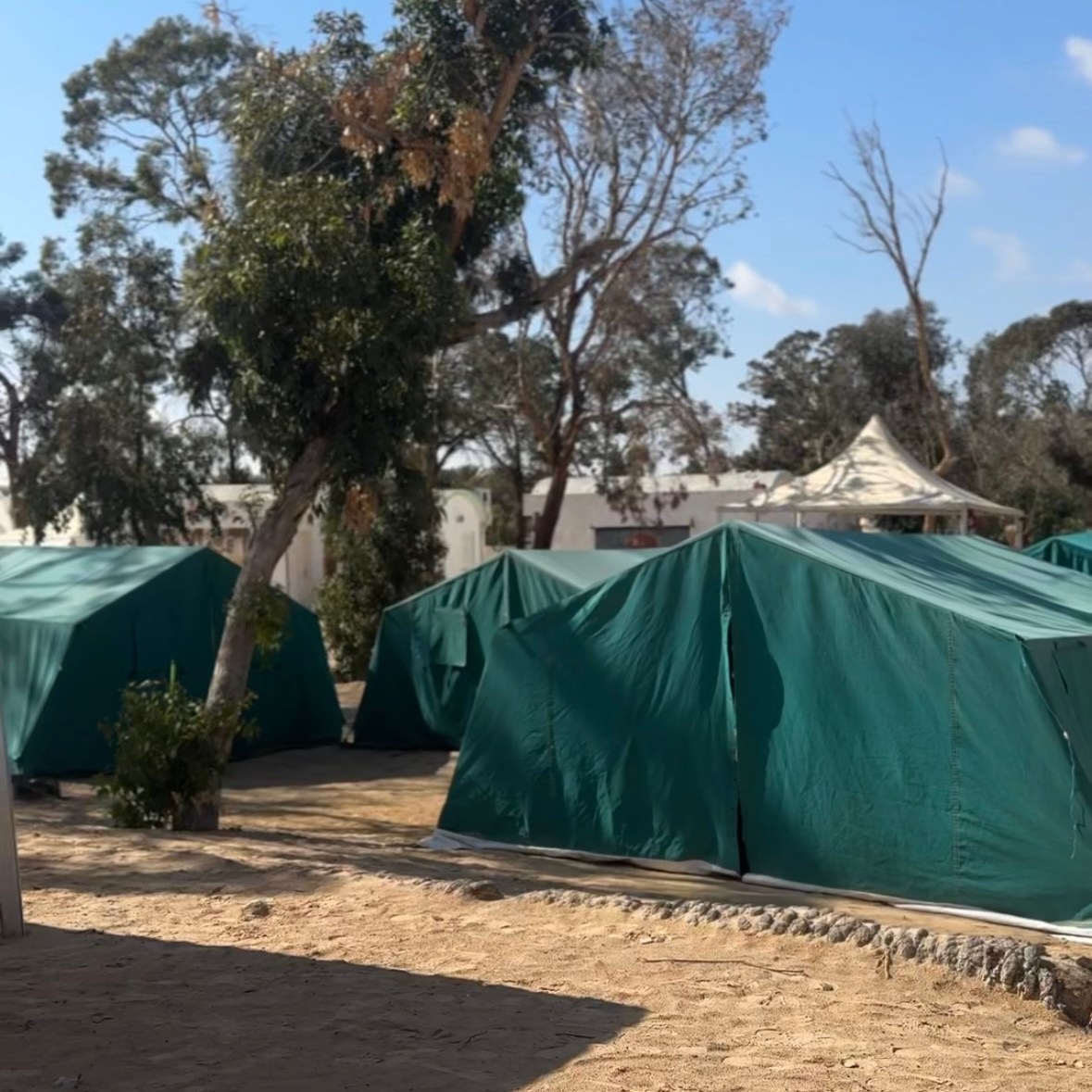
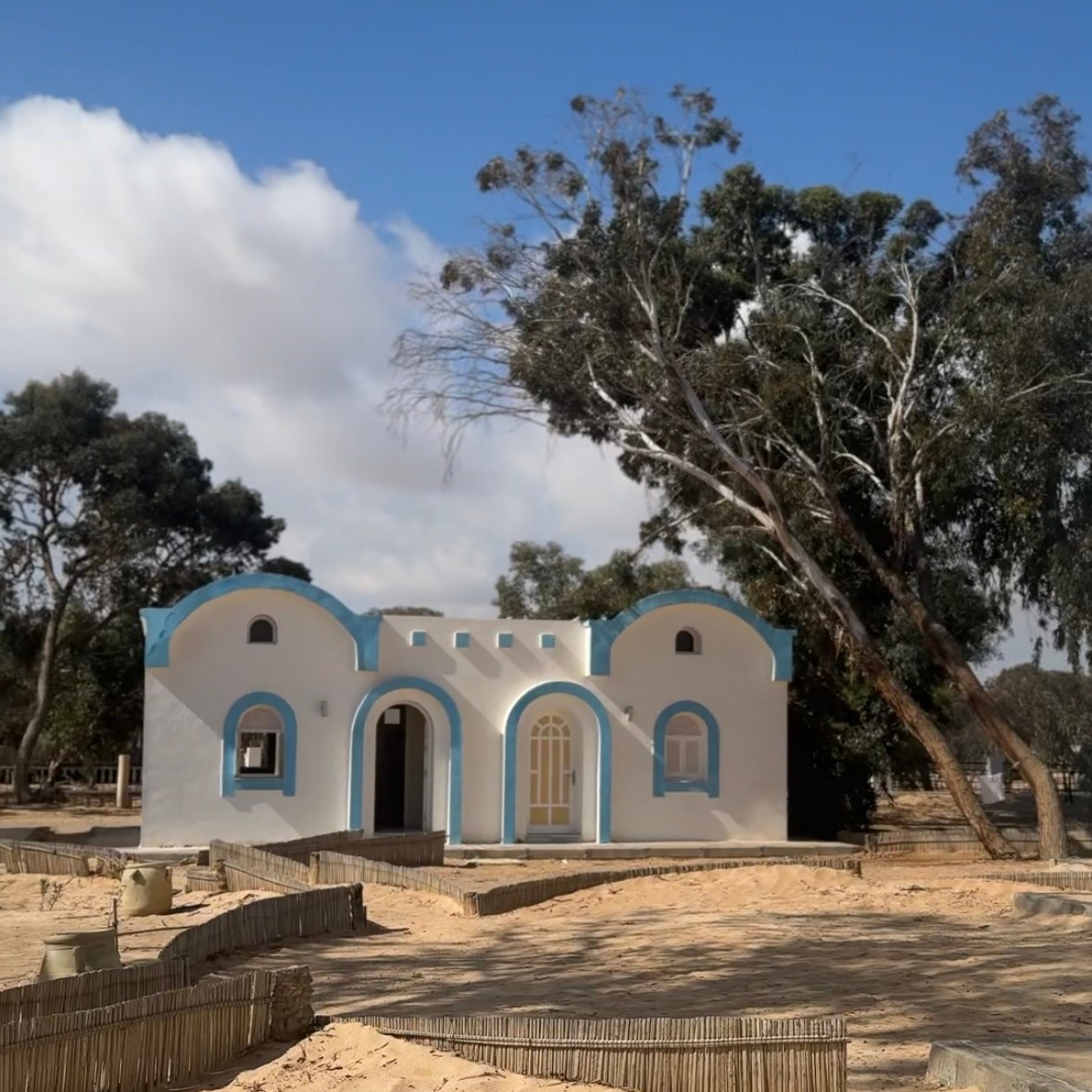
    You can sleep in a Bedouin campground during your visit. There are many options, ranging from basic to luxury options. Below is an example of a more budget-friendly option.

    You can also ride camels, quad bikes or buggies across the massive sand dunes just outside the town.

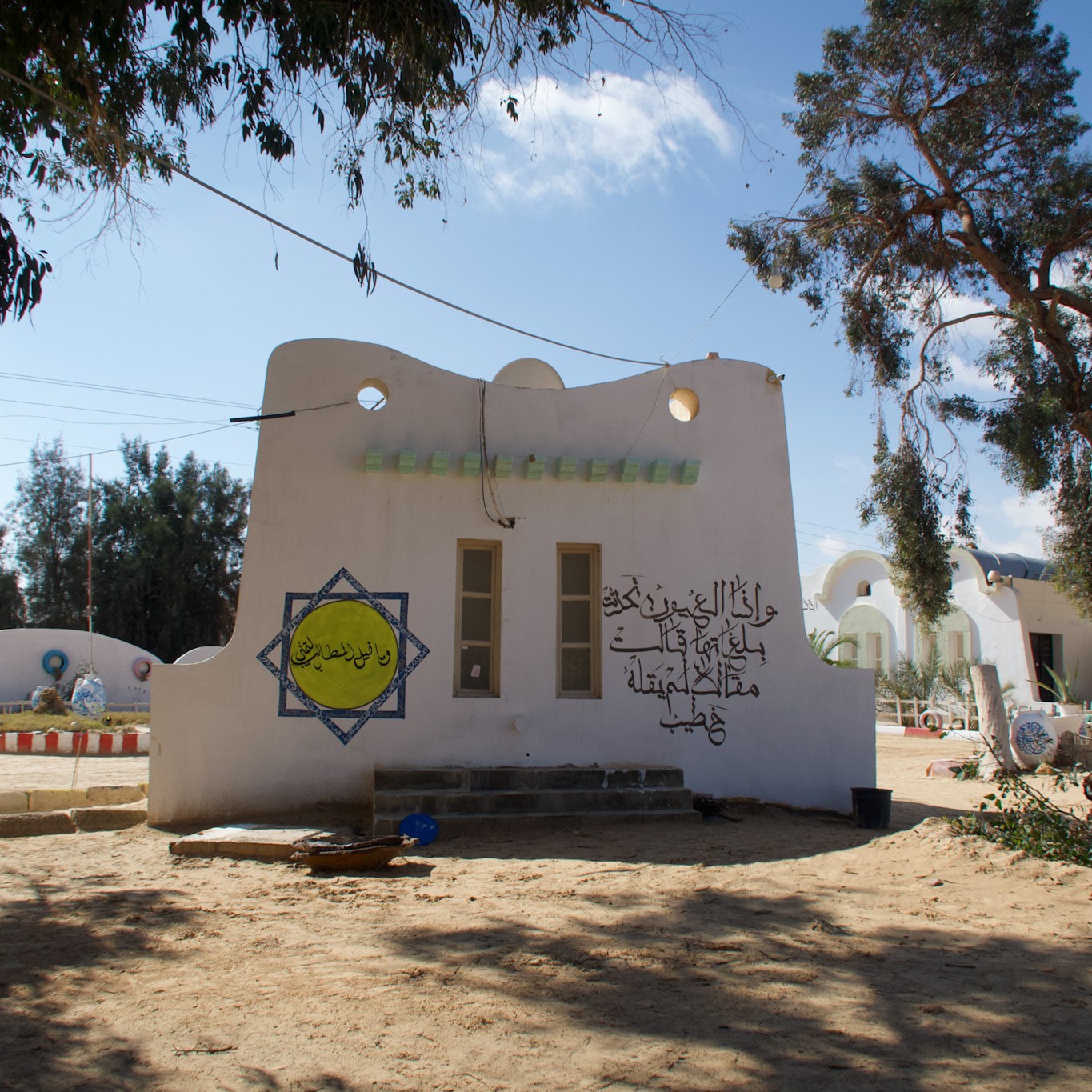
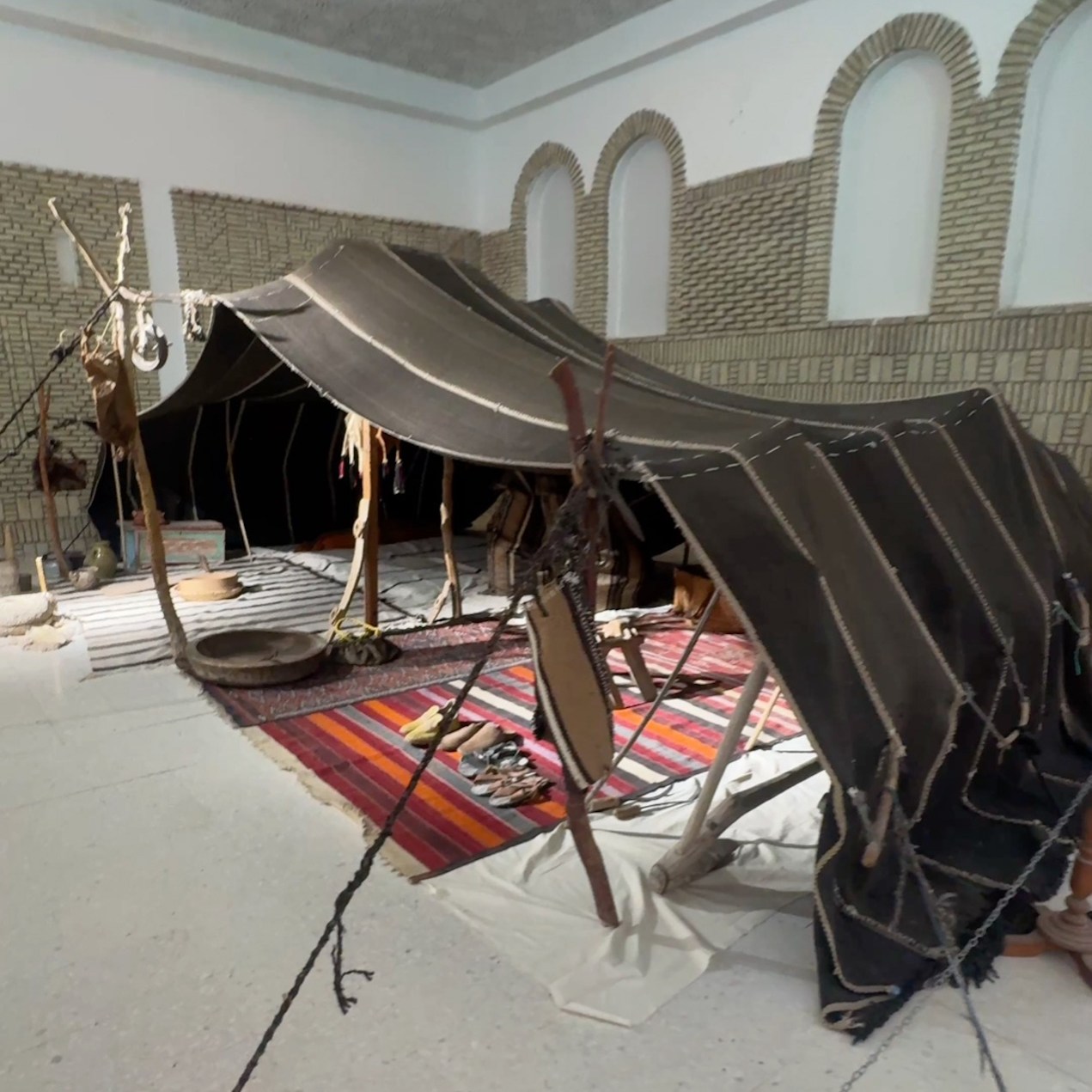
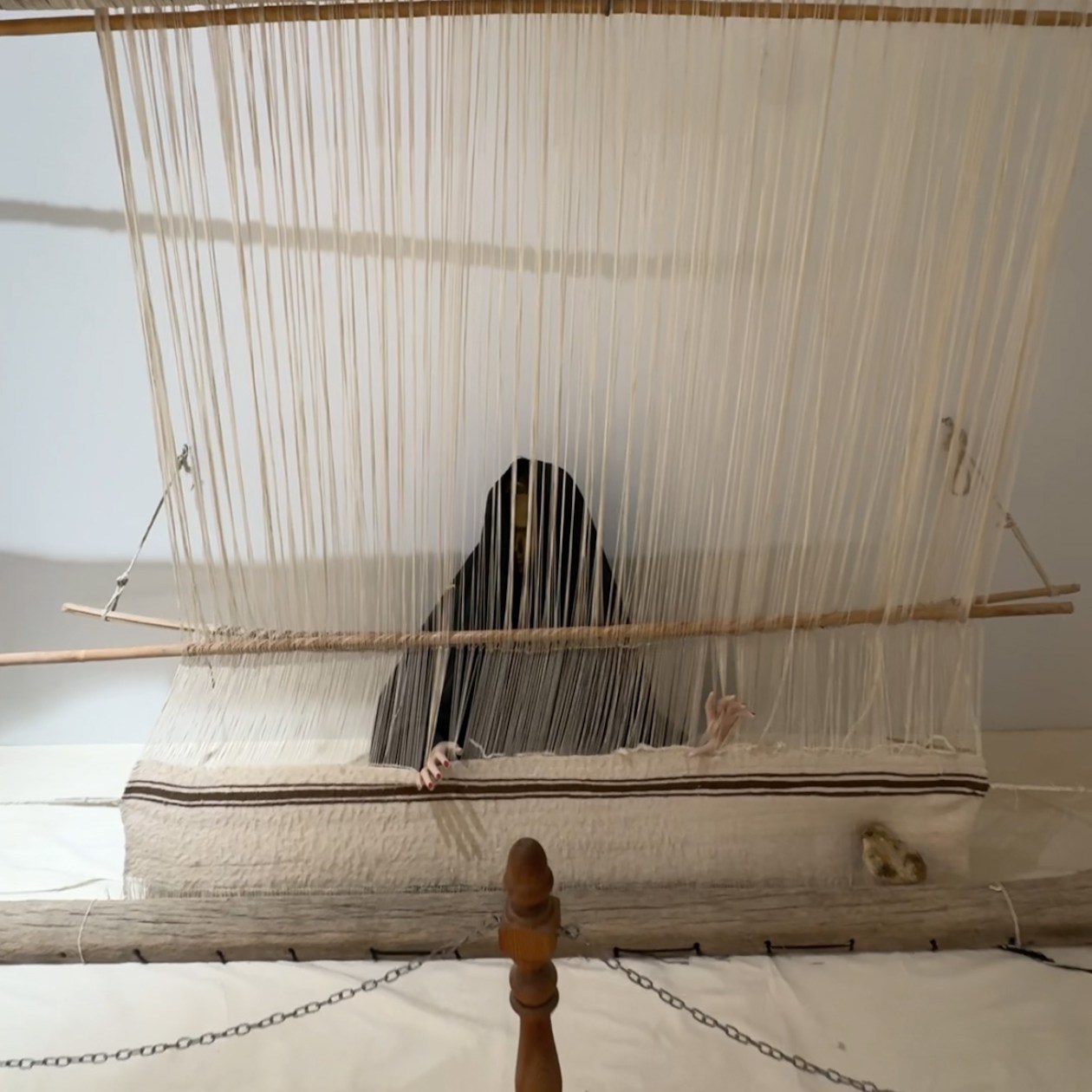
    Visit the Museum of the Sahara for a concise introduction to the Mrazig people. The exhibits cover their clothing, tools, and traditional desert life.

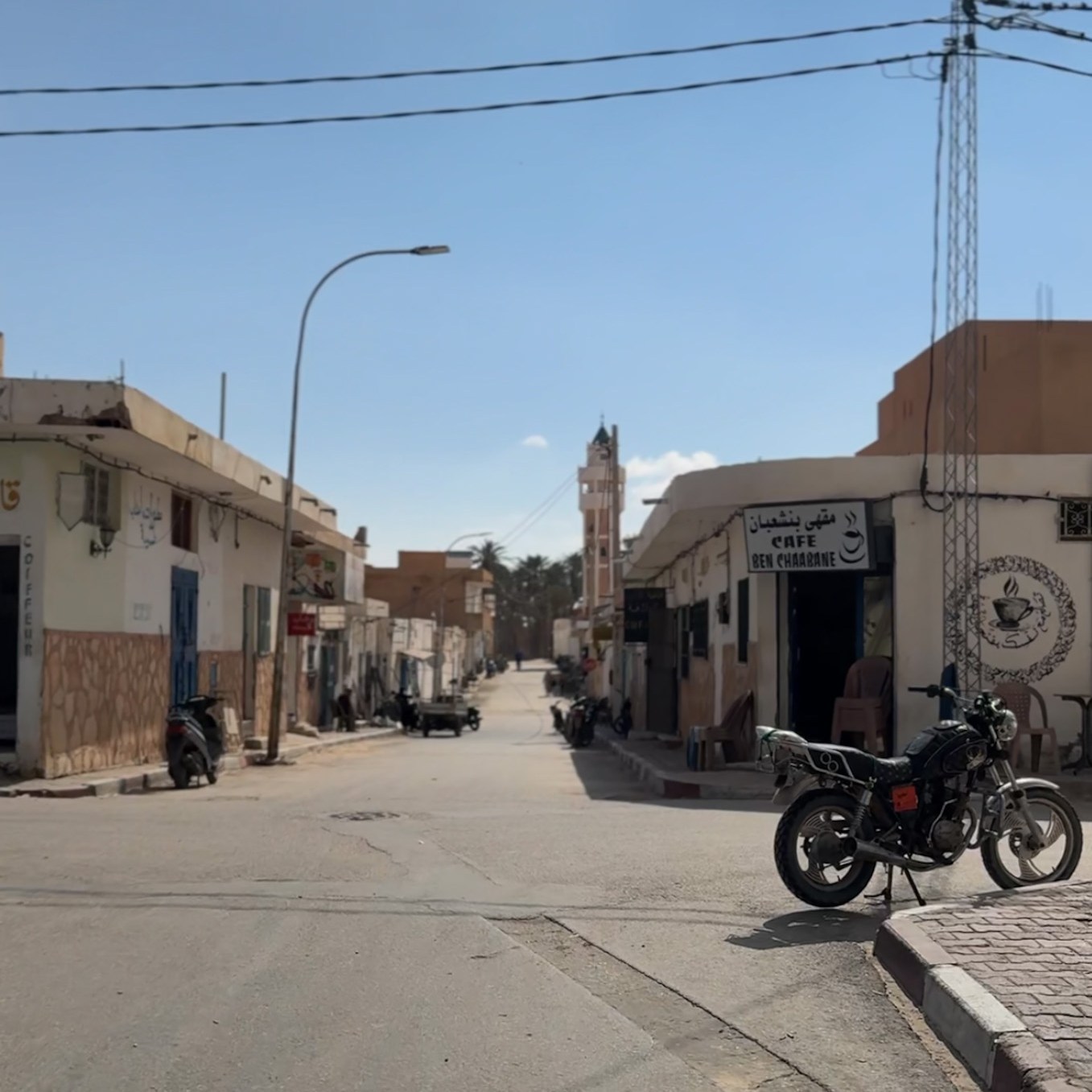
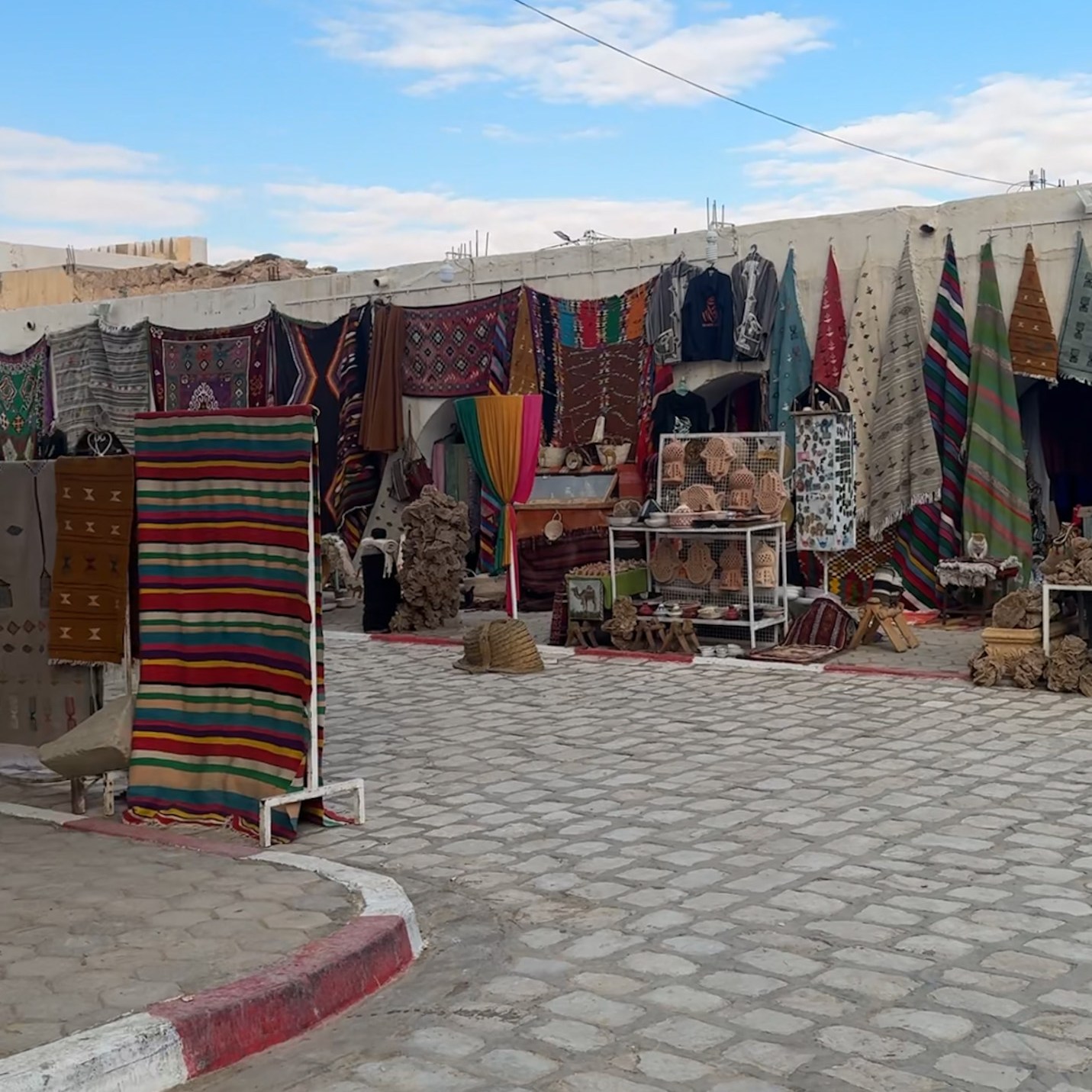
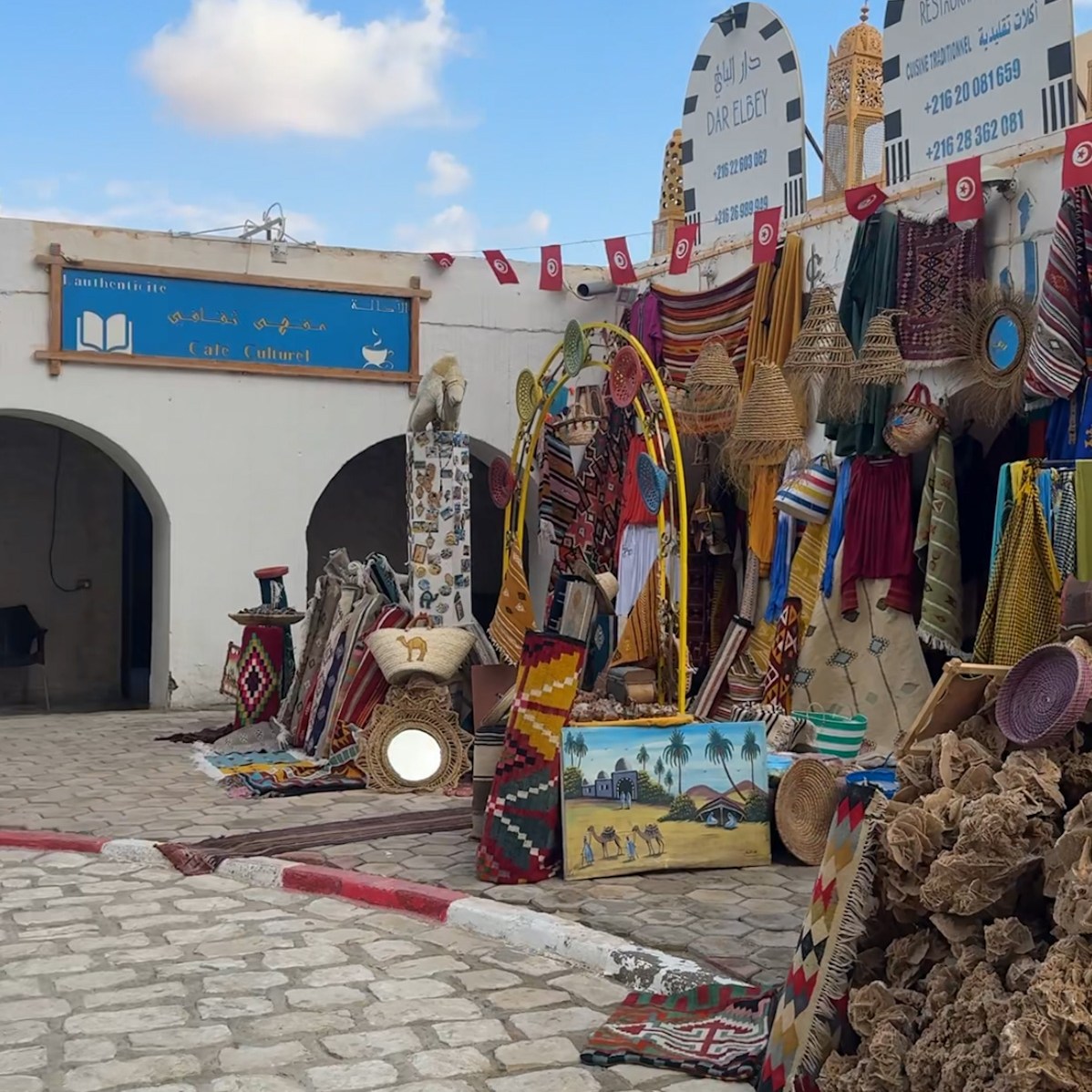
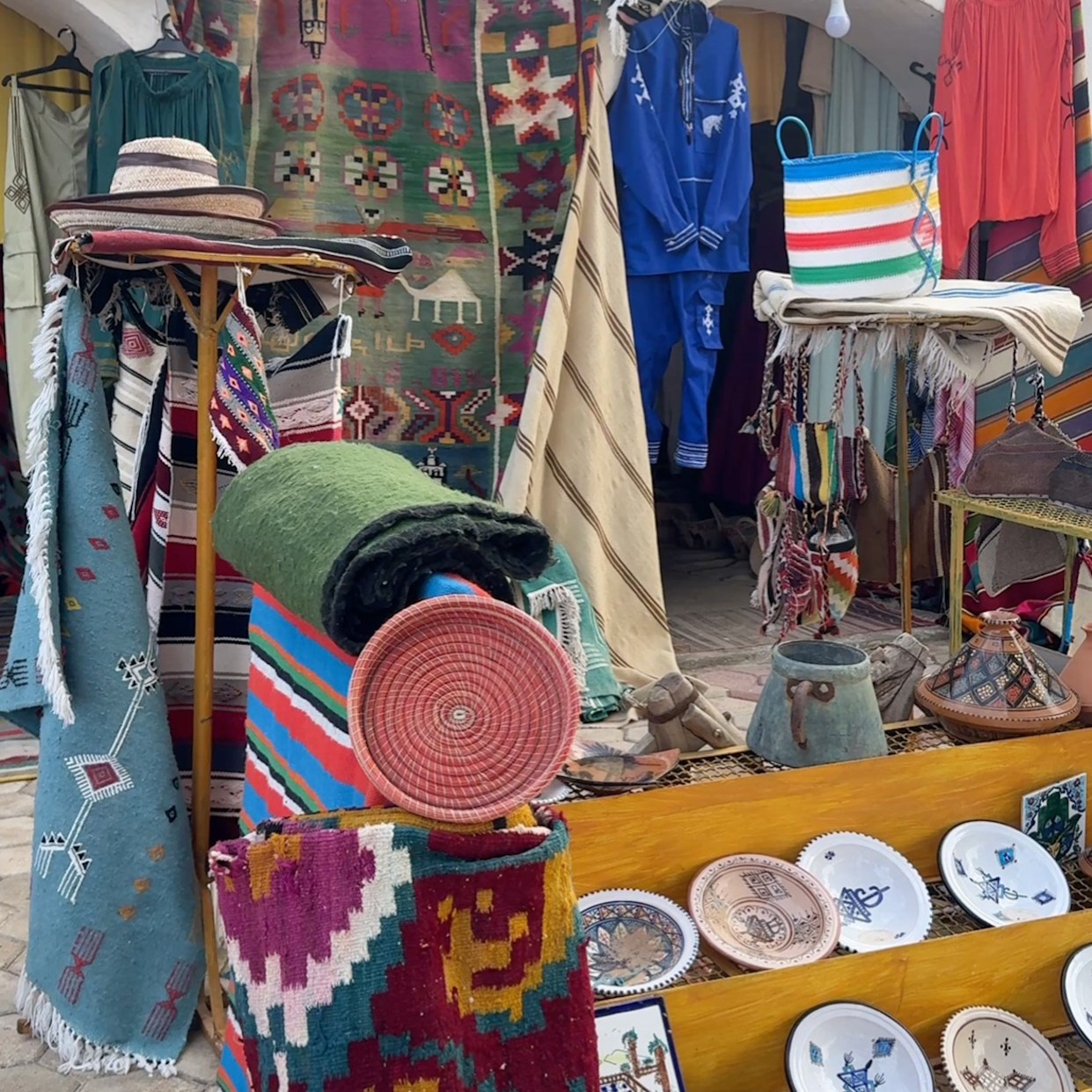
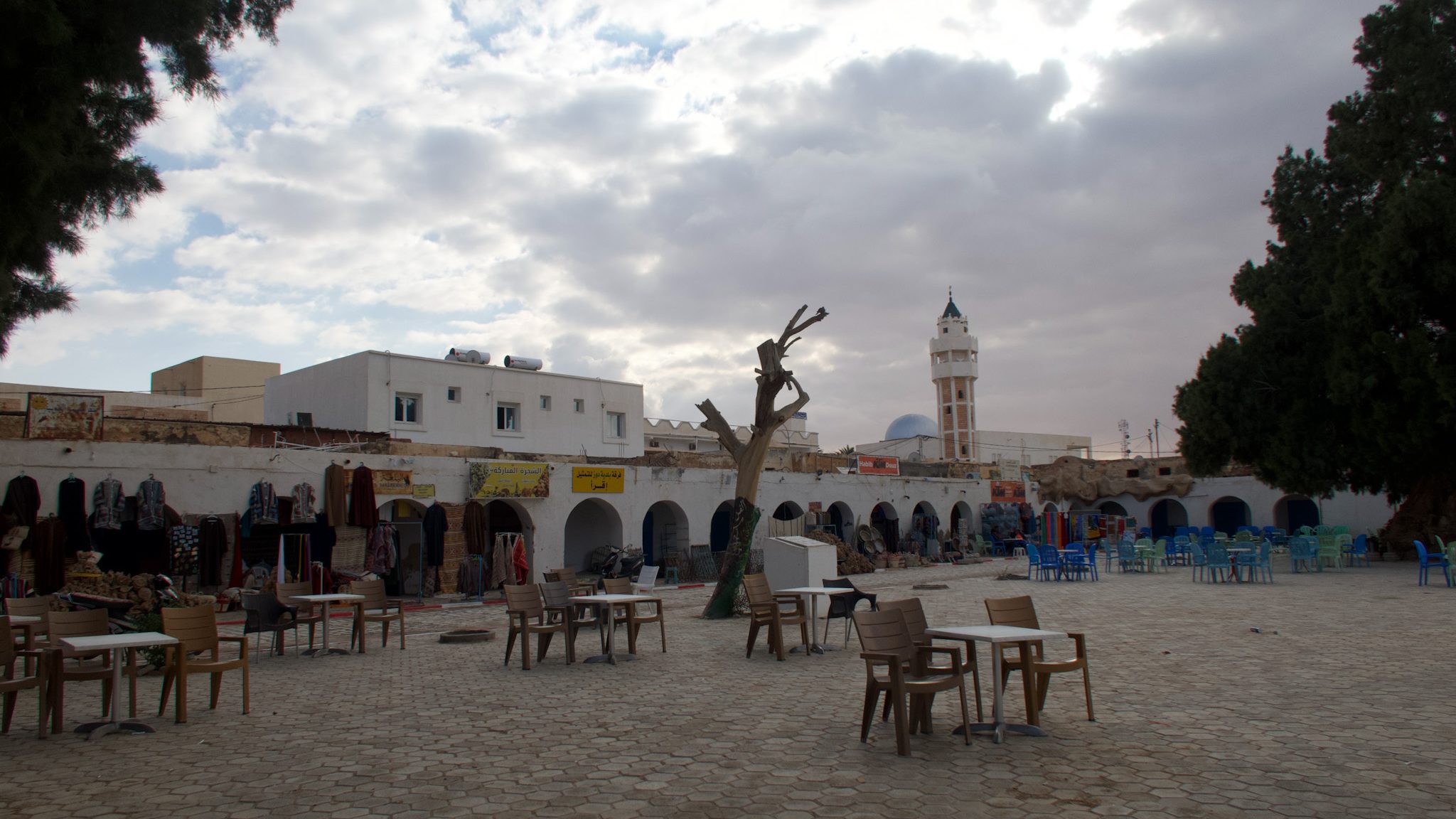
    The main square in Douz is a functional public space for the locals. It’s surrounded by cafés and a few small stores where vendors sell traditional items such as woven rugs, jewelry, and the distinctive hooded wool coats known as burnous. There’s a market every Thursday where herders, merchants, and families across surrounding towns come together to sell goods.

    An open plaza in Douz, Tunisia featuring empty tables and chairs, surrounded by traditional market stalls and buildings with a mosque tower in the background under a cloudy sky.

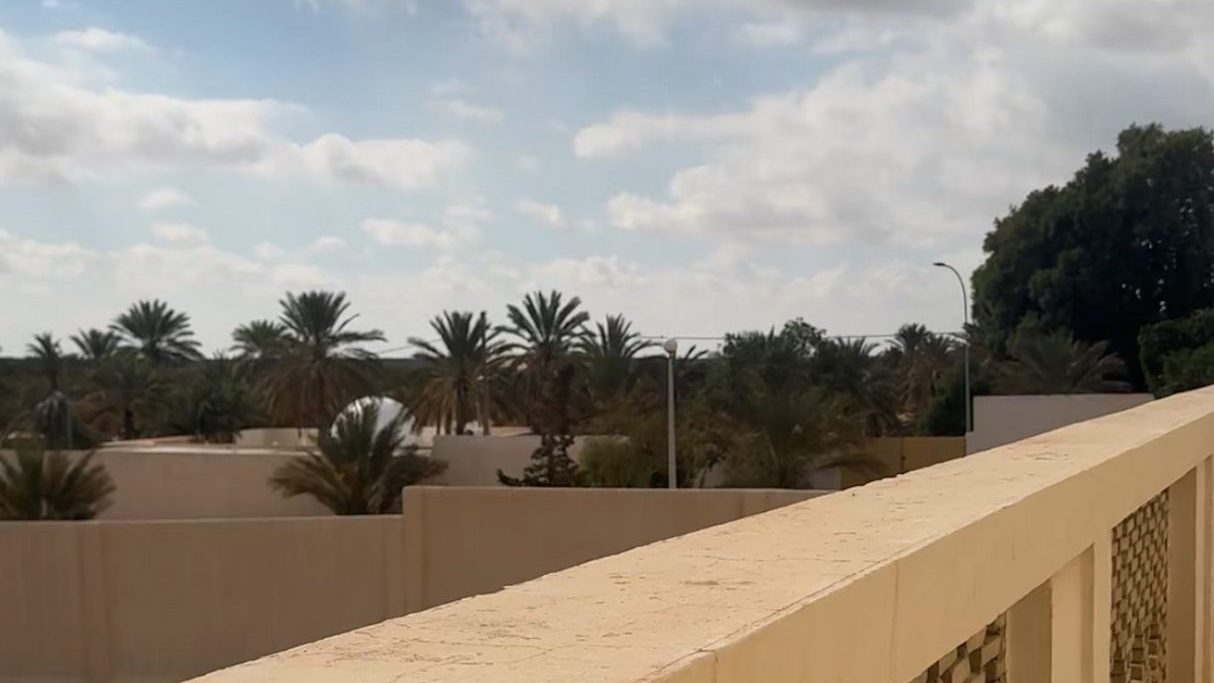
    Much of the local economy still revolves around date farming. You’ll see groves of Deglet Nour palm oases and workers preparing for the seasonal harvest.

    View of palm trees and a cloudy sky from a balcony railing in Douz, Tunisia.
    Know before you go to Douz

    Where is it? Douz is in southern Tunisia, on the southern edge of the Chott el-Djerid salt flat. It’s about a 1.5 to 2-hour drive from Tozeur.

    How to Get There: The easiest way to get to Douz is by car or as part of a tour from other major hubs like Djerba or Tozeur. Louages (shared taxis) also connect Douz to other southern towns.

    Want a guide? Consider supporting the local economy by booking a guided tour in Douz with a regional expert through a platform such as WildyNess. You’ll get authentic insight while helping sustain community-based tourism.


    Interested in visiting Douz?

    Reach out to me! I am happy to help create your dream Tunisia trip itinerary for you. Just comment below or send a note via “Contact Me.”

    ,