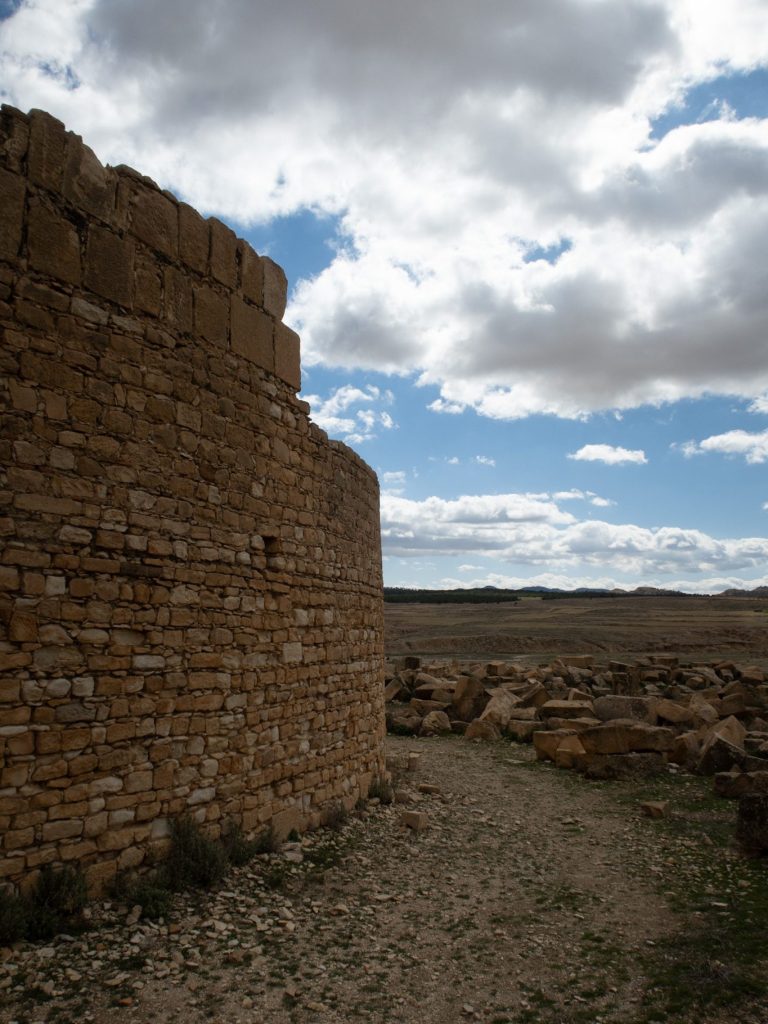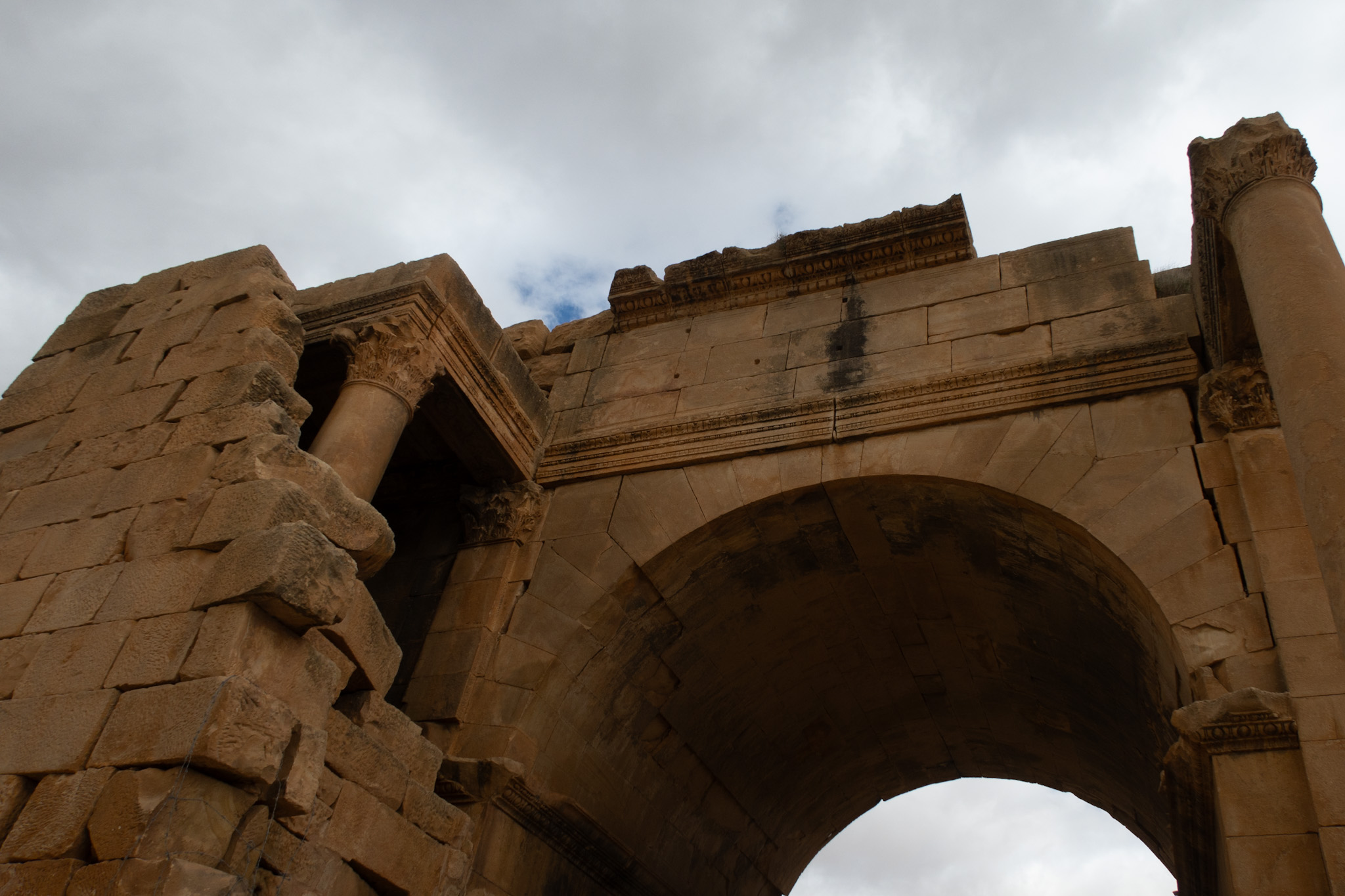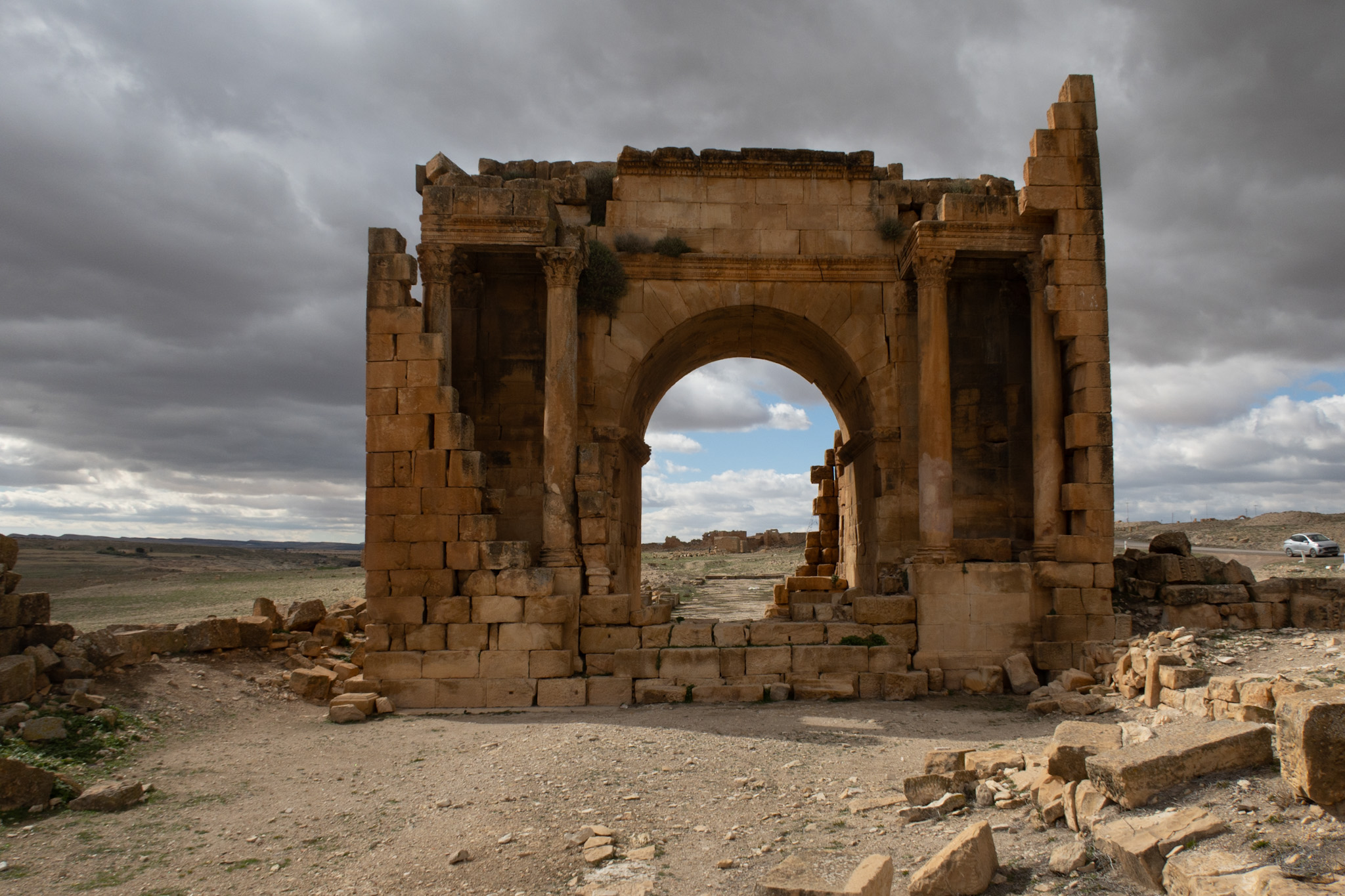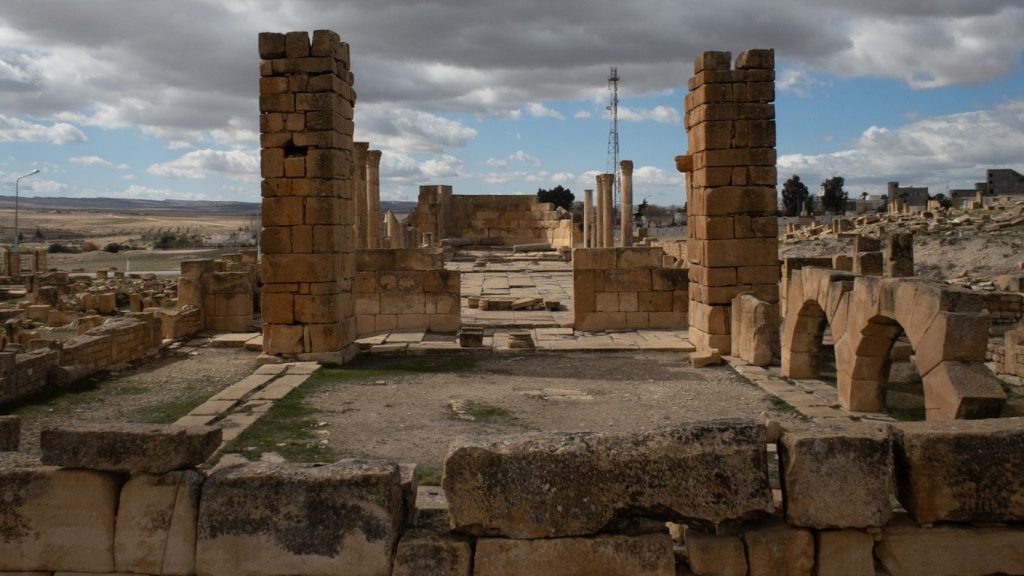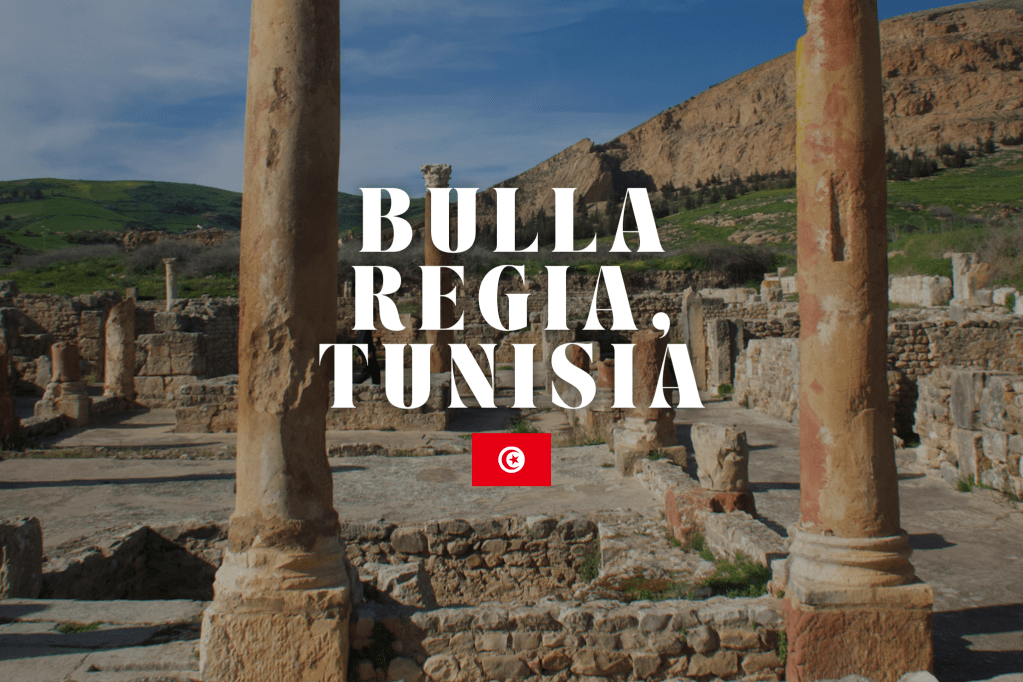

If you’re planning a trip to explore Tunisia’s historic sites, especially its Roman-era wonders, make sure you add Bulla Regia to your list.
This ancient city in northwest Tunisia just outside of the city of Jendouba offers some of the best-preserved Roman ruins outside Italy, which gives you just a sense of the vast reach of the Roman Empire in North Africa. It joins other Roman ruins in Tunisia, including but not limited to El Jem, Dougga, Sbeitla, Haidra, Utica and more.
This guide will show you how to visit Bulla Regia in 2025.
Why is the town called Bulla Regia?
The word Bulla is believed to come from either Berber or Latin roots, possibly meaning “citadel” or “fortified town.” The term Regia is Latin for “royal.” Put together, Bulla Regia likely means “Royal Bulla” or “The Royal City of Bulla,” which is fitting, as you will continue learning more about below.
What is special about Bulla Regia?
The first thing you’ll notice in Bulla Regia is that it is surrounded by green. So much green.
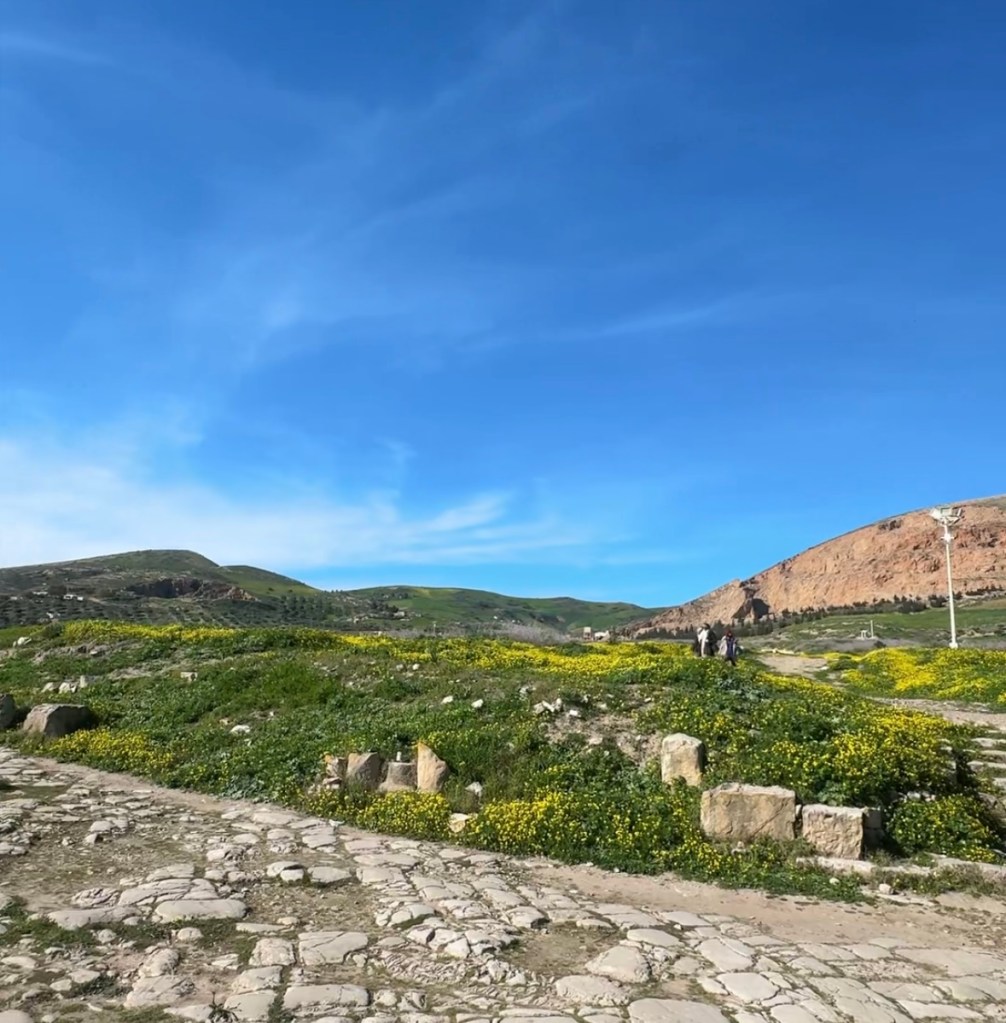
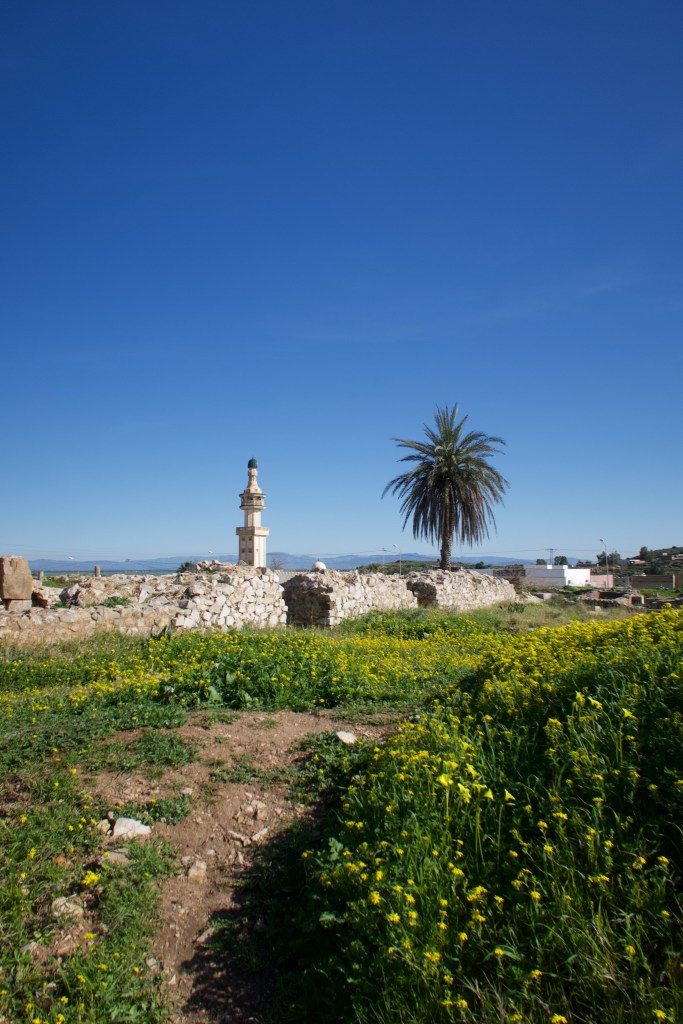
Bulla Regia’s residents grew wealthy mainly because this area thrived as an agricultural hub during Roman times. The region around Jendouba offered green, fertile land compared to other parts of North Africa.
Bulla Regia’s land produced large quantities of grain and olive oil, which were highly valuable commodities across the empire. These goods were often exported to feed Rome and other cities, which created prosperity for local landowners and merchants. Beyond farming, Roman roads and trade routes linked the region to Europe and the Mediterranean, which expanded access to wealth and driving development.
Who lived in the land prior to the Romans?
Prior to the Romans, Bulla Regia was a Numidian city. Numidia was an ancient Berber/Amazigh kingdom that covered much of what is now Algeria and northwest Tunisia. The Numidians were skilled horsemen and warriors, and they had established urban centers with their own culture, social structures, and traditions. When Rome expanded into North Africa during the Punic Wars (starting in the 3rd century BCE), they gradually absorbed Numidian territories.
Unfortunately, few traces of Numidian influence remain visible today. Most of what you see in Bulla Regia comes from the Roman era.
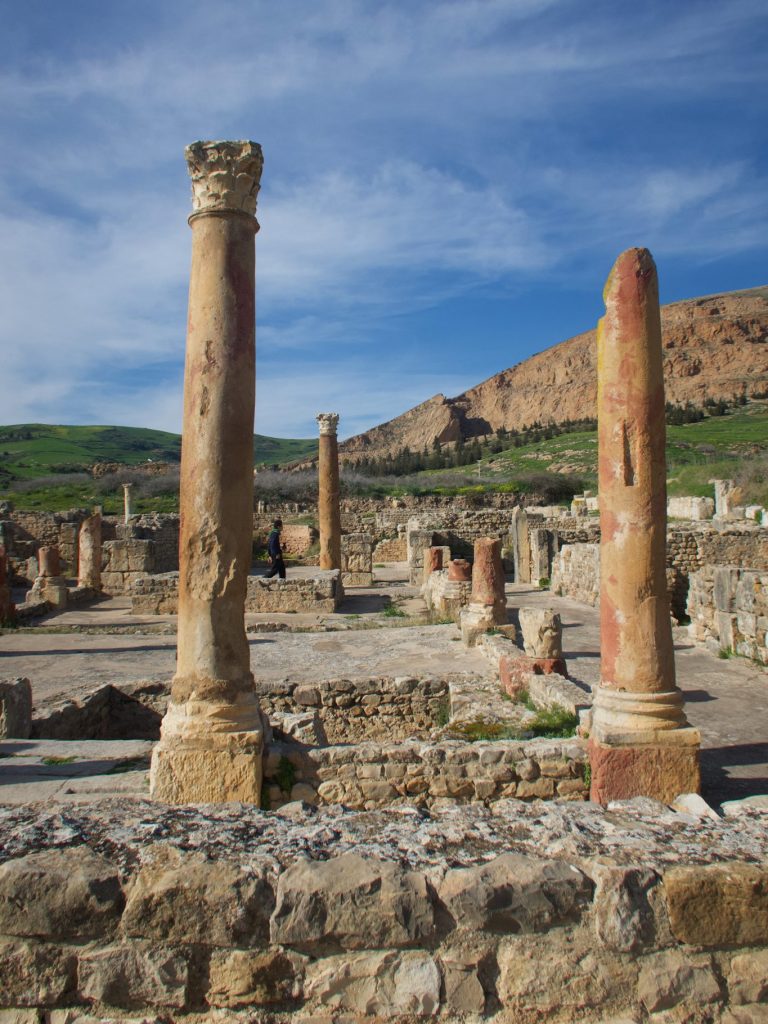
What should I see when I visit Bulla Regia?
Bulla Regia offers a sprawling (and I mean truly sprawling) site with plenty to explore.
The underground homes here stand out for their unique design that suited the wealthy Romans living in a place far from the Mediterranean coast. Summers in this part of Tunisia can get brutally hot, so Roman residents designed their homes with two levels. They used the ground floor during cooler seasons and for entertaining guests, while the family lived underground in day-to-day life. These lower rooms wrapped around an open-air courtyard that brought in sunlight and fresh air.
Keep this in mind when you visit, because you can actually walk downstairs into the ancient homes!
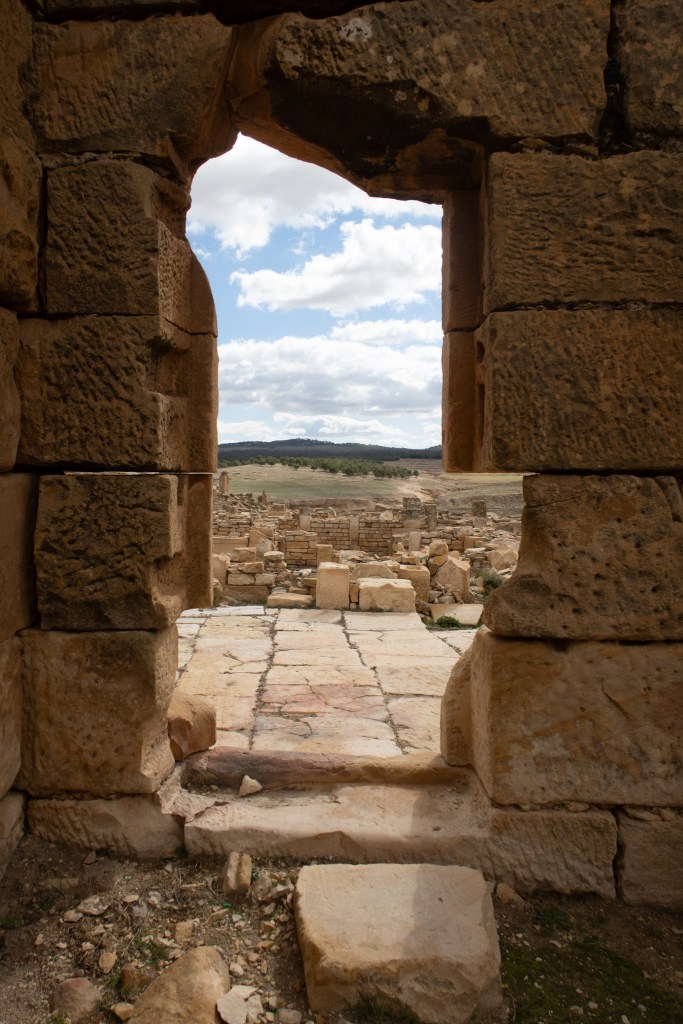
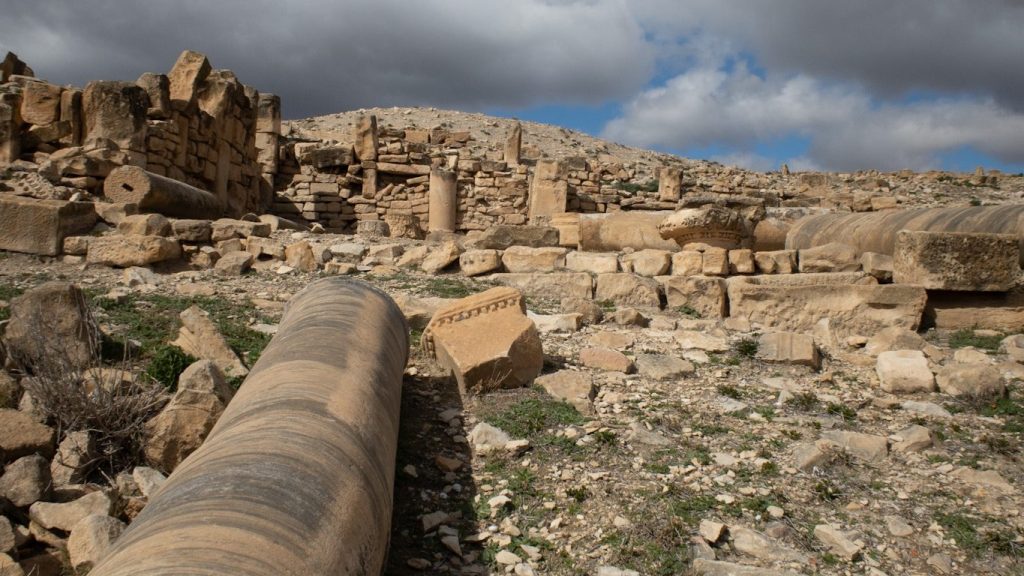
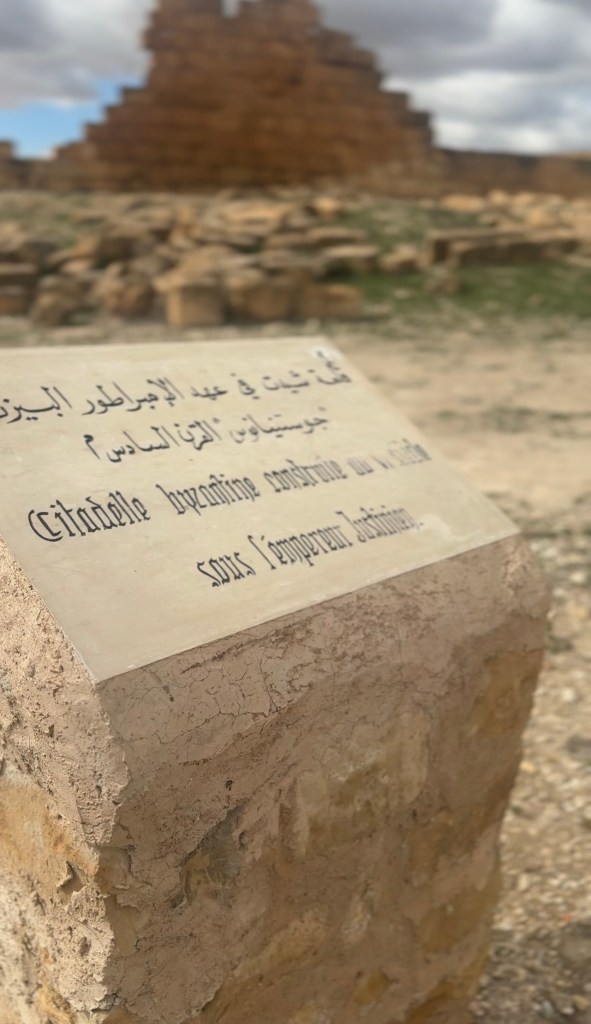
Beyond the houses, you’ll find the remains of Bulla Regia’s public buildings. Similar to many Roman-era cities, Bulla Regia has familiar structures: an amphitheatre, a central forum, and a set of public baths.
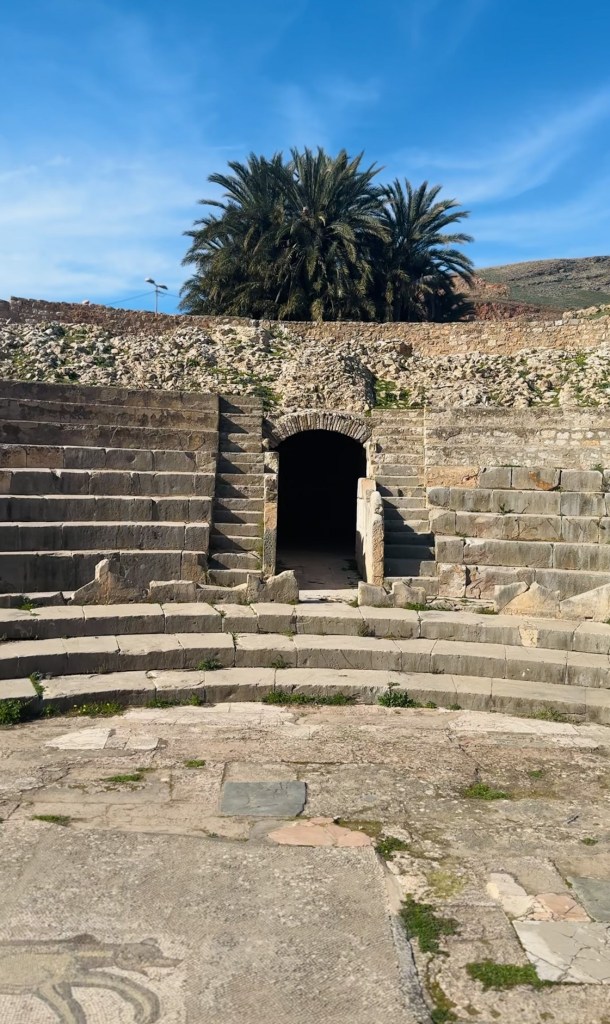
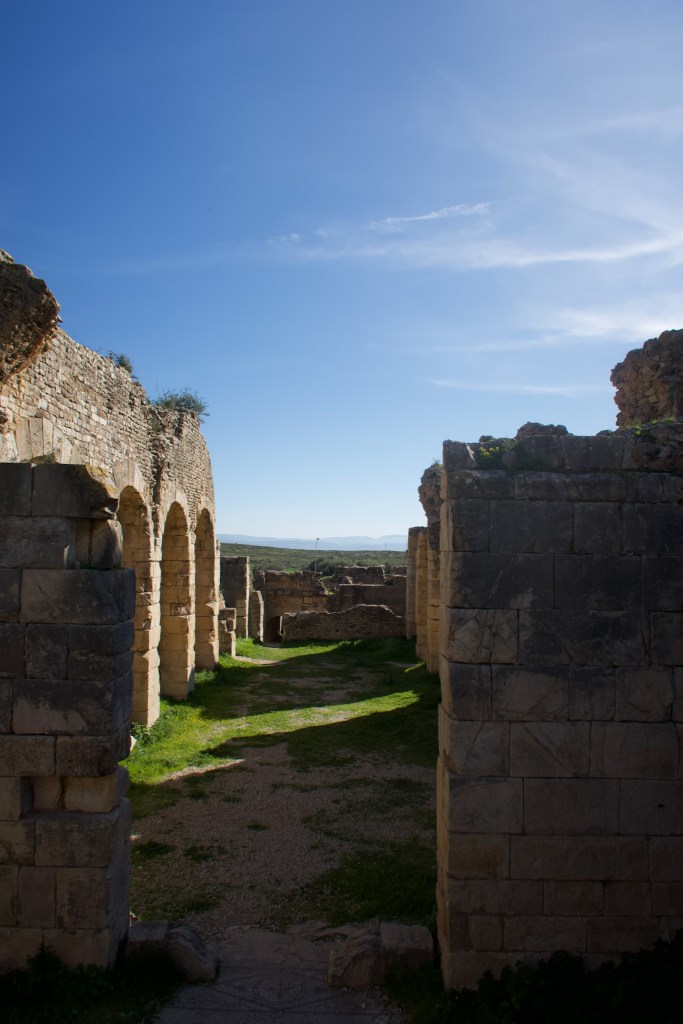
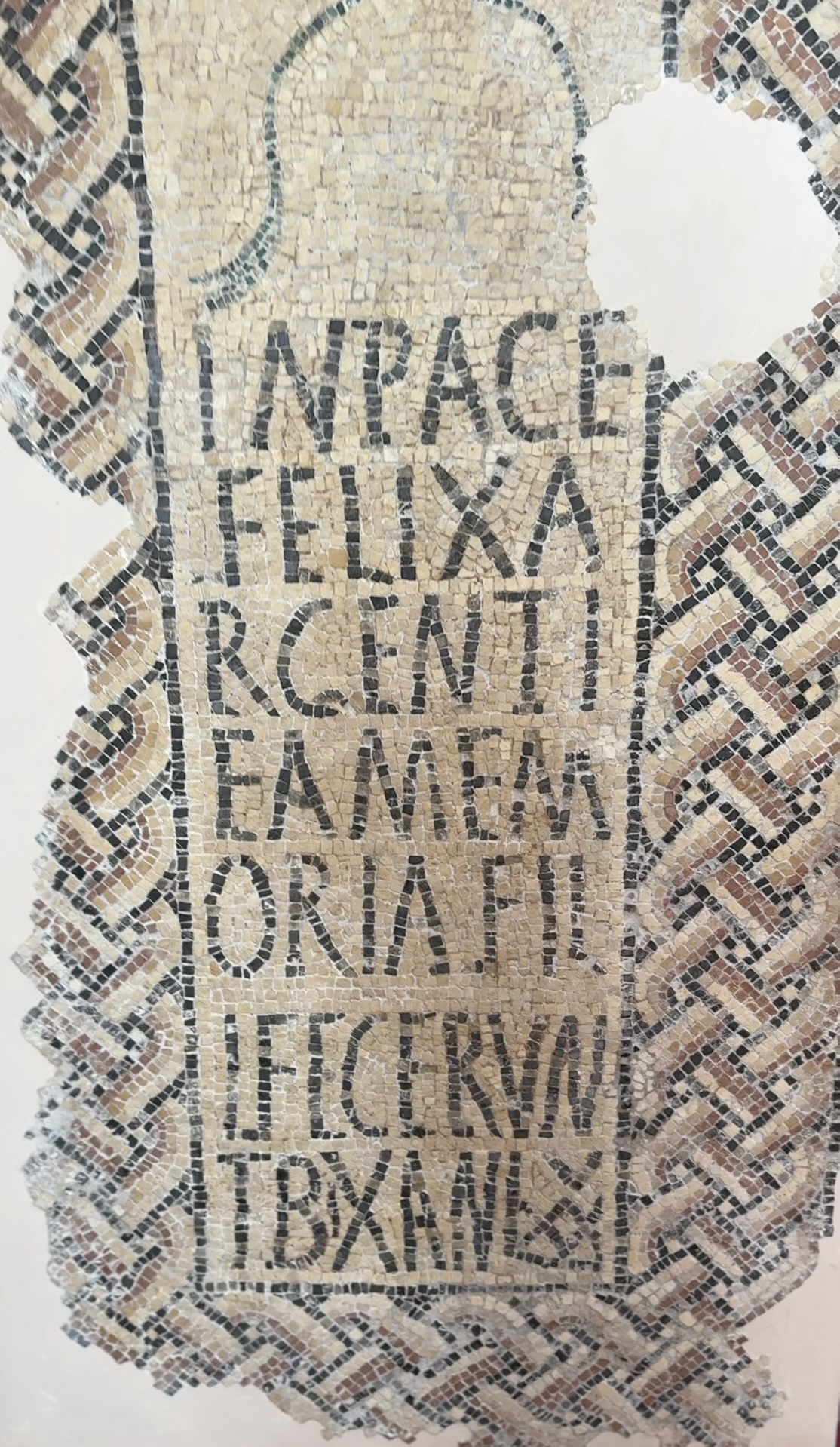
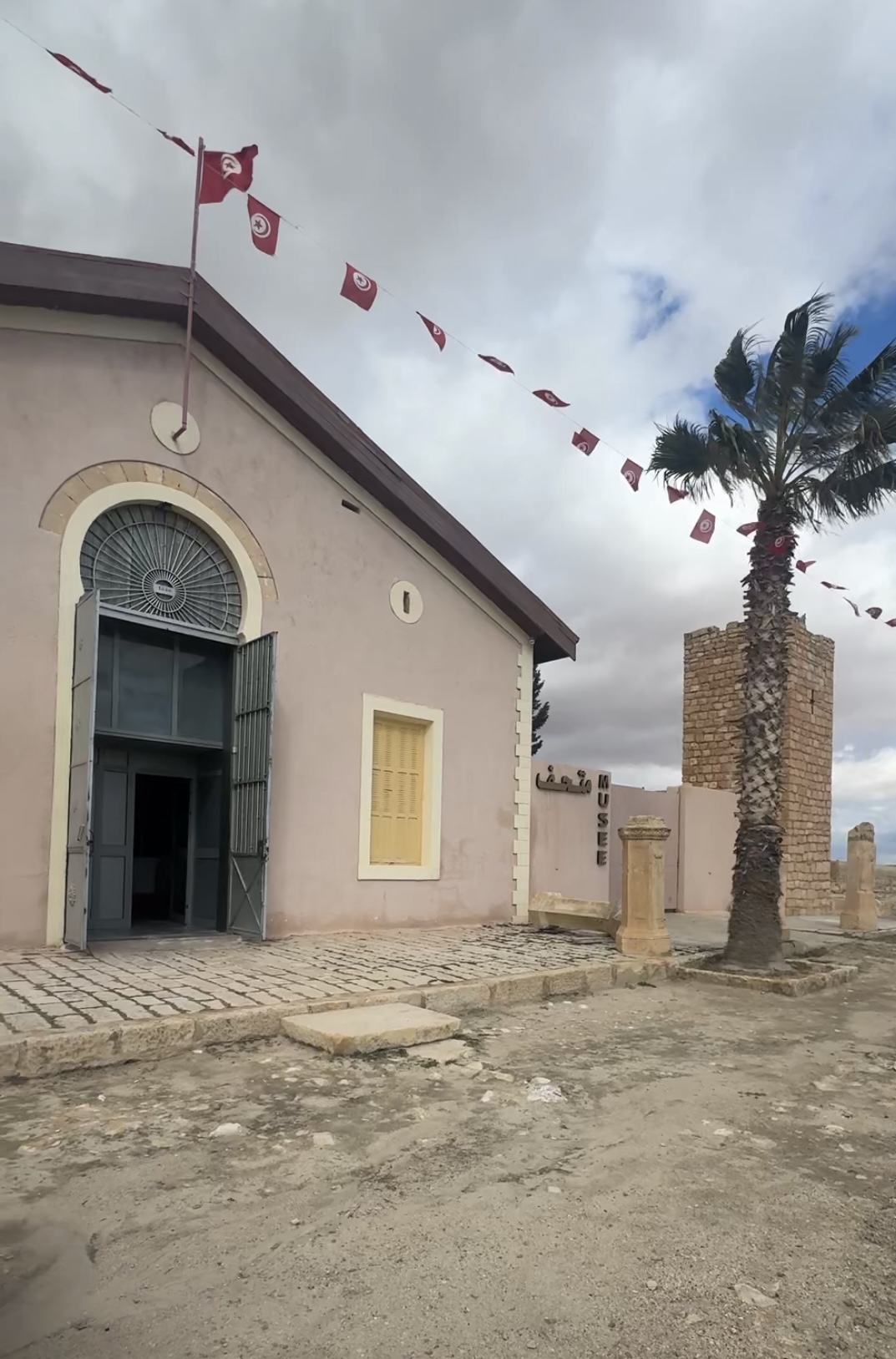
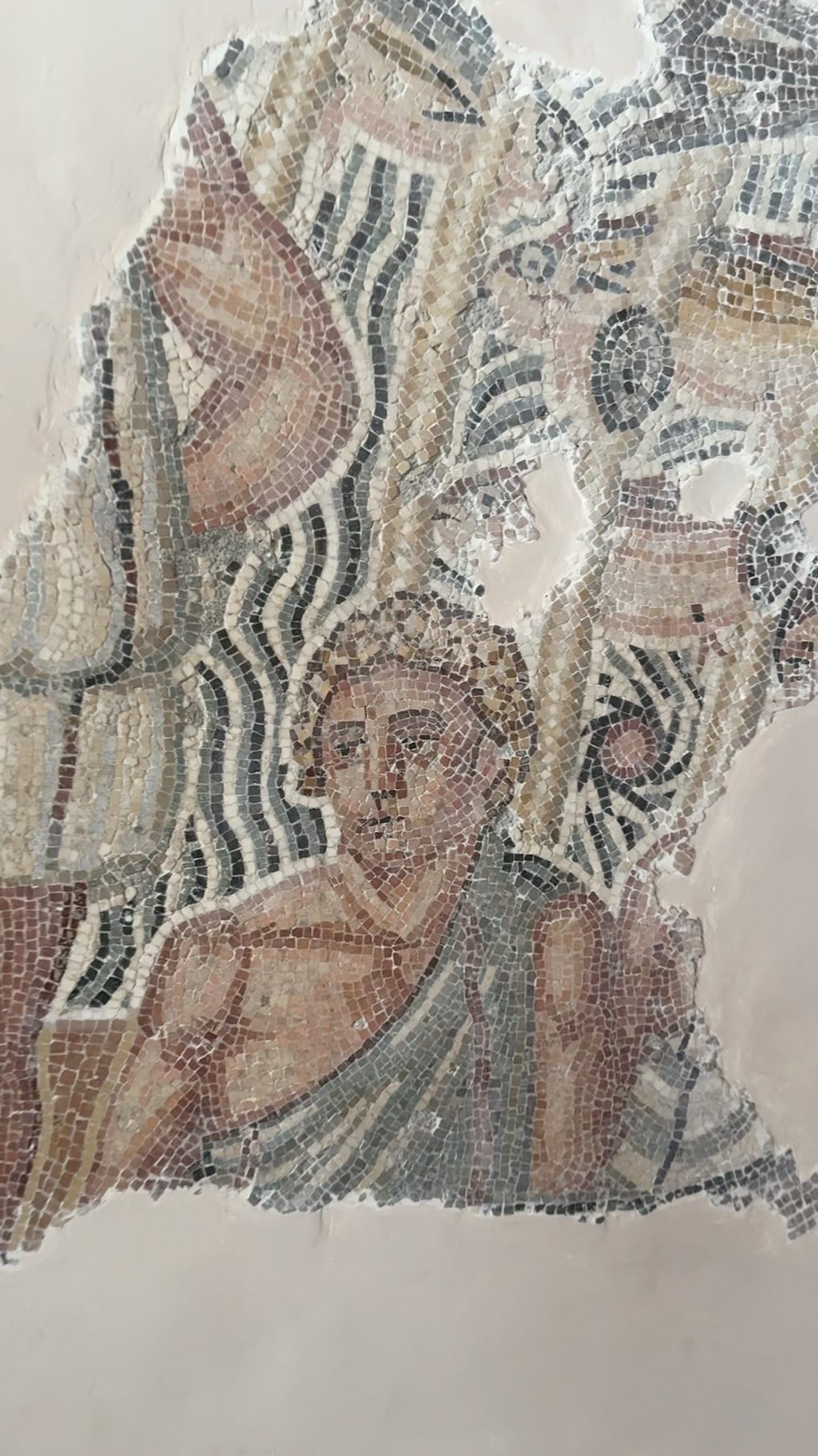
The Bulla Regia Museum displays artifacts from the site, adding additional valuable context. Still, I much preferred exploring the actual ruins. Seeing the ruins and the museum all together will let you imagine daily life in Bulla Regia when the city was at its prime.
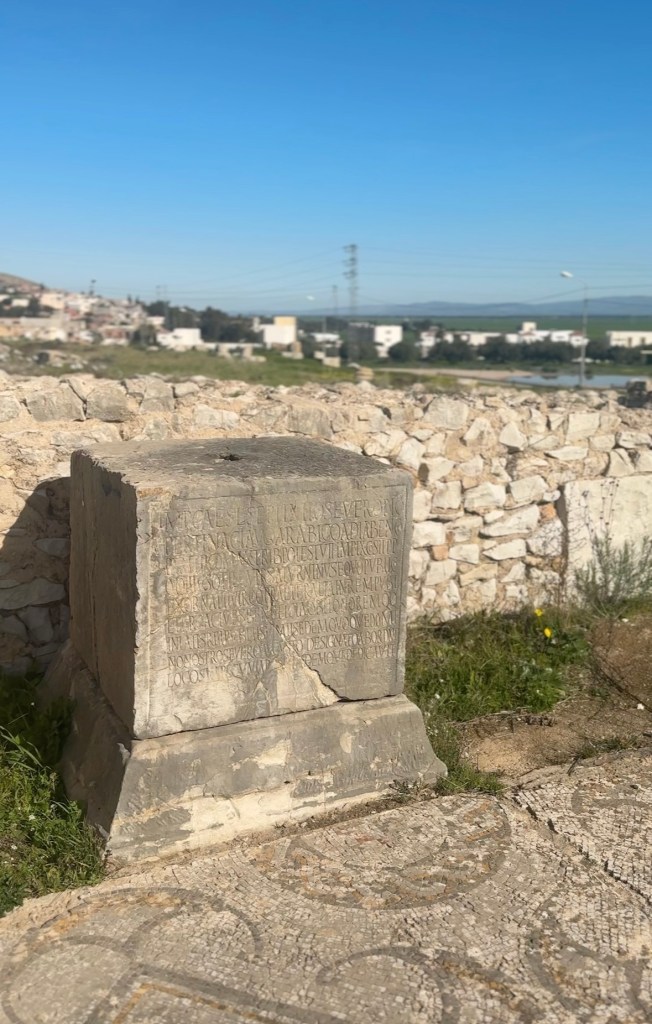
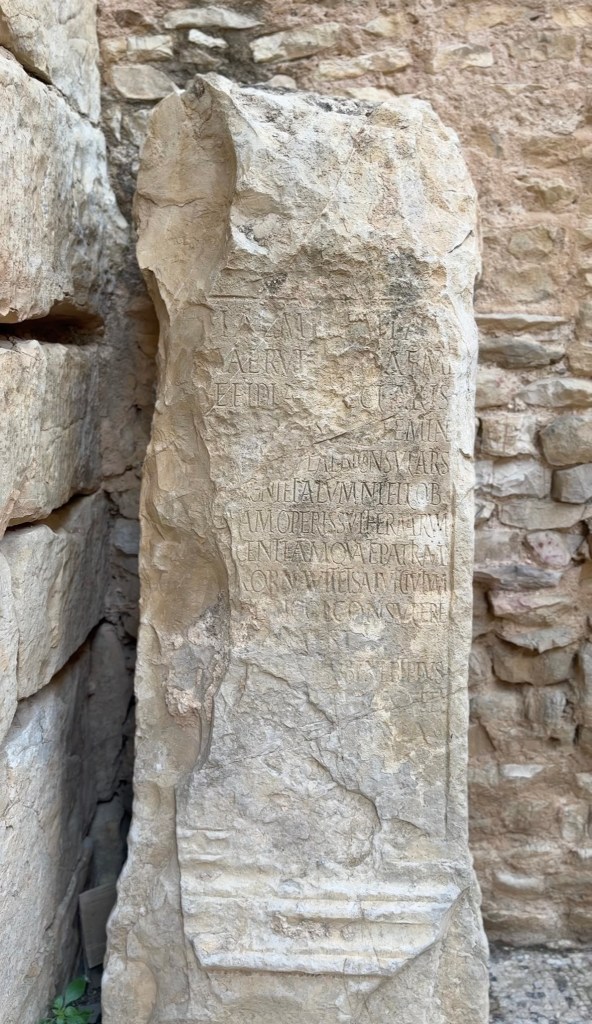
How to Visit Bulla Regia in 2025
Ready to plan your trip to Bulla Regia? Below are some practical travel tips:
- Location: Bulla Regia is in northwest Tunisia, a short drive from the city of Jendouba. You can easily visit it on a day trip from Tunis or combine it with a visit to the nearby ruins of Dougga.
- How to Get There: The easiest way to get to Bulla Regia is with a private car, a taxi from Jendouba, or as part of a tour. Local platforms such as WildyNess work directly with regional experts who can offer historical context, and they also help arrange transport. Booking through WildyNess also helps sustain the local economy.
- Tickets and Hours: As of writing this, the entrance fee is 8 TND (approximately €2.50). Check the exact opening and closing times when you’re visiting, as they can sometimes change.
Interested in visiting Bulla Regia?
Reach out to me! I am happy to help create your dream Tunisia trip itinerary for you. Just comment below or send a note via “Contact Me.”