Tag: travel

  • Tamerza (Tamaghza): A guide to Tunisia’s very own Grand Canyon oasis

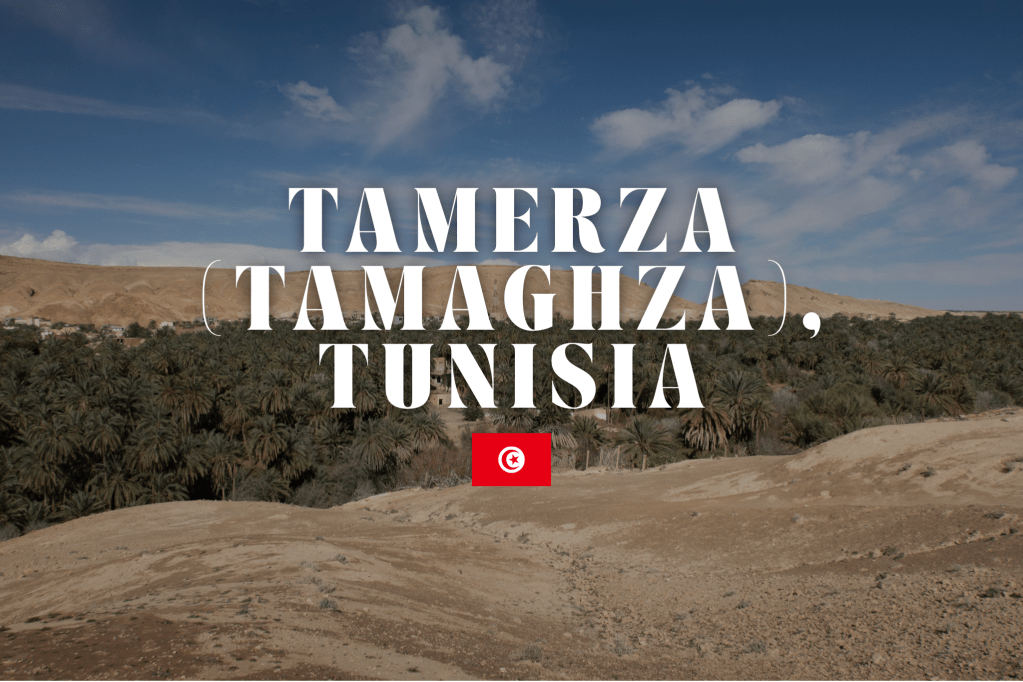
    Tamerza (Tamaghza): A guide to Tunisia’s very own Grand Canyon oasis


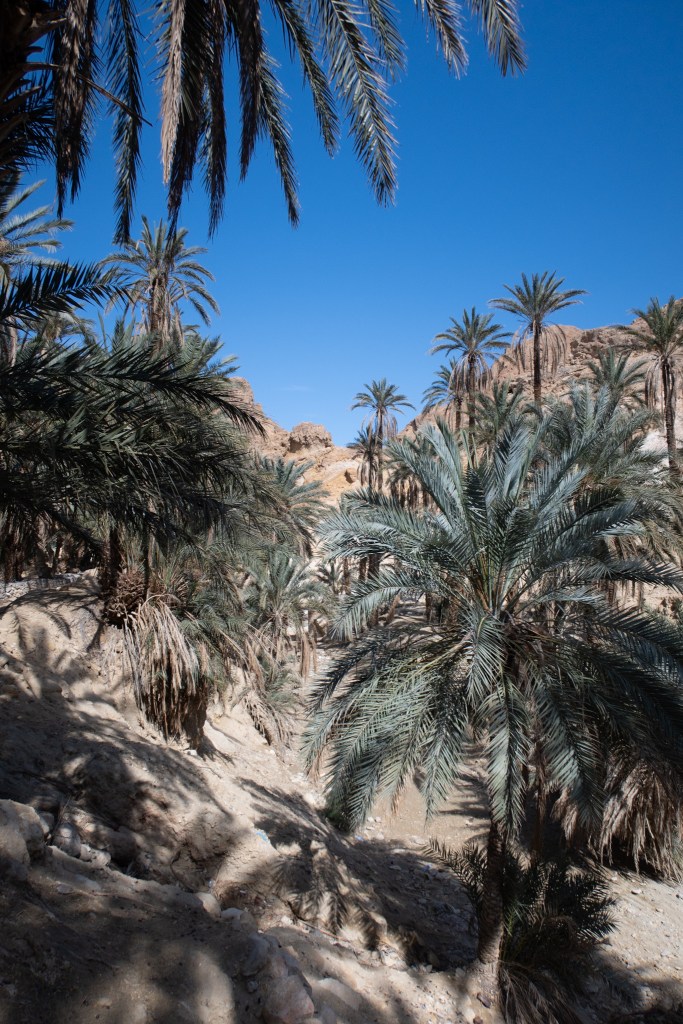
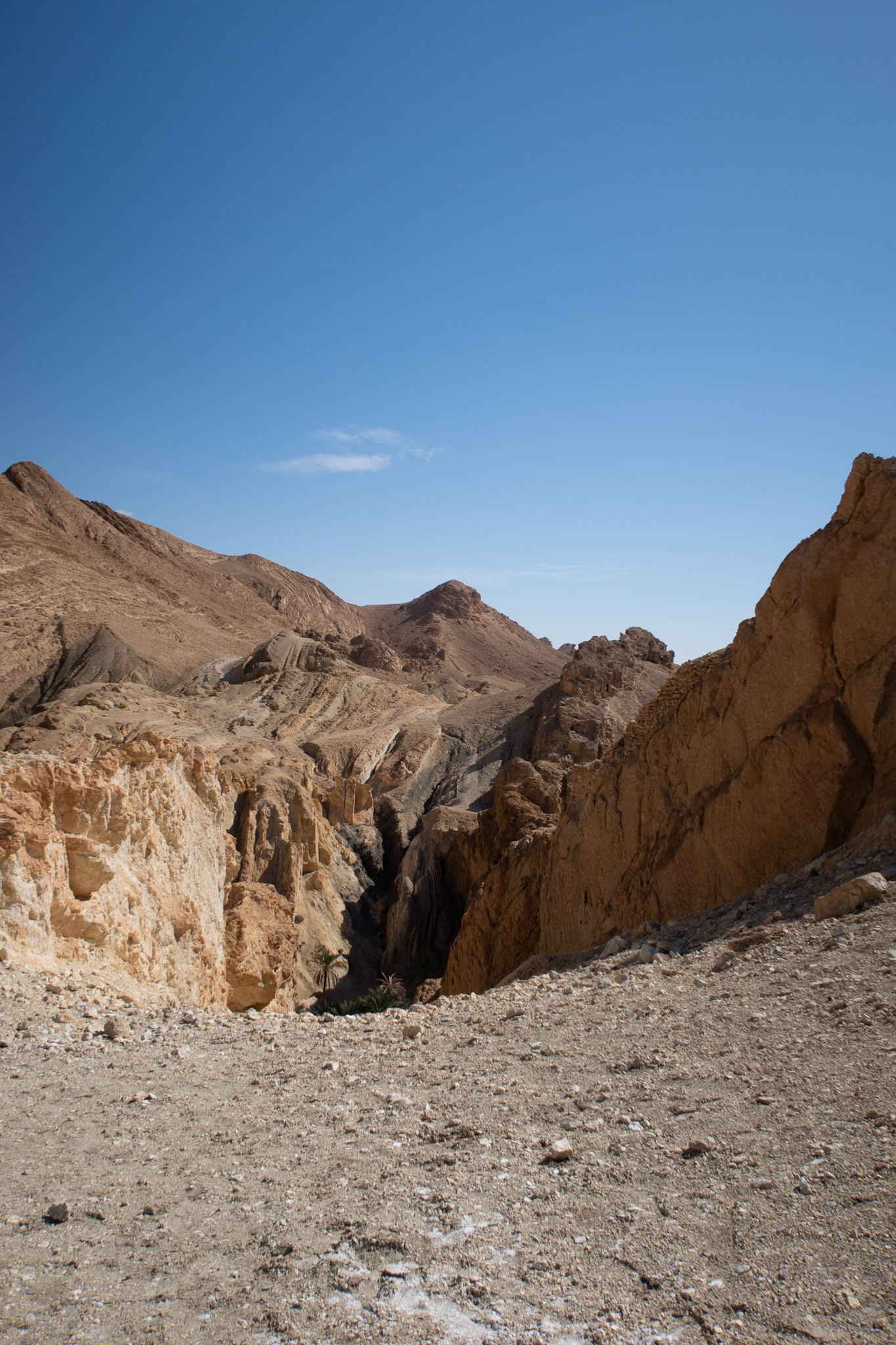
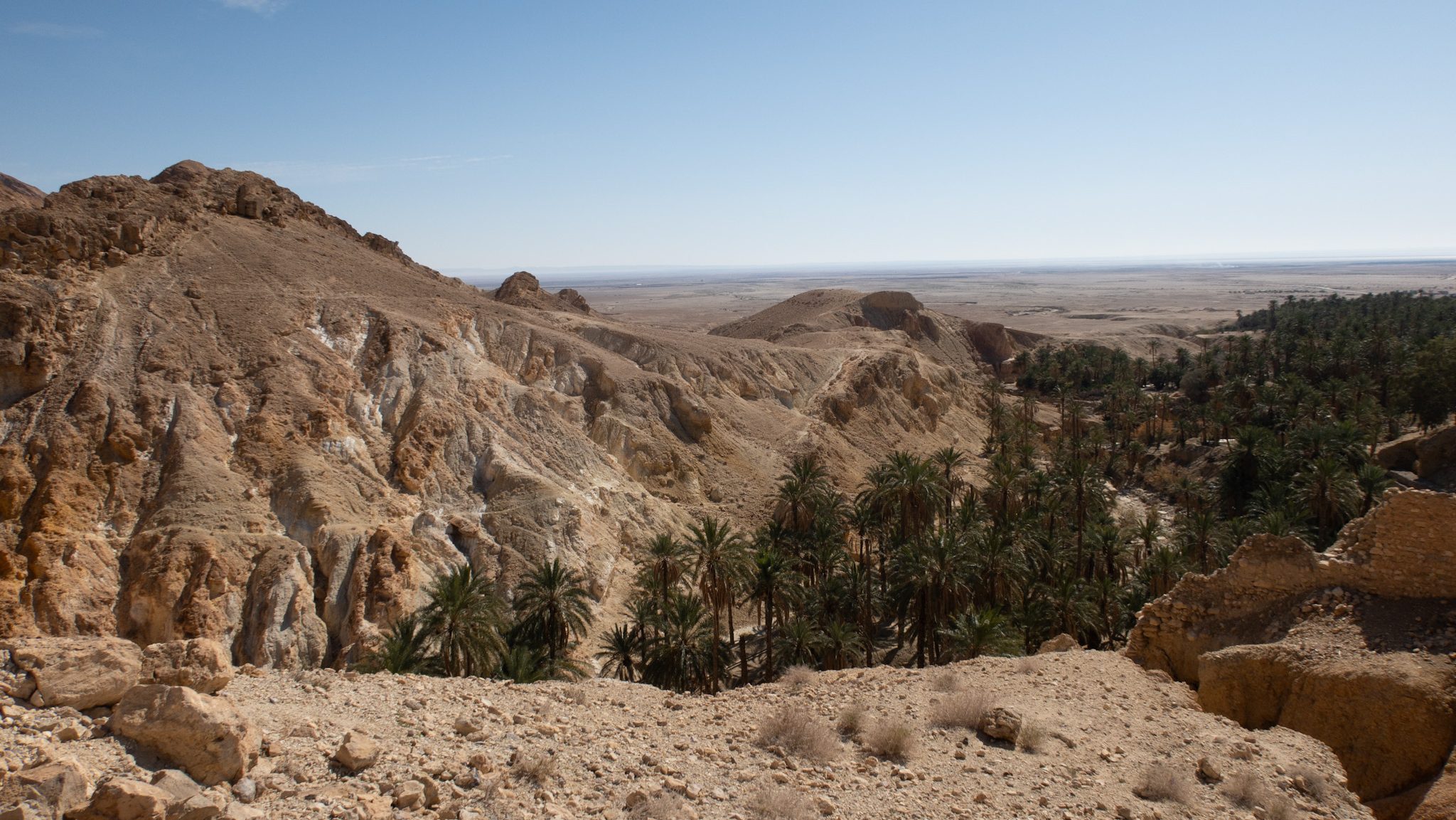
    As Tunisia’s largest mountain oasis, Tamerza (also known as Tamaghza) features a dramatic landscape of canyons and waterfalls. It sits near the smaller oasis of Chebika and once served as the Roman outpost of Ad Turres.

    Travelers exploring Tunisia’s western desert enjoy Tamerza for its epic hikes and views and usually pair it with the Chebika Oasis and Mides Canyon (also known as the “Three Desert Oases Tour”).

    For Americans reading this, it truly resembles a Grand Canyon experience (with a unique Tunisian oasis twist, of course!)
    What’s up with the two names?

    You’ll see the location be referred to as both “Tamerza” and “Tamaghza.” Both names point to the same place, but “Tamaghza” ties more closely to its indigenous roots.

    Maps and general tourism mostly use the name Tamerza today, while Tamaghza reflects the original Amazigh (Berber) pronunciation and honors the village’s Amazigh heritage. Thus, from now on, I’ll use the name Tamaghza, as I believe it’s more fitting.

    What makes Tamaghza special?

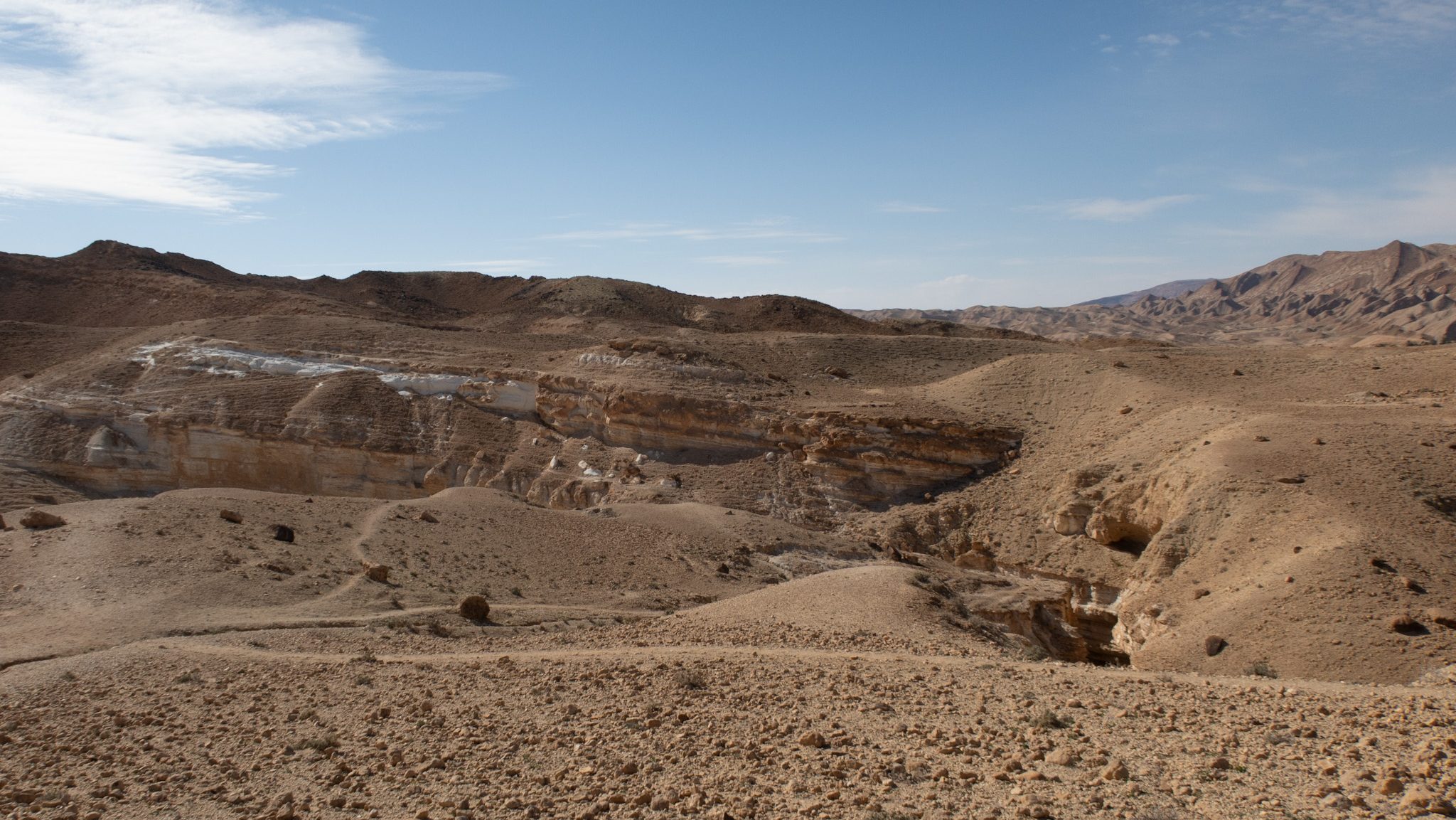
    Tamaghza stands out because of its grand, sprawling canyon landscape, which is what earns its fitting nickname as Tunisia’s “Grand Canyon.”

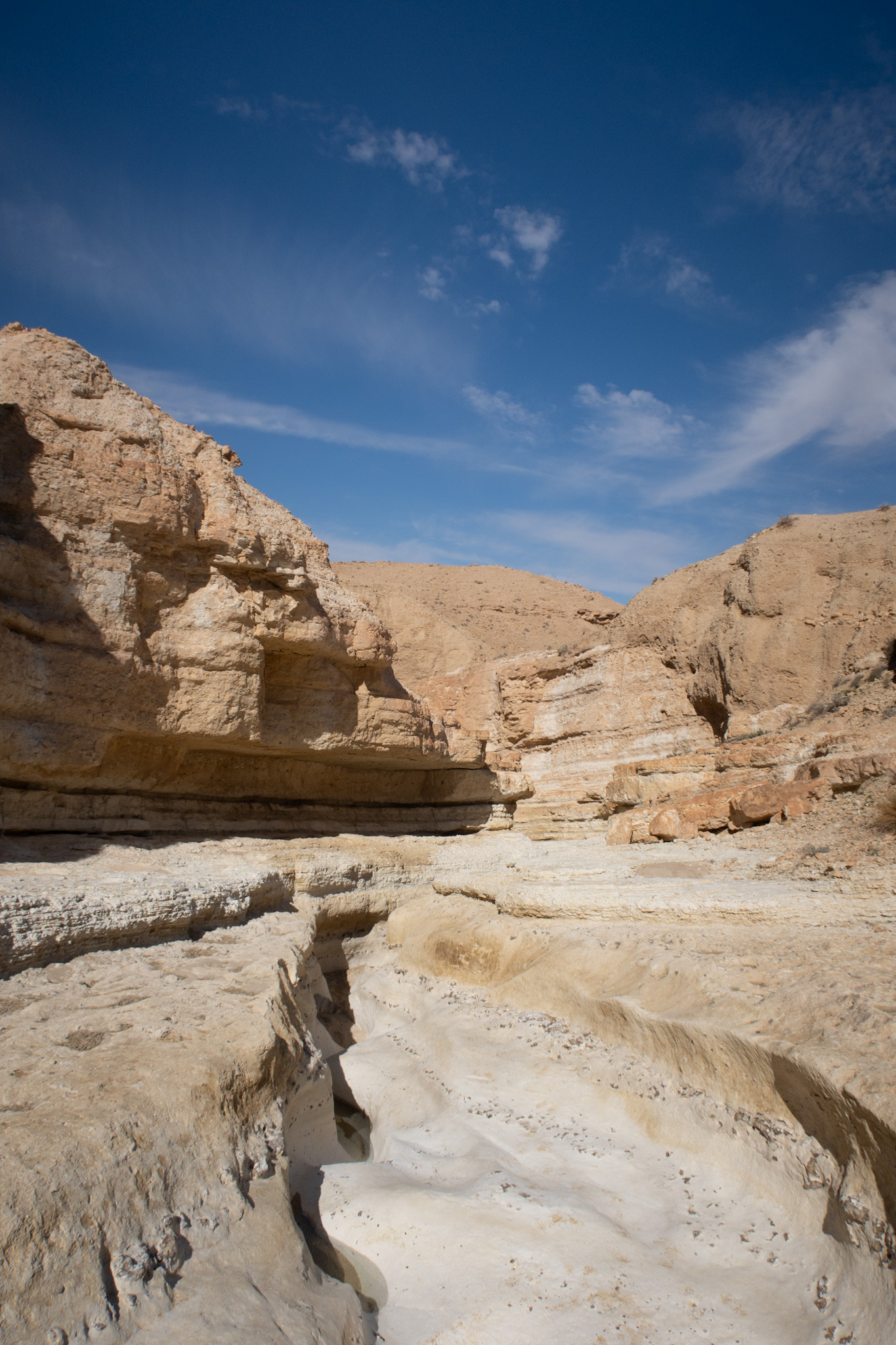
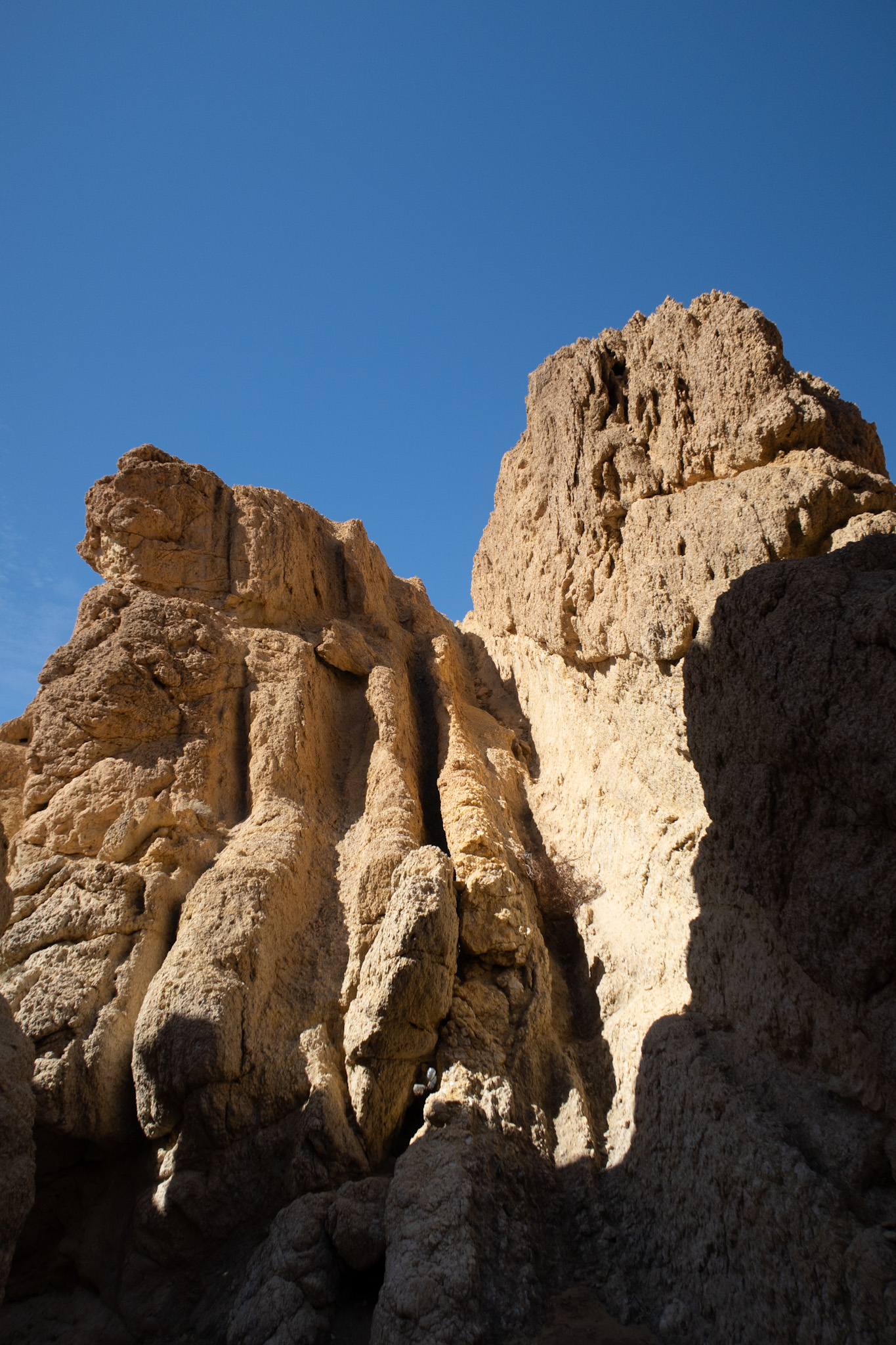
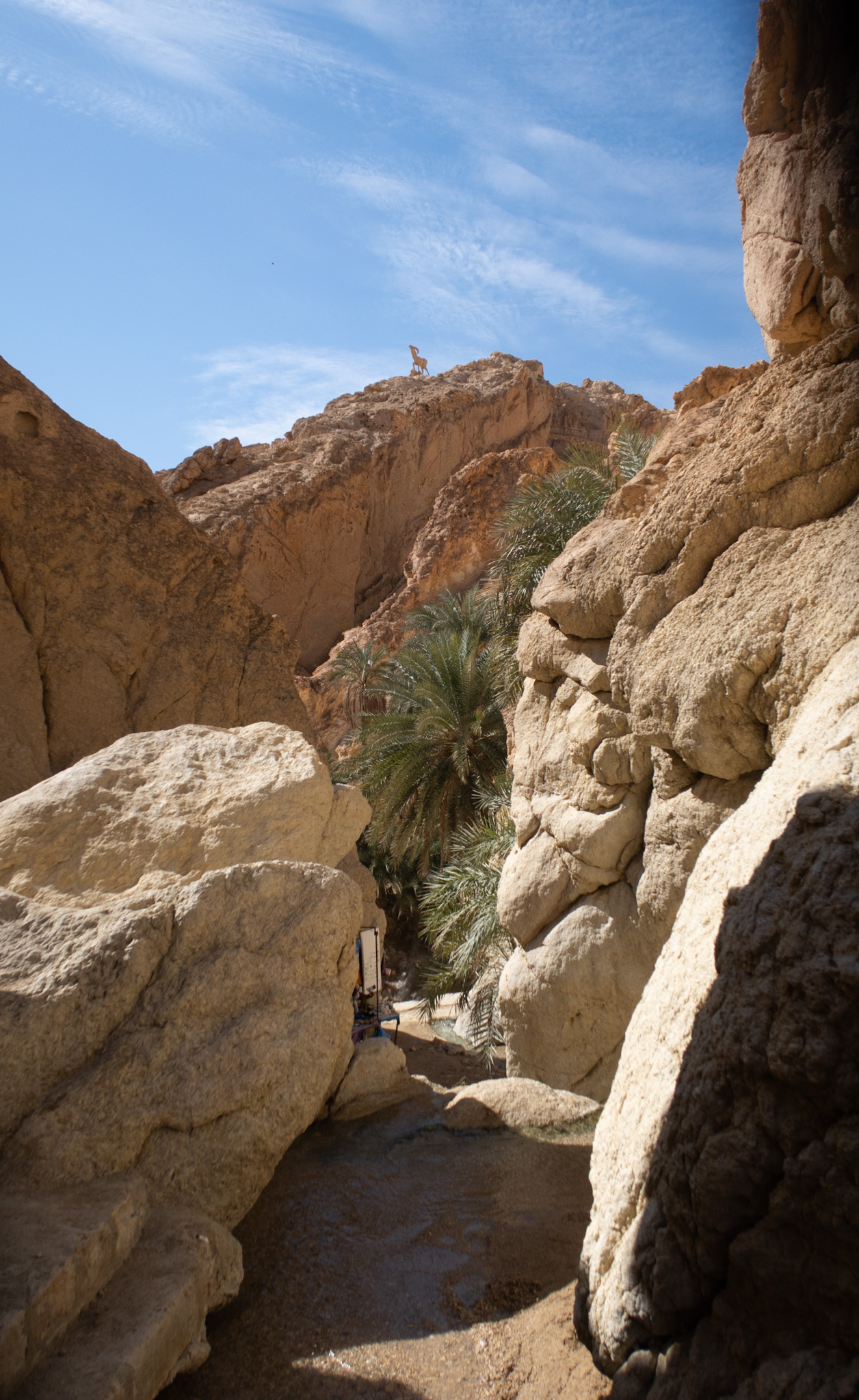
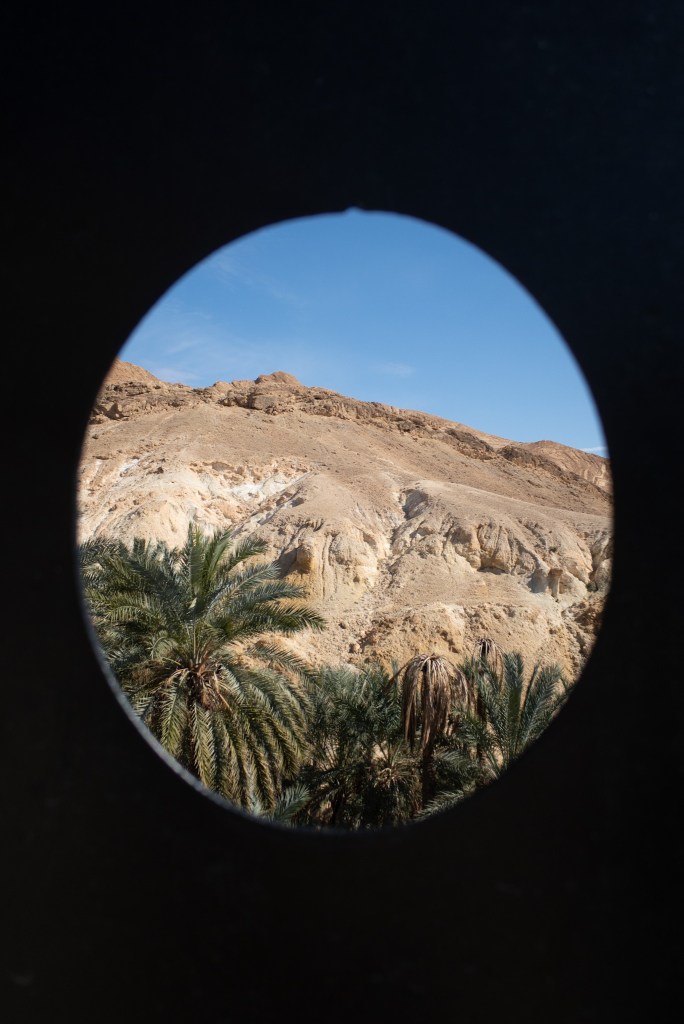
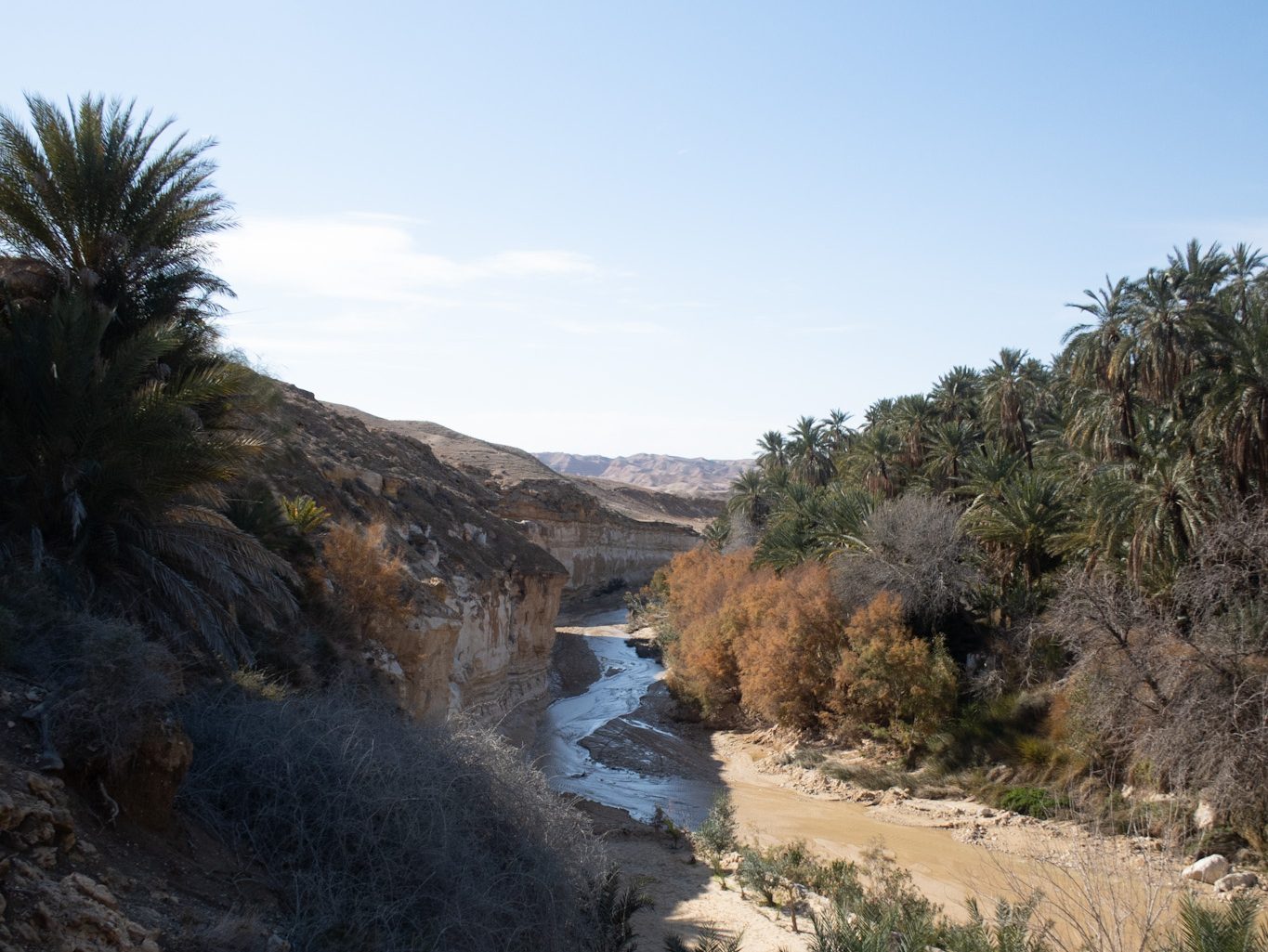
    The red and white layers of rock contrast with palm trees growing beside the barren terrain, giving the place a distinctly Tunisian character.
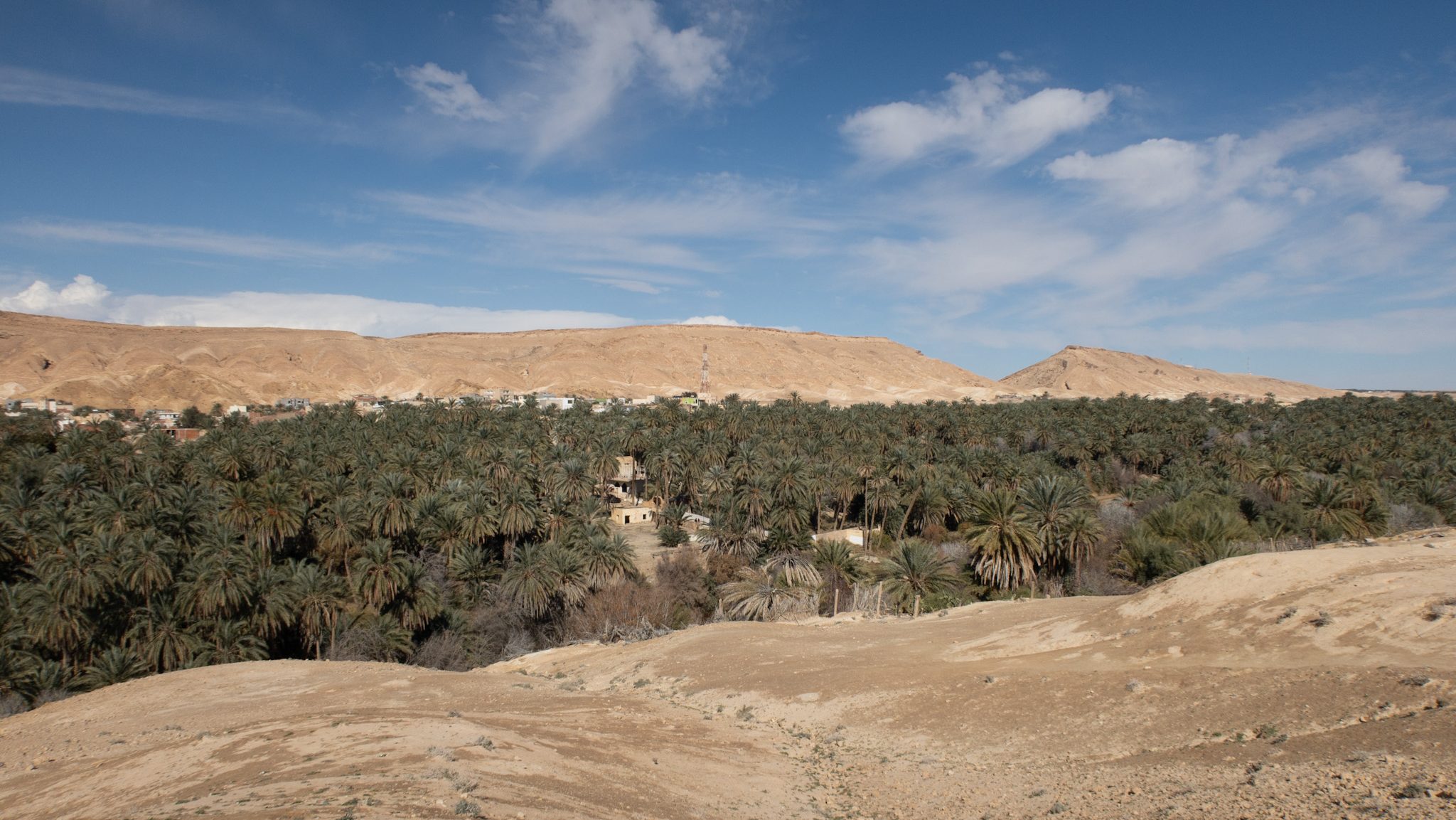
    The main canyon is the heart of Tamaghza. You can walk along the edge of the canyon to take in its undeniably spectacular panoramic views, or you can hike down into the canyon to follow the riverbed. For those looking for something active, take on multiple hiking trails. The location offers easy walks to more challenging routes!
    Know before you go to Tamaghza (Tamerza)
    • Location: Tamaghza is located in Tunisia’s Tozeur Governorate, near the Algerian border. It’s typically visited alongside the neighboring mountain oases of Chebika and Midès as part of the popular “Three Oases Tour.”

    Safety Note for American and Canadian Tourists: You may come across government travel advisories about areas near the Algerian border. Use your best judgment, but know that this region is considered safe and sees a regular flow of tourists. For added reassurance (and to support the local economy), consider booking a local guide through a trusted platform such as WildyNess. They can also assist with accommodations and transportation.

    • How to Get There: Tamaghza is accessible by regular sedan, though a 4×4 offers a more scenic and adventurous route. Public transportation, such as louages (shared taxis), are not a practical option for this area.
    • What to Bring: Sturdy shoes are a must for navigating rocky, uneven terrain. Bring plenty of water, sunscreen, and a hat. The best time to visit is during the cooler months (fall, winter or spring). Basically, try to avoid the summer heat.

    Interested in visiting Tamerza (Tamaghza)?

    Reach out to me! I am happy to help create your dream Tunisia trip itinerary for you. Just comment below or send a note via “Contact Me.”
    , , ,
  • Midès Canyon: A guide to Tunisia’s breathtaking canyon oasis

    Midès Canyon: A guide to Tunisia’s breathtaking canyon oasis


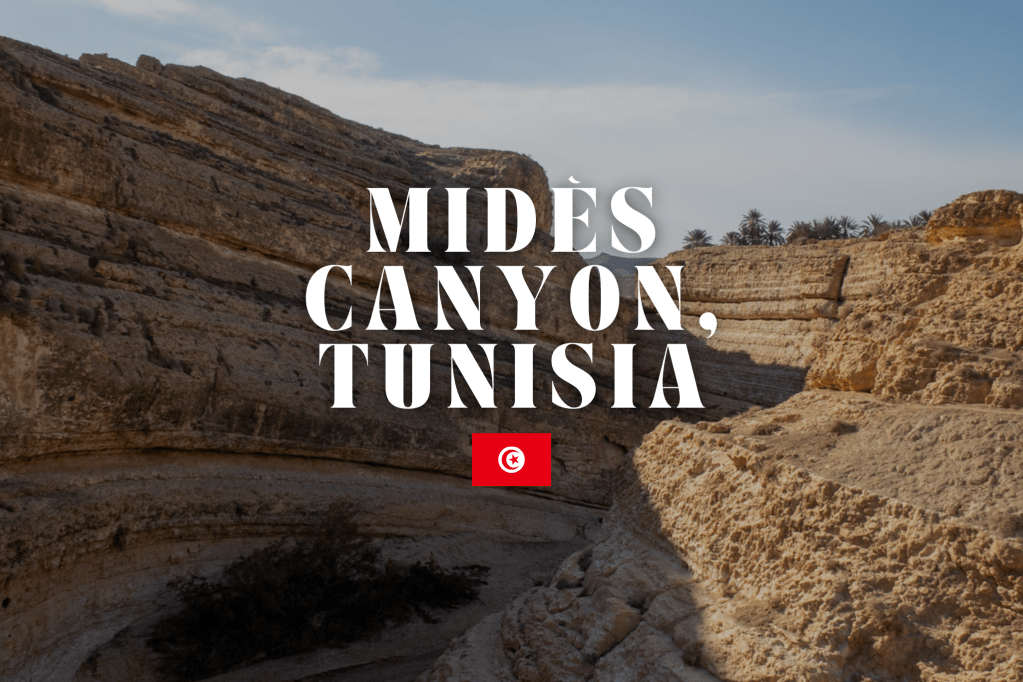
    Midès Canyon is one of Tunisia’s most dramatic natural sites. It’s a rugged, rocky canyon set against the backdrop of a centuries-old village within southern Tunisia, not far from the Algerian border.

    As the most remote of the three mountain oases in southern Tunisia, it’s often the final stop after Chebika and Tamerza (Tamaghza) on the popular Three Oases circuit that usually departs from Tozeur.

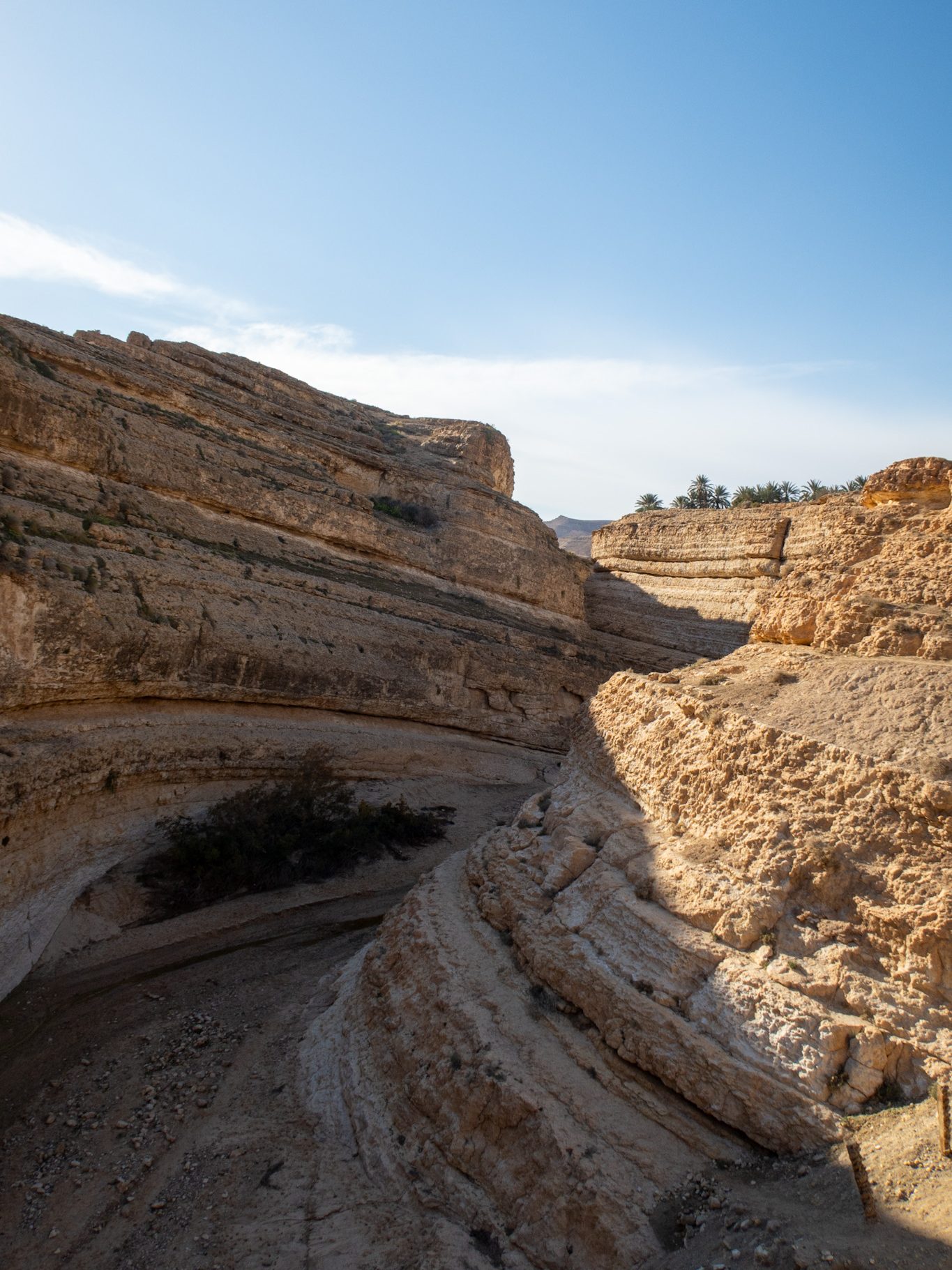
    The canyon’s layered cliffs and panoramic views have drawn the attention of not just travelers, but Hollywood, too! It’s so majestic that filmmakers have chosen this spot as a location for movies such as Raiders of the Lost Ark and The English Patient!

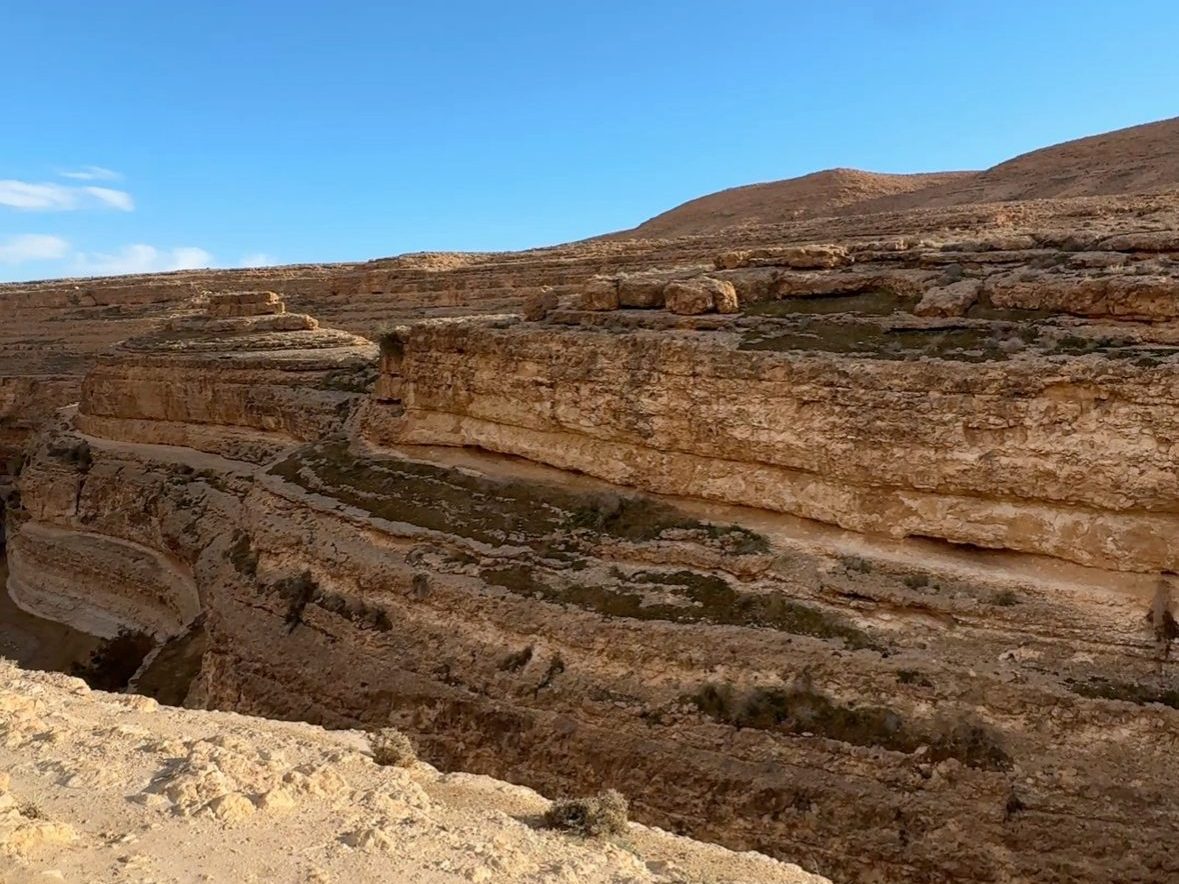
    Mines Canyon, a rocky canyon in Tunisia with layered cliffs under a clear blue sky.
    Why is it called Midès?

    The name Midès likely has Amazigh (Berber) roots, though the exact etymology isn’t well documented. The pronunciation in local Arabic and Amazigh dialects leans toward pronouncing it “Mee-dess.” Some theories suggest the name could stem from an ancient reference used by Amazigh communities who once lived in and around the area.

    You might also see it spelled “Midas,” which could lead to confusion with the Greek myth of King Midas, the one who turned everything he touched into gold. I was admittedly one of those people who thought there was a connection. But the name has no relation, though the canyon cliffs look majestic enough that the association somewhat fits.

    Panoramic view of layered rocky cliffs under a clear blue sky at Mides Canyon, Tunisia.
    What makes Midès special?

    The defining feature of Midès is its spectacular canyon with its layered cliffs that wind for over 3 kilometers. The rock colors shift from light beige to deep orange throughout the day.

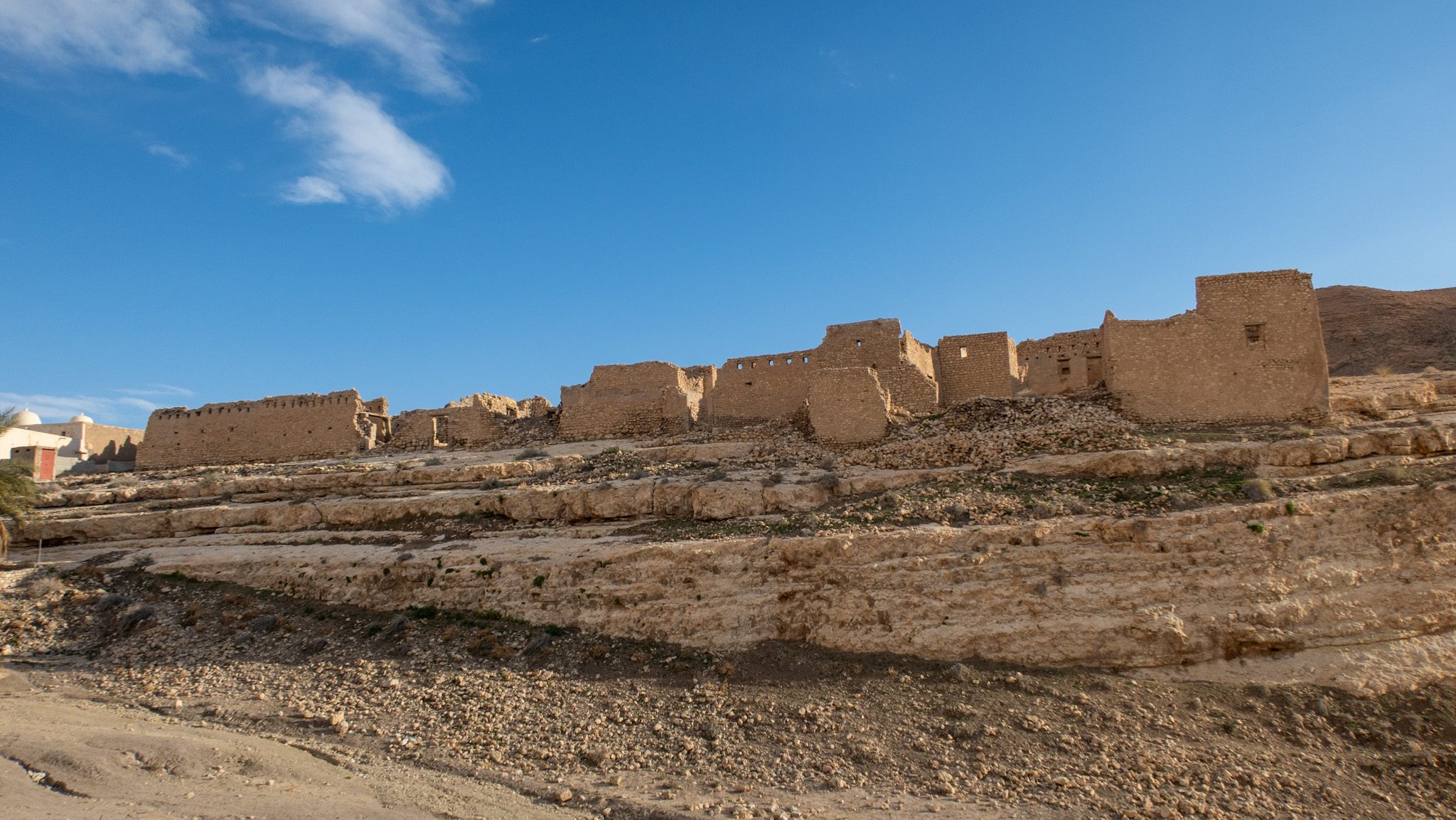
    The residents abandoned the old village of Midès after floods in 1969, and you can still see the remains of the village on the cliffs of the canyon.

    Ruins of ancient buildings within an ancient village in Mides Canyon, Tunisia on a hillside under a blue sky.

    The mix of the ruins and multiple colors of the canyon, as well as the green palm trees in the distance, makes Midès extremely photogenic.

    Know before you go to Midès

    Midès is the most remote of the three main mountain oases (Chebika and Tamaghza), so planning is essential.

    • Location: Midès is in the Tozeur Governorate. It is the final stop for most 4×4 tours of the mountain oases.
    • How to Get There: You can drive with either a regular sedan or with a 4×4. The latter will give you a sturdier experience, but both are fine.
    • Go With a Guide: Booking through a local platform such as WildyNess connects you with regional guides who can take you to all three oases (and more!) These guides offer valuable insights and also help ensure your visit directly supports the local economy. You can also book your transportation and accommodation through them.
    • Safety Note: The United States and Canadian governments advise caution near the Algerian border. While it’s important to stay informed and make the choice that feels right for you, this region is well-traveled by both domestic and international visitors. Traveling with a guide adds an extra layer of reassurance, but you will be safe in this area.

    Interested in visiting Midès?

    Reach out to me! I am happy to help create your dream Tunisia trip itinerary for you. Just comment below or send a note via “Contact Me.”

    , , ,
  • Chebika Oasis: A guide to visiting this mountain oasis in the Tunisian desert

    Chebika Oasis: A guide to visiting this mountain oasis in the Tunisian desert


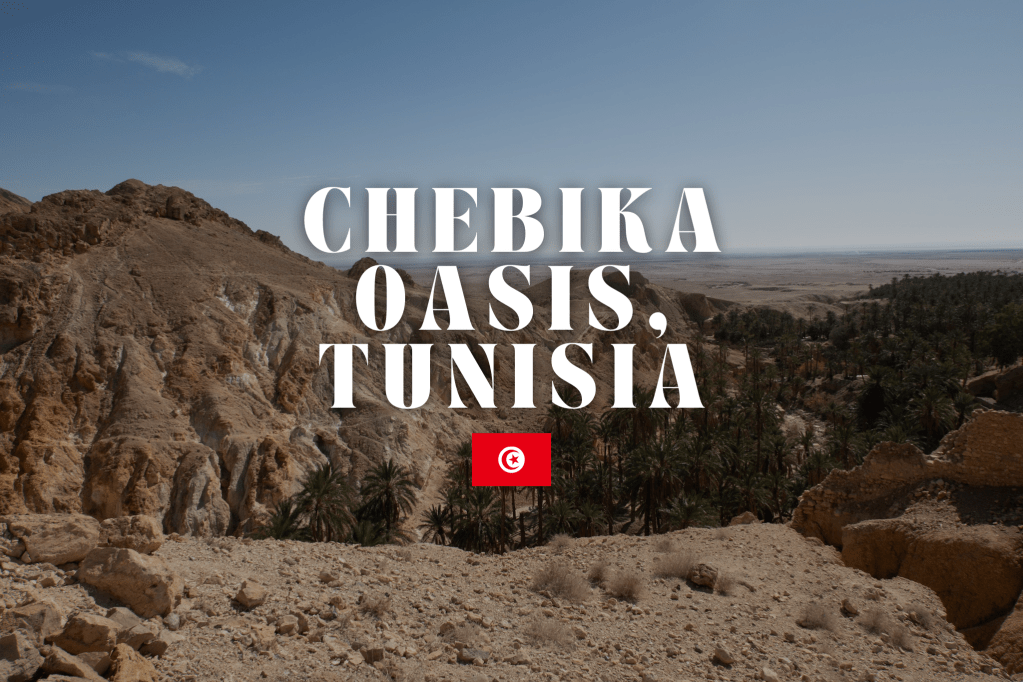
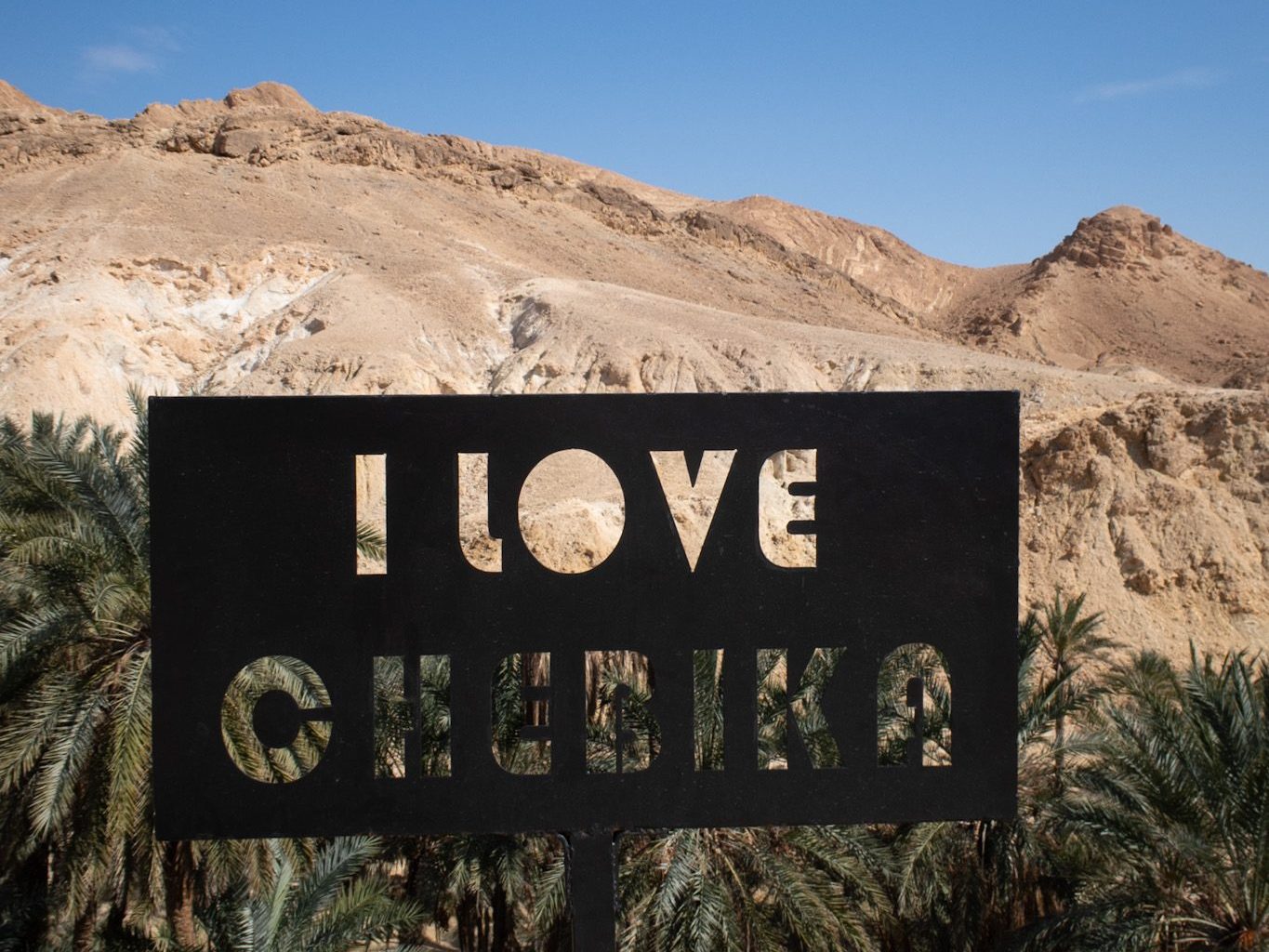
    Chebika is one of the most wonderful hidden gem natural hikes in Tunisia.

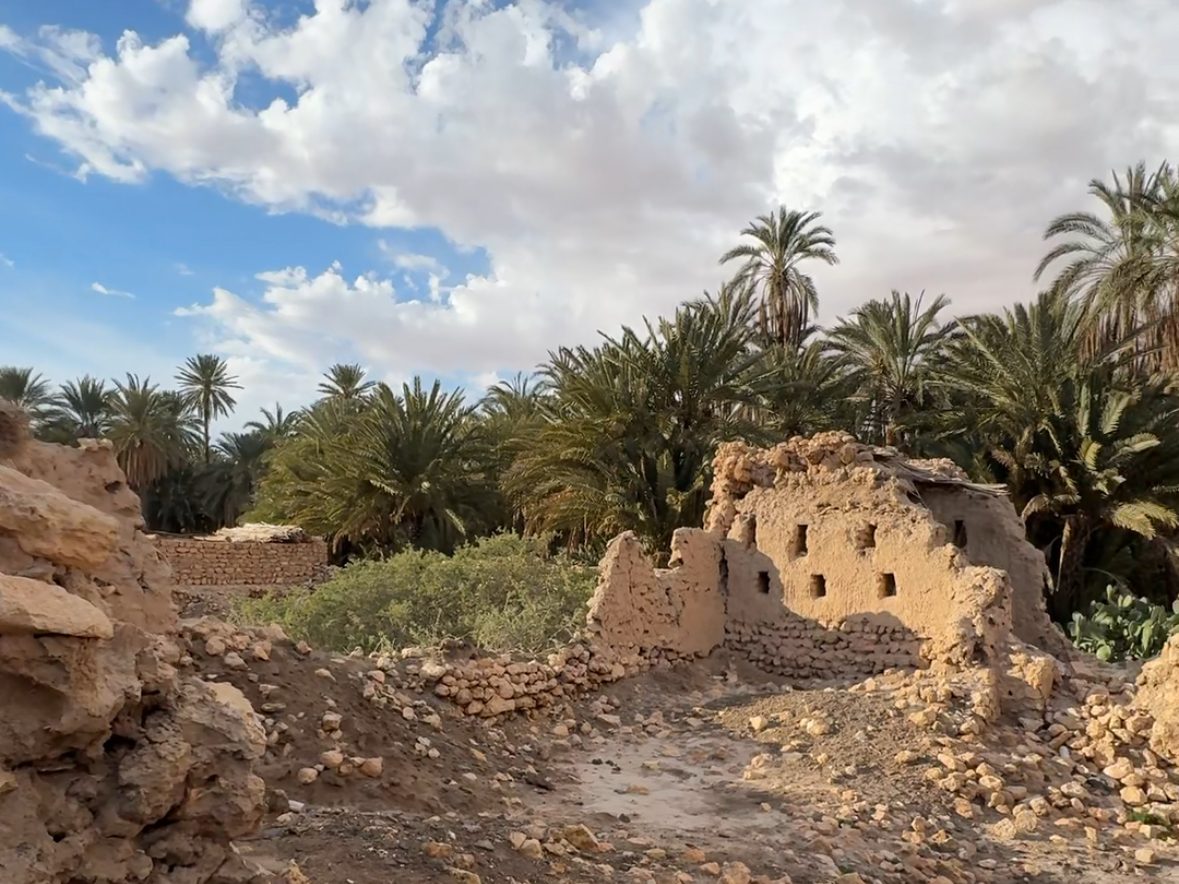
    This oasis sits tucked at the base of the Djebel el Negueb mountains and is the site of one of Tunisia’s most beautiful desert oases. Once an ancient Roman outpost and later an Amazigh (Berber) village, Chebika is famous today for the contrast between its barren mountains and the lush green palm grove fed by a natural spring.

    Travelers exploring Tunisia’s desert landscapes often come to Chebika to hike, visit the waterfall, and walk among the ruins of a mountain village. If you’re planning a Tunisia itinerary that includes the Tozeur region or southern Tunisia’s Sahara landscapes, Chebika is a site worth including. Without further ado, let’s learn why!

    Why is it called Chebika?

    The Chebika oasis gets its name from the Tunisian Arabic word meaning “small net.” The name refers to the distinctive way the water flowing in the waterfalls of the oasis creates patterns as it flows down the rocky terrain.

    Chebika also known by the Arabic name “Qasr el-Shams” (Palace of the Sun) due to its sun-drenched location.

    Fun fact: In Tunisian Arabic, the phrase “chbīk?” (شبيك؟) is a casual way of asking “What’s wrong with you?” and sounds a lot like “Chebika”!

    What makes Chebika special?

    Along with Tamazgha (Tamerza) and Midès, Chebika forms part of the famous trio of mountain oases that serve as essential stops on Sahara desert tours departing from Tozeur.

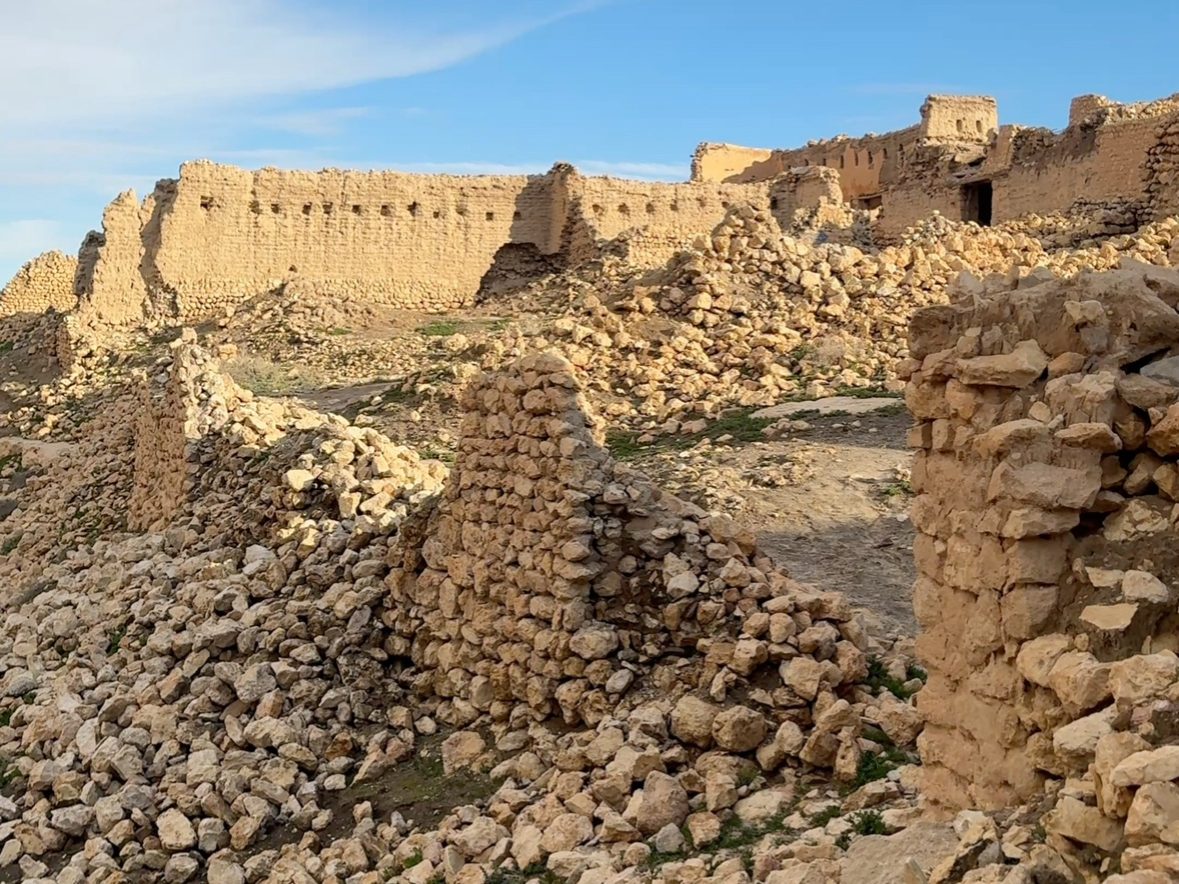
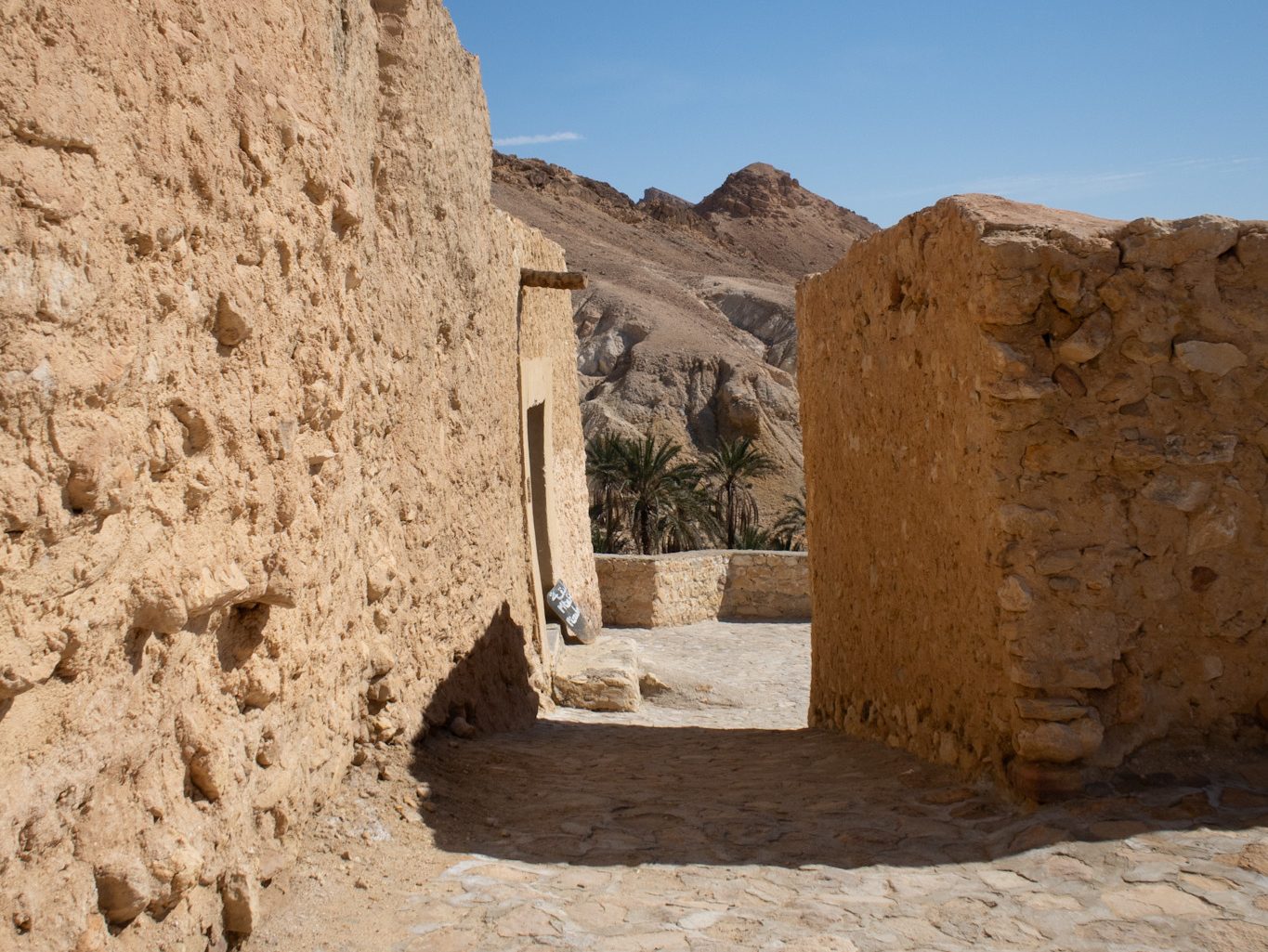
    Chebika holds historical significance. In antiquity, it was a Roman outpost known as Ad Speculum, and was then later a mountain refuge of the Amazigh (Berber) people. Today, you can still see remnants of the ancient settlement located on the hiking path.

    The Chebika oasis also owes its prosperity to a sophisticated irrigation system that keeps an equitable distribution of water to fields. You can observe underground streams and a network of underground channels that supply wells, through which trees are grown in an otherwise completely barren territory.

    What can I see and do in Chebika?

    Exploring Chebika is an active experience that involves walking and hiking.

    Take the main waterfall hike, which is the highlight of your Chebika visit. A loop trail starts at the village, passes through the canyon and waterfall, and climbs up to the ruins of the old village before circling back. The route makes for a short yet refreshing hike.

    Follow the trail through the gorge to reach the spring’s source. The path runs alongside the stream and leads to a waterfall.

    The contrast between the lush palm groves and the arid desert backdrop is surreal!

    Know before you go to Chebika

    Enjoy this beautiful desert oasis by considering the below.

    Keep in Mind: Locals will likely offer to guide you for a small fee. If you’d like someone to show you around, go for it. However, if you’re just there to hike, you can easily explore the trails on your own.

    Pro tip: You can book a local guide in advance through a platform such as WildyNess (more information below).

    Location: Chebika is located in the Tozeur Governorate of western Tunisia, near the border with Algeria. Travelers often visit it as part of a “Three Oases Tour” that also includes the nearby oases of Tamazgha and Midès.

    A Note for North American Travelers
    U.S. and Canadian government travel advisories have flagged this region due to its border proximity to Algeria. That said, Chebika is a routine stop on desert tours and has a steady flow of both local and international visitors. Use your own discretion, stay updated on official guidance, and consider speaking with local guides or tour operators on the ground. Many have worked in this area for years without issue
    .

    Consider booking a tour through WildyNess, a trusted local platform that works directly with expert guides based in the region who can offer perspective beyond what you’ll find in official advisories. WildyNess specializes in responsible, small-group travel and offers routes that include Chebika, Tamazgha, and Midès, with options for hiking, photography, and cultural insight.

    In practice, Chebika is calm, well-traveled, and far more accessible than the warnings might suggest. As with any travel near a border zone, it’s smart to avoid going off-grid or venturing too far without a guide.

    How to Get There: To properly explore the mountain oases, it would be helpful to have a 4×4 vehicle, but a normal sedan will work just as fine as well. You can arrange your experience and your transportation through local platforms such as WildyNess.


    Interested in visiting Chebika?

    Reach out to me! I am happy to help create your dream Tunisia trip itinerary for you. Just comment below or send a note via “Contact Me.”


    , , ,
  • Your guide to Tozeur, Tunisia’s lush desert oasis city with unique brickwork

    Your guide to Tozeur, Tunisia’s lush desert oasis city with unique brickwork


    If you’re planning a trip to Tunisia, make sure Tozeur is on your list. This major oasis city is located in southern Tunisia and sits on the edge of the vast Chott el Djerid salt flats.

    Tozeur stands out for its palm groves, distinctly decorative brickwork architecture, and easy access to iconic sites, from mountain oases such as Chebika and Tamerza to famous Star Wars filming sites such as Mos Espa. Overall, it has served as an important desert trade hub for centuries.

    So, why is the city called Tozeur?

    The city of Tozeur likely took its name from the Roman name Tusuros, when it served as a fortified outpost of the empire.

    That said, some believe the name comes from an Amazigh (Berber) root meaning “strong,” which fits its strategic desert palm oasis location. Others trace it even further back to ancient Egyptian or Phoenician roots, though those links are more speculative.

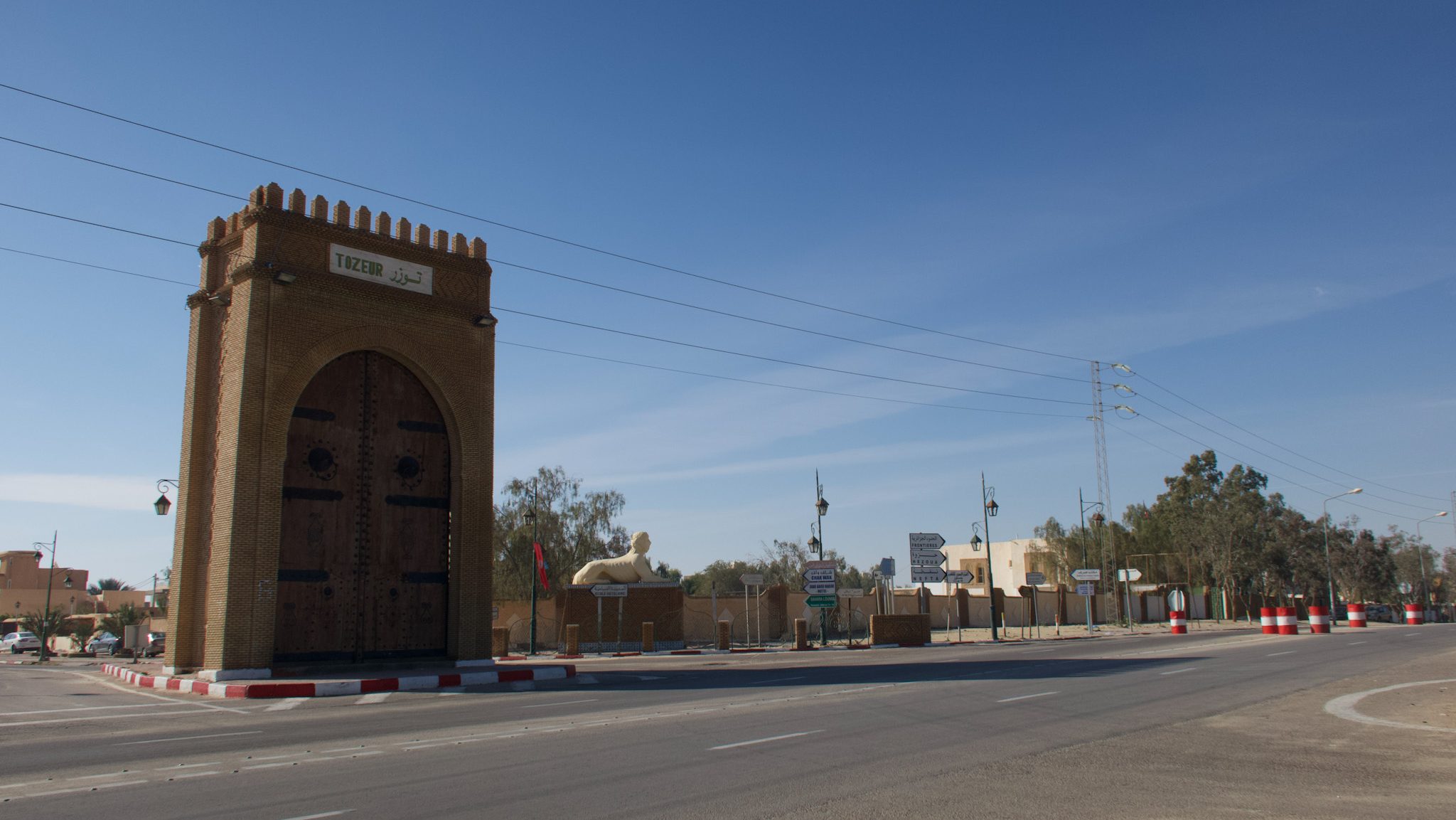
    The entrance gate to Tozeur, Tunisia, featuring a large arched design and wooden doors, with road signs and a lion sculpture nearby.
    © 2025 Atoosa Ryanne. All rights reserved
    What makes Tozeur special?

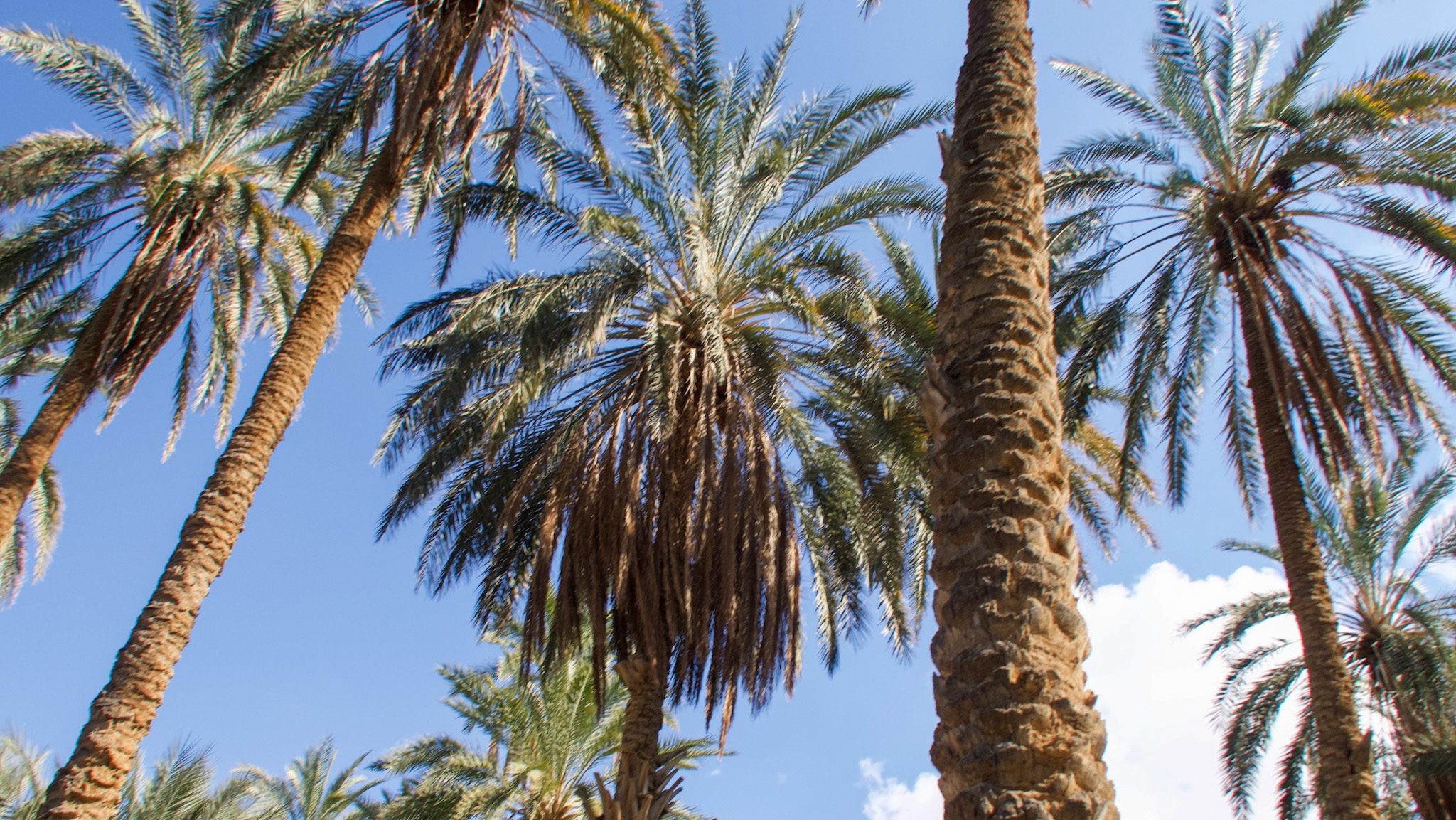
    The city of Tozeur is famous for its huge palm grove, which contains hundreds of thousands of date palms. This “sea of green” in the middle of the desert is fed by over 200 springs and a complex, ancient irrigation system.

    A view of tall palm trees against a bright blue sky, showcasing the lush green fronds and textured trunks.
    © 2025 Atoosa Ryanne. All rights reserved

    Tozeur also leads as one of the top producers of Deglet Nour dates, prized across the world.

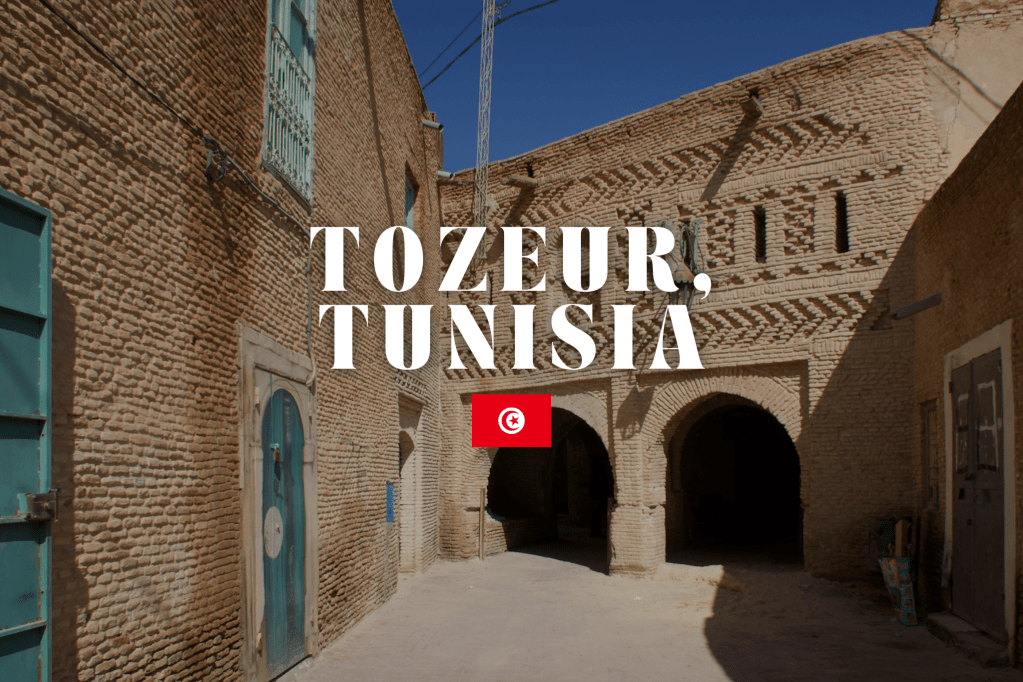
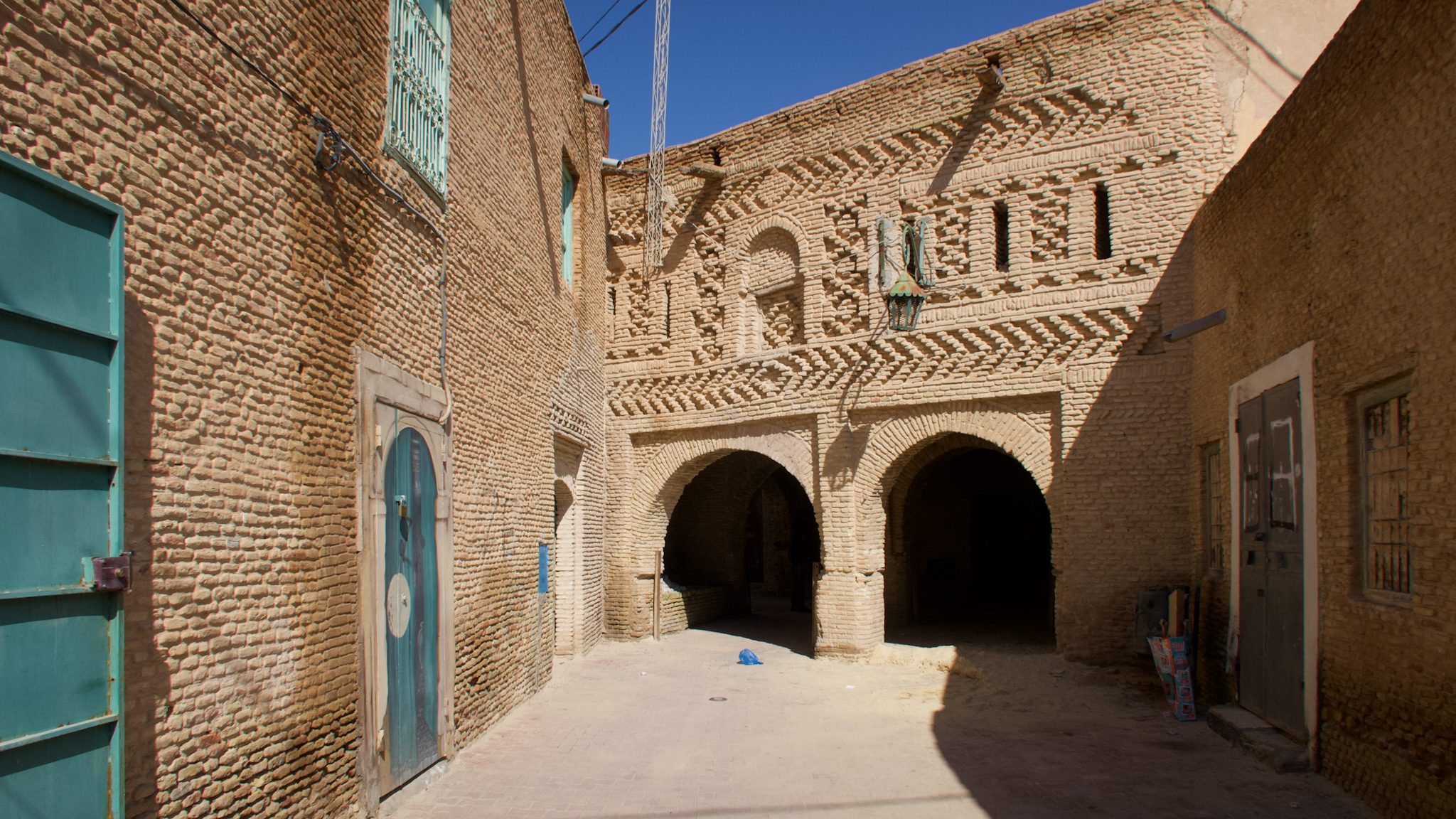
    You’ll also notice that Tozeur features unique architecture. Local artisans used small, sand-colored bricks to create intricate geometric patterns on buildings, giving the city a look you won’t find anywhere else. It’s perfect for architecture fans and photographers!

    Narrow street in Tozeur, Tunisia with rustic brick buildings and decorative architecture, featuring arched doorways and a blue sky.
    © 2025 Atoosa Ryanne. All rights reserved

    Along with Douz, Tozeur serves as a main gateway to the Tunisian Sahara. Almost all 4×4 tours start here, heading out to explore the mountain oases of Chebika, Tamerza, and Midès, plus the iconic Mos Espa Star Wars film set.

    What can I see and do in Tozeur?

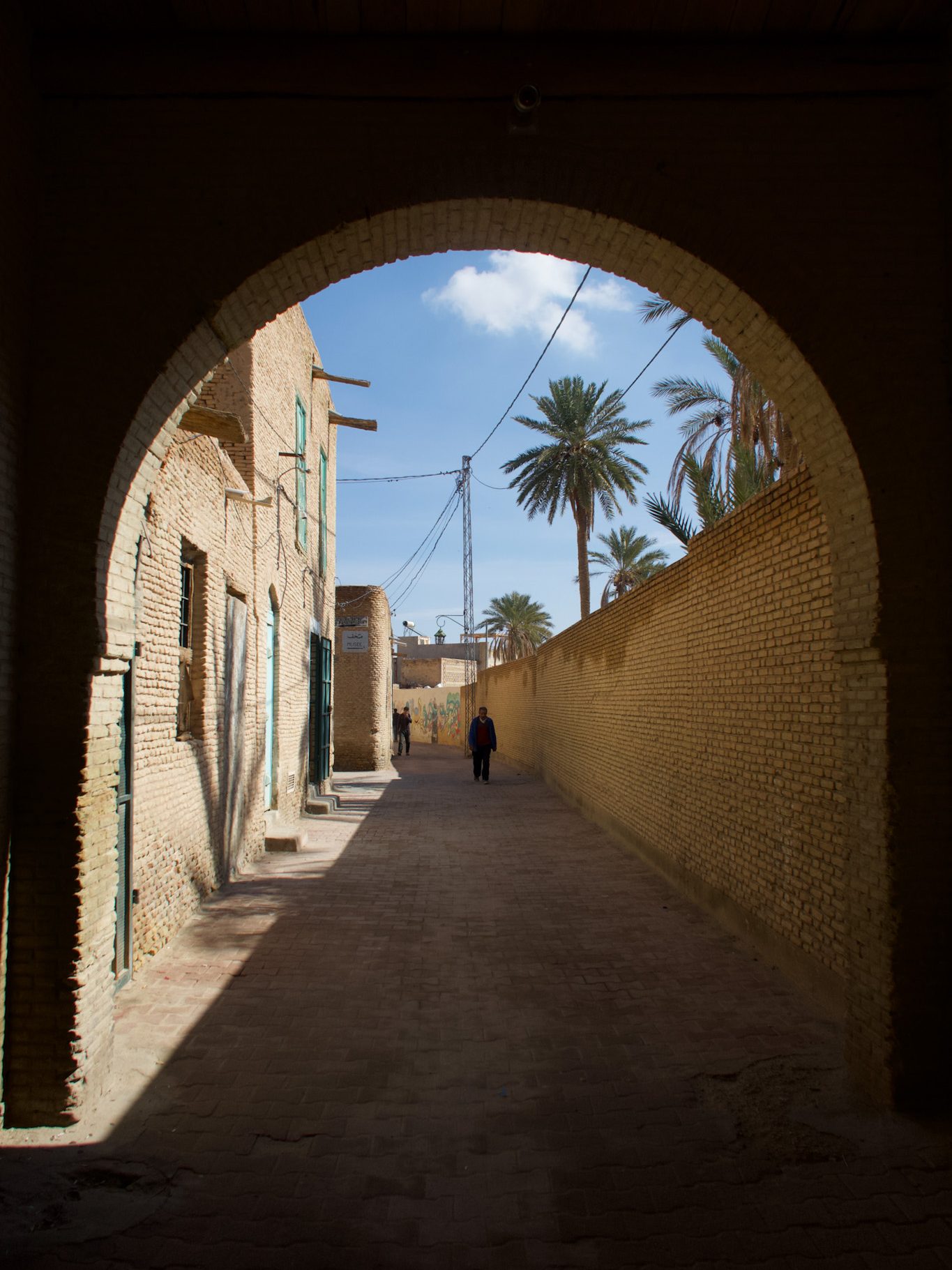
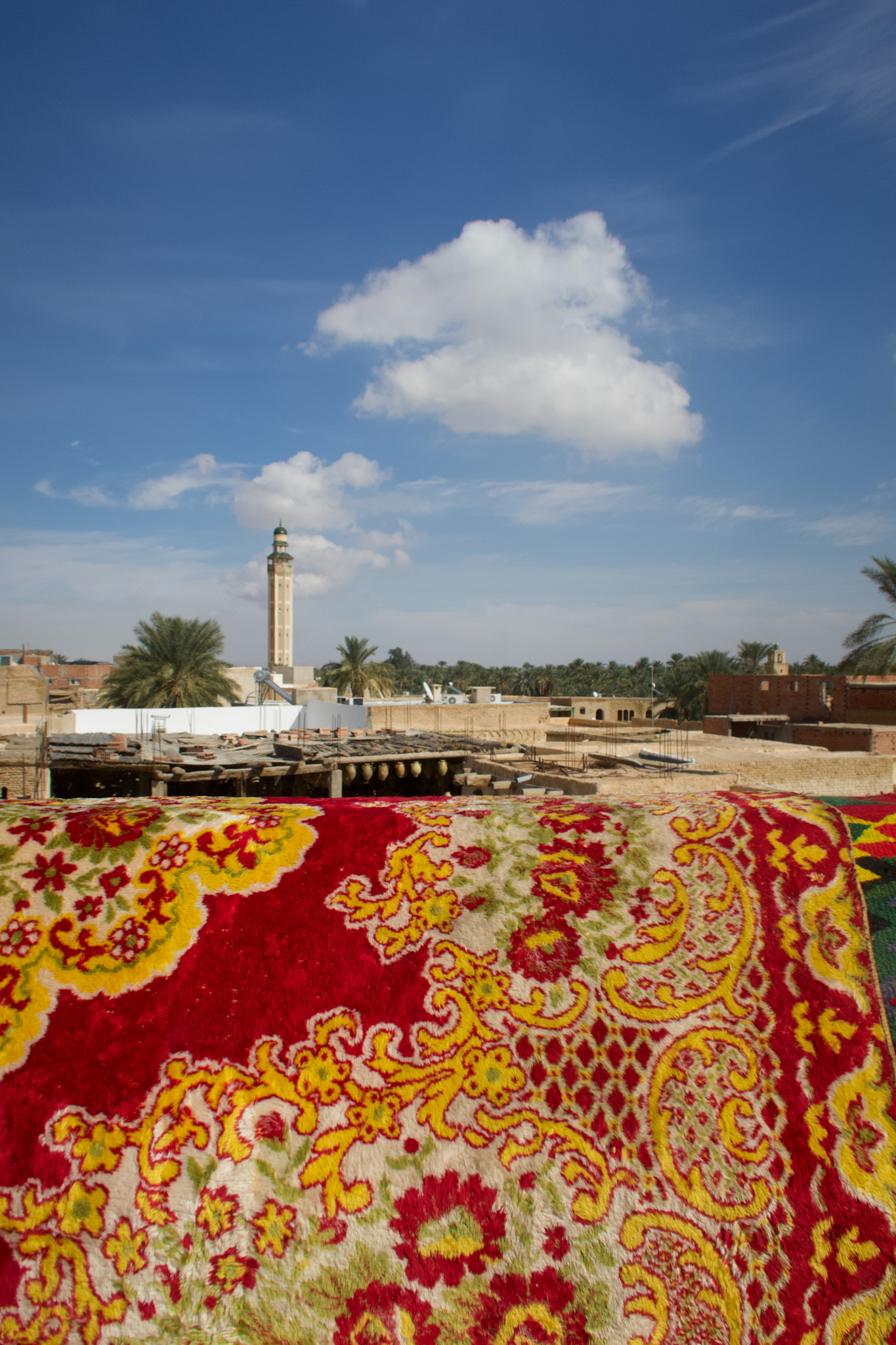
    Explore the Tozeur medina, which serves as the city’s old quarter and also the best place to experience the beautiful brick architecture. It’s a maze of narrow, shaded alleyways.

    A narrow street view through an arched entrance in the Tozeur Medina, showcasing a sandy path lined with brick walls and palm trees in the background.
    © 2025 Atoosa Ryanne. All rights reserved

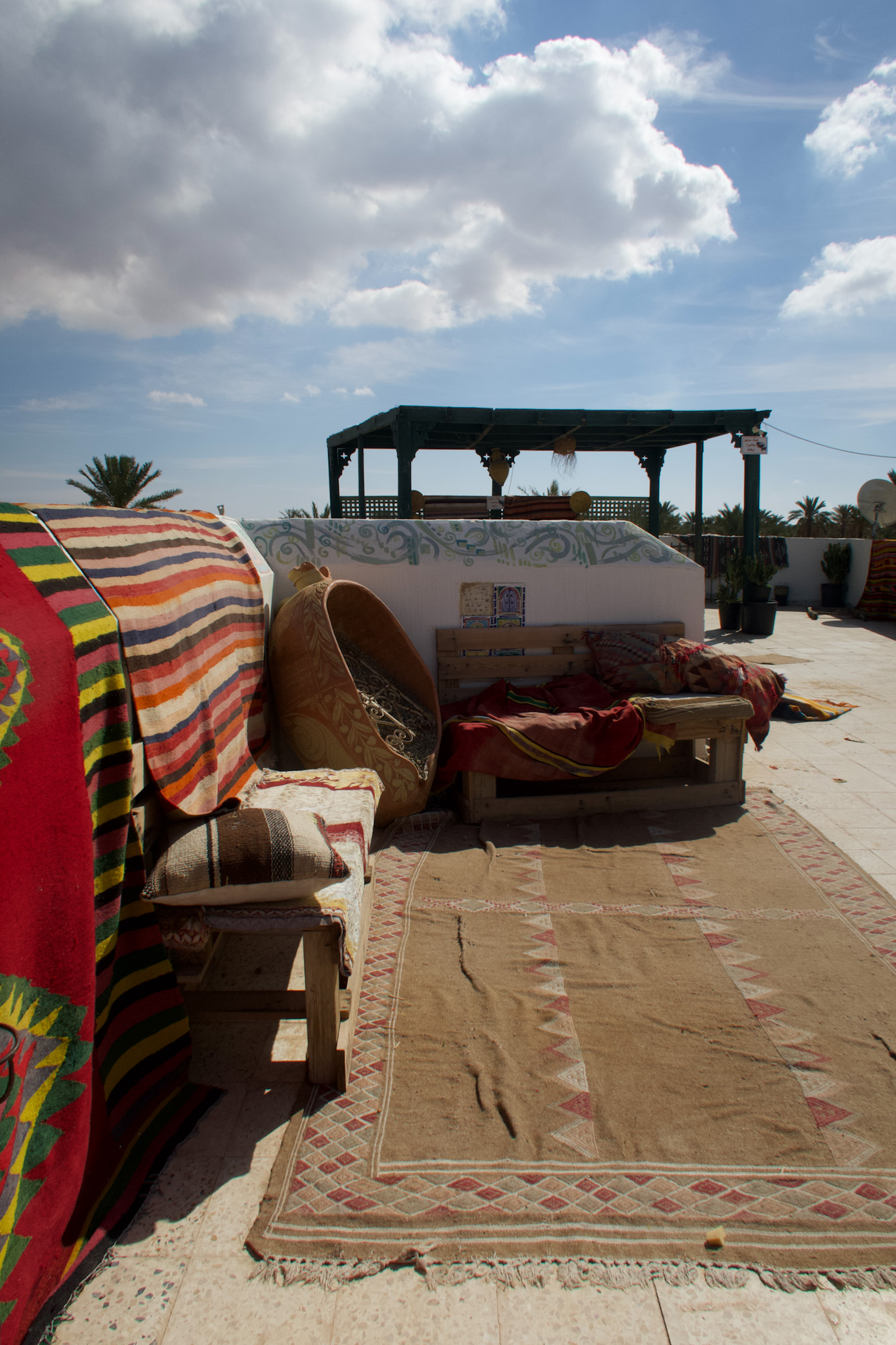
    Visit an Amazigh-inspired rooftop café in the heart of the medina, where you can sip tea while overlooking the Tozeur skyline and experience a deeper sense of the region’s Amazigh roots.

    Just walk a little bit out of the way of the Tozeur medina and you’ll land into the lush palm groves. You can bike or walk here and enjoy the very lush atmosphere and palm trees!

    Within the oasis is a small eco-museum called Eden Palm, dedicated to the date palm. You can learn about how dates are grown, harvested, and used, and see the traditional irrigation channels up close.

    If you’re into museums, Tozeur has quite a few. Set in a traditional mansion, Dar Cherait Museum showcases pottery, jewelry, wedding costumes, and recreated scenes from Tunisian life across the centuries. And Chak Wak Park is a one-of-a-kind theme park filled with life-sized dinosaurs and historical figures. It’s kitschy, but fun for families.

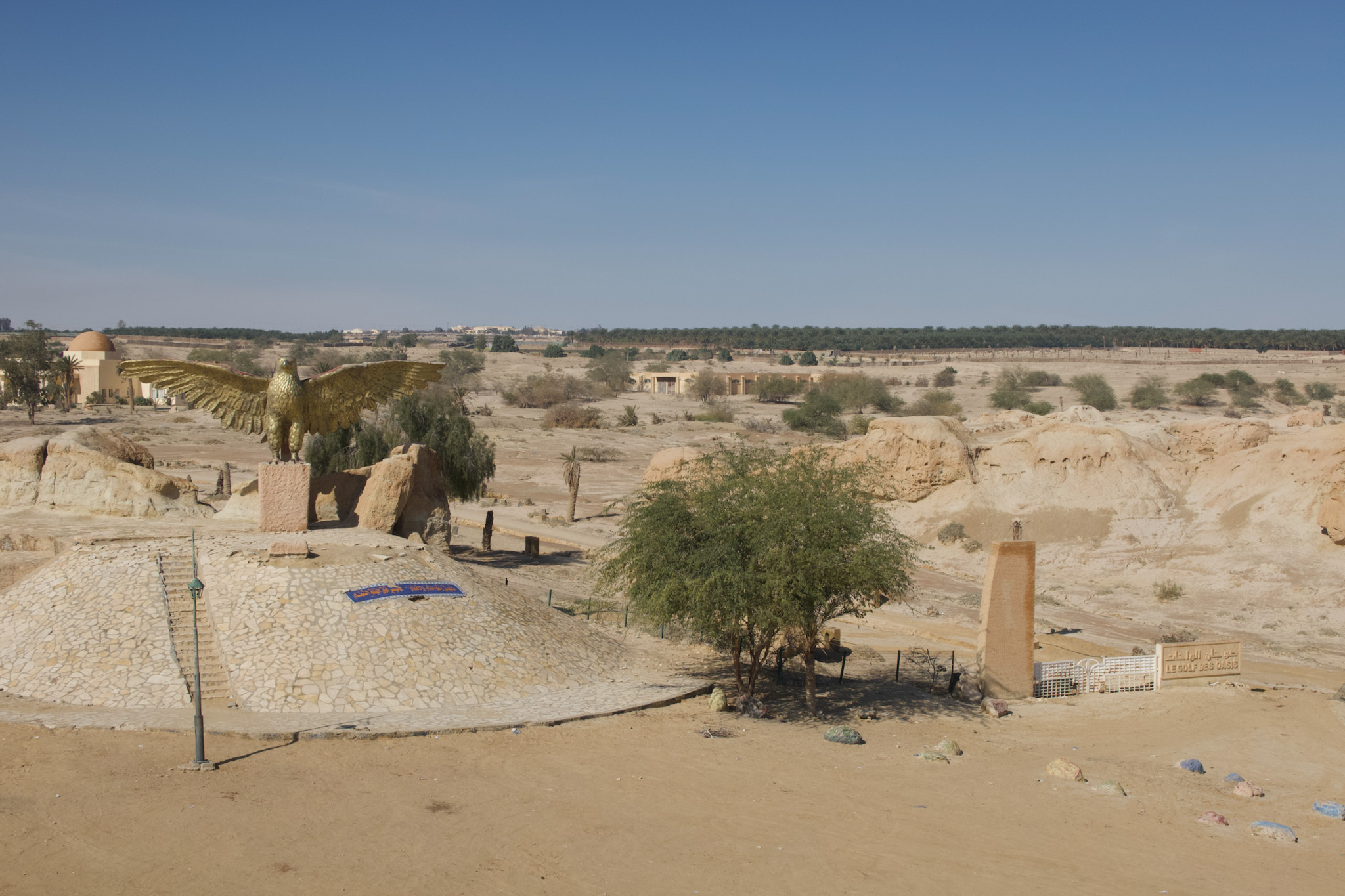
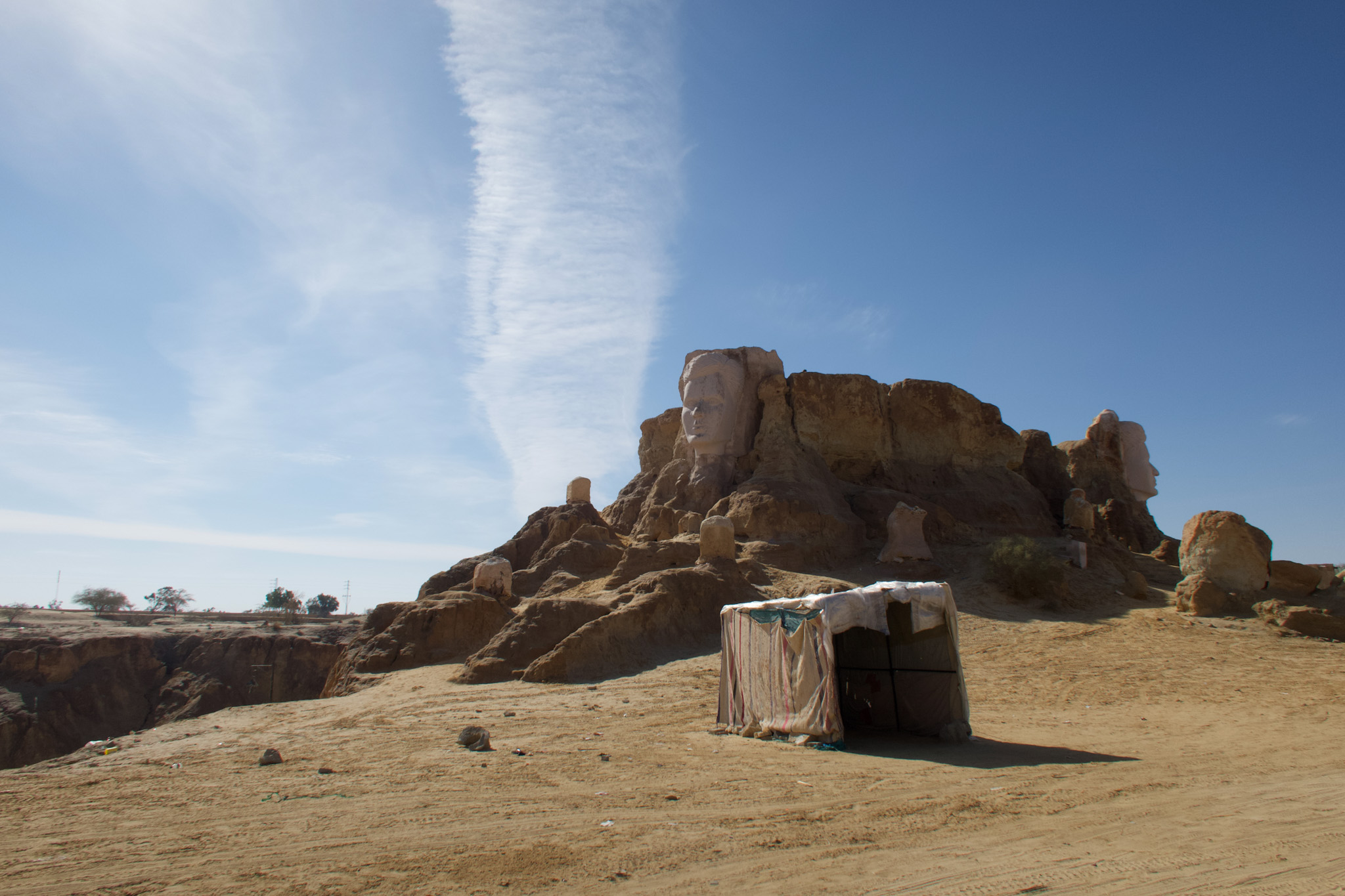
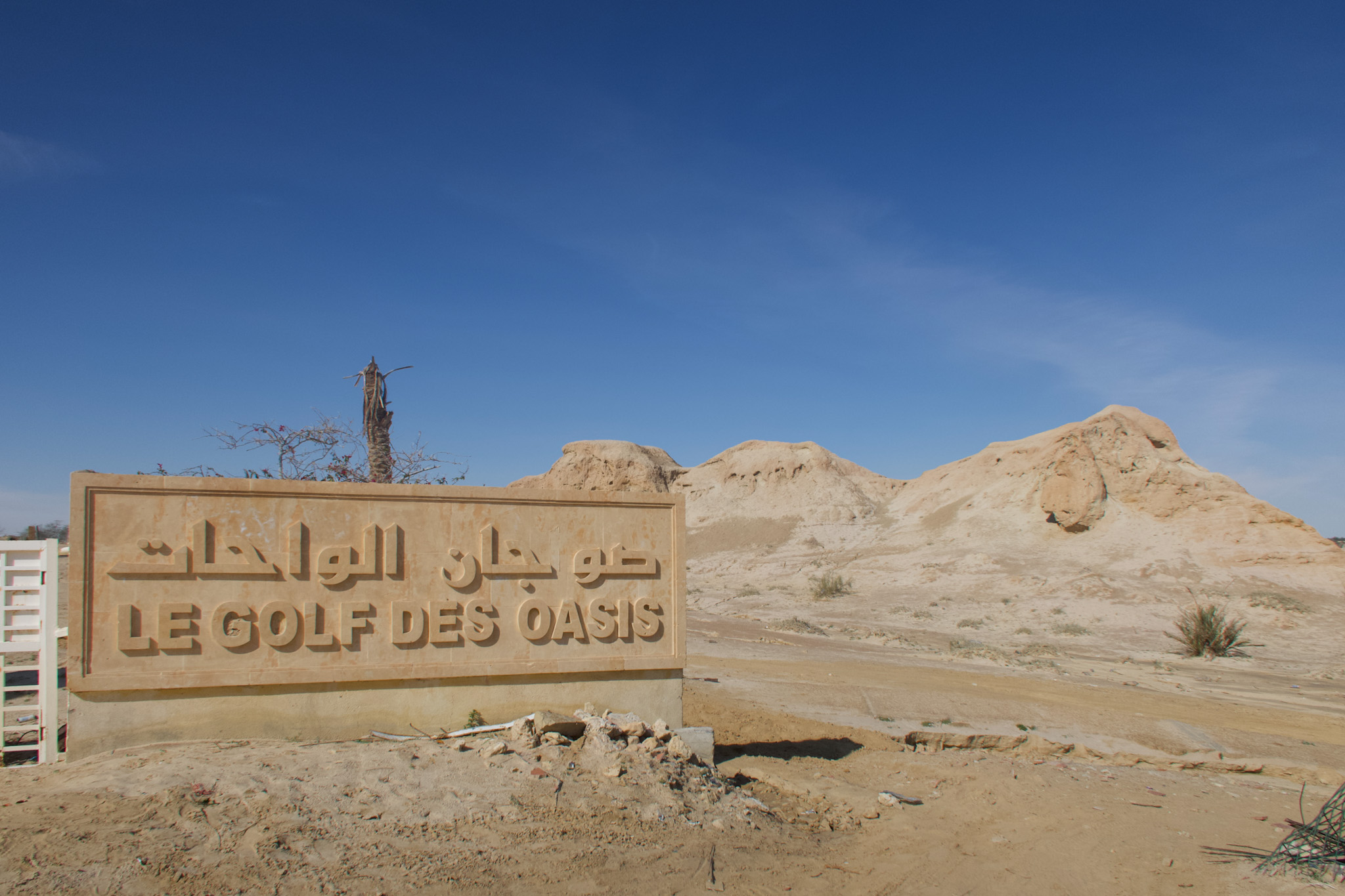
    For nature lovers, you can climb up the Belvedere Rocks in Ras El Ain Park, just outside the Tozeur city center. From the top, take in views of the oasis, the city, and the salt flats beyond. It’s also home to a giant stone sculpture of national poet Abou El Kacem Chebbi and hosts the eerie remains of an abandoned golf course.

    If you’re into quirky political history, you will enjoy this random fact: Two Iraqi Airways Boeing 747s just sit on the tarmac of the Tozeur-Nefta International Airport, and one of these was reportedly the private jet of Saddam Hussein. Flown here in 1991 to protect them from bombing during the Gulf War, they have been stranded ever since.

    Know before you go to Tozeur

    What to Expect: Tozeur is a well-developed city with hotels, restaurants, and a bustling market. It’s a hub of activity for desert tourism but has kept its unique charm and character.

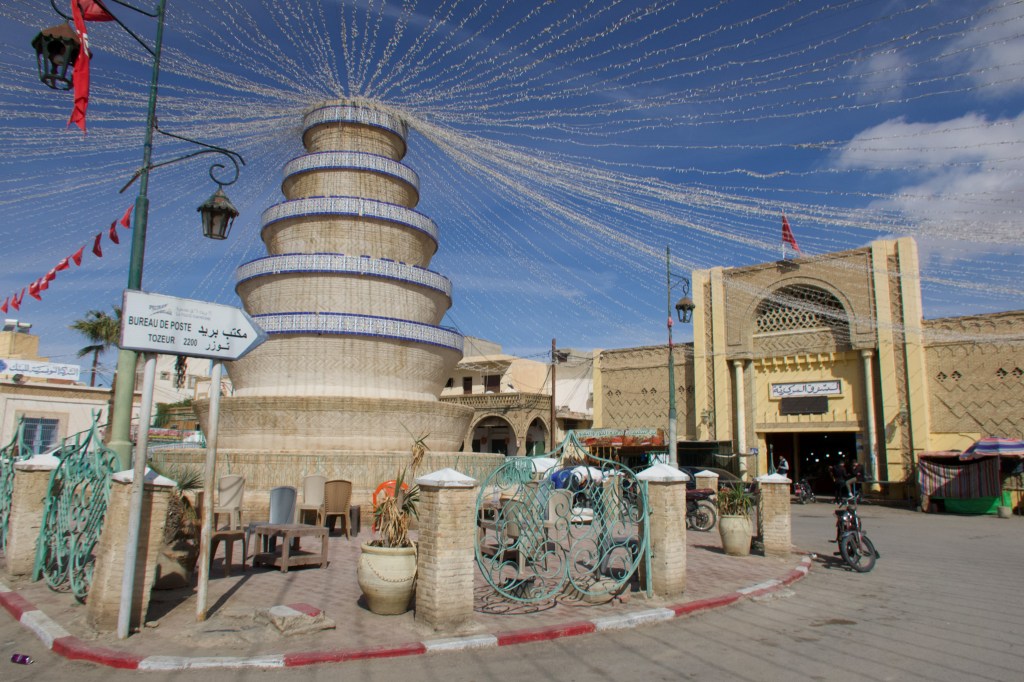
    A large decorative fountain structure in the center of Tozeur's town square, with strings of lights overhead and surrounding buildings visible.
    © 2025 Atoosa Ryanne. All rights reserved

    Where is it? Tozeur is in southwestern Tunisia, on the northern edge of the Chott el-Djerid salt flat.

    How to Get There: Tozeur-Nefta International Airport serves a handful of European routes and regular domestic flights from Tunis. You can also reach Tozeur by car, bus, or shared louage taxi from cities across Tunisia.

    Want a guide? If you’d rather not go it alone, consider booking through a local tourism company like WildyNess. They specialize in immersive, off-track travel and work with experienced guides who know the hidden corners and stories of the region.


    Interested in visiting Tozeur?

    Reach out to me! I am happy to help create your dream Tunisia trip itinerary for you. Just comment below or send a note via “Contact Me.”

    ,
  • Mos Espa: A guide to the abandoned Star Wars film set in the Tunisian desert

    Mos Espa: A guide to the abandoned Star Wars film set in the Tunisian desert


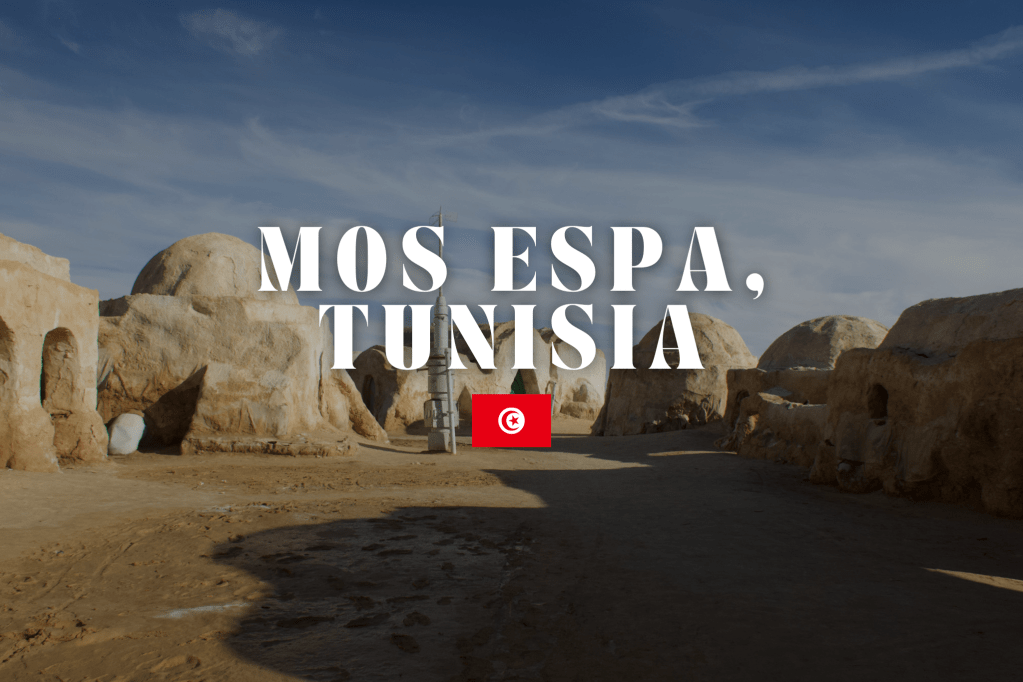
    While Tunisia is famous for its Mediterranean beaches and ancient historical ruins, it’s also home to a site known by sci-fi fans around the world: Mos Espa, the hometown of Anakin Skywalker! This film set for the Star Wars prequel movies is a historical ruin in itself, currently left standing in the middle of the desert.

    For fans of the Star Wars movies or travelers looking for a unique photo opportunity, a trip to the Mos Espa set is an adventure into “a galaxy far, far away,” Tunisian style.

    Why did Star Wars film in Tunisia, and what scenes were filmed here?

    George Lucas first chose Tunisia as the backdrop for the planet Tatooine in 1977, during the filming of Star Wars: A New Hope. Inspired by the town of Tataouine in southern Tunisia, Lucas saw the country’s salt flats, sand dunes, and rugged terrain as the perfect stand-in for a planet on the edge of the galaxy. He ended up naming the iconic planet Tattooine after that town!

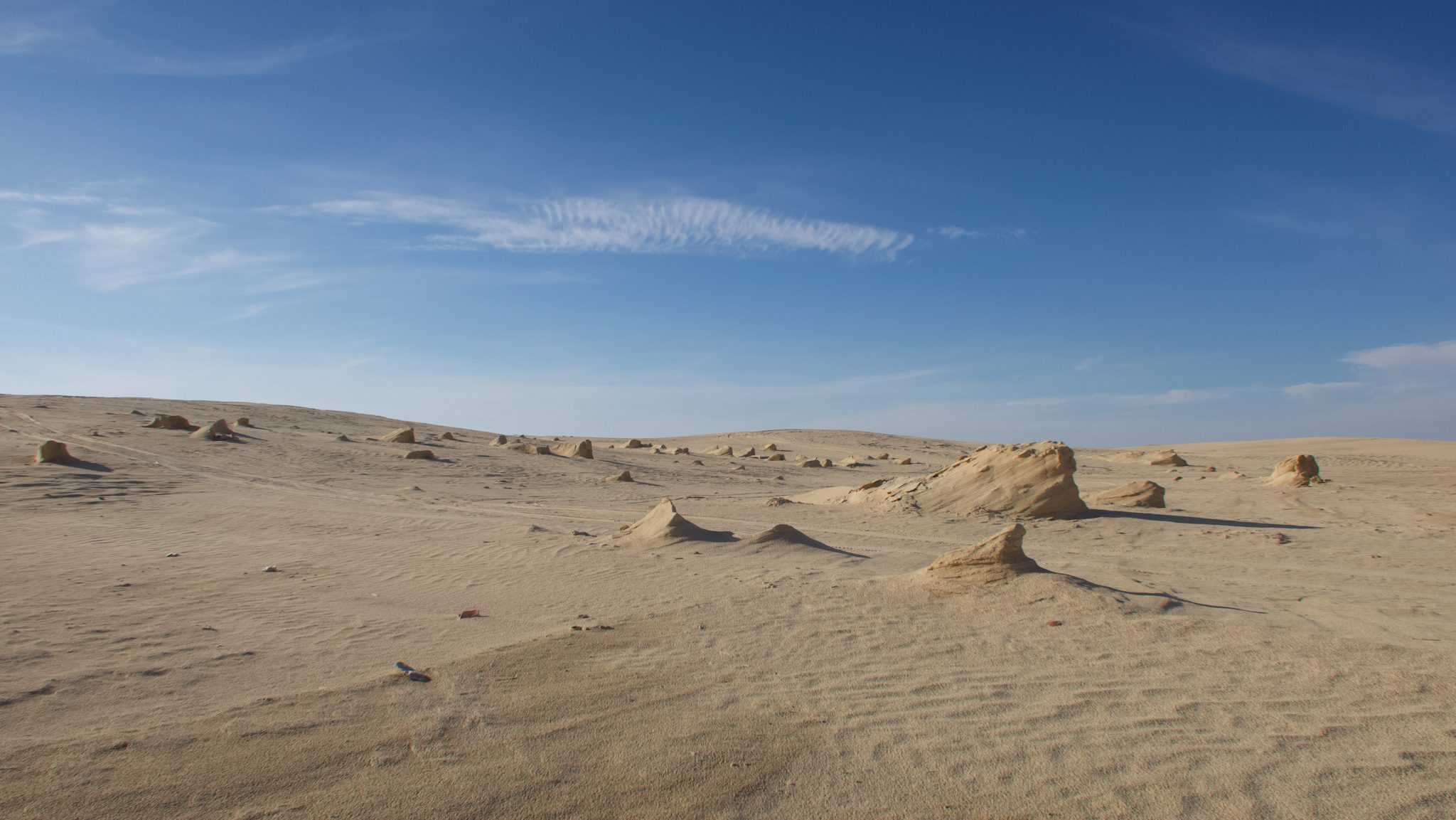
    A vast desert landscape in the Tunisian Sahara featuring scattered rock formations under a blue sky with wispy clouds.

    When it came time to film Episode I: The Phantom Menace in the 1990s, Lucas returned to Tunisia. He and his crew built the Mos Espa set in an isolated stretch of desert outside Nefta, a small oasis town in the south near Tozeur.

    The crew constructed a desert streetscape, featuring Anakin Skywalker’s childhood neighborhood, Watto’s junk shop, the podrace hangar used by Sebulba, and more. These settings served as important scenes in the film, including young Anakin’s first meetings with Qui-Gon Jinn, Padmé Amidala, and Jar Jar Binks.

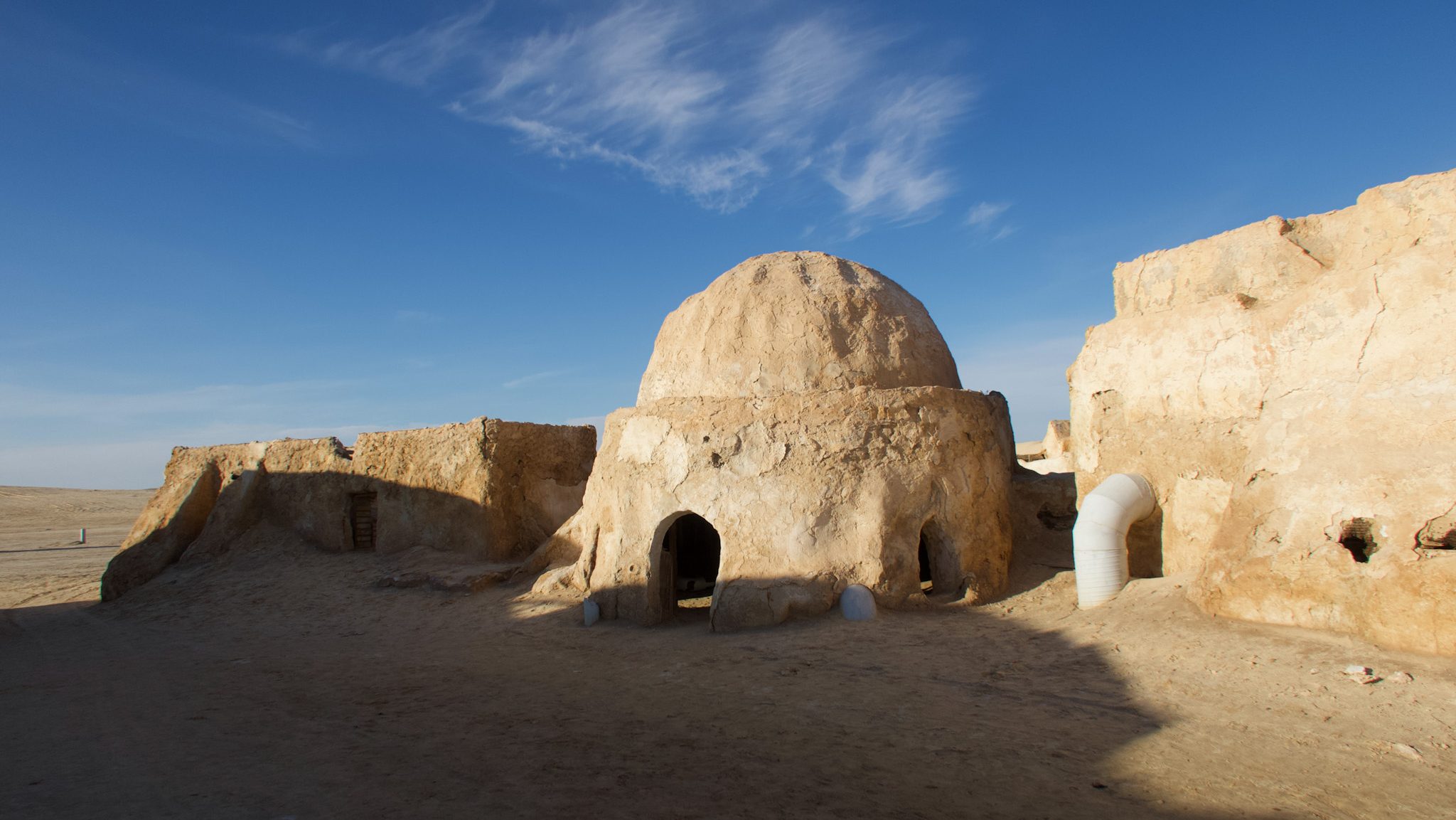
    Desert landscape featuring dome-shaped structures from the Star Wars Episode I: The Phantom Menace Mos Espa set.

    Rather than dismantle the set once filming wrapped, Lucasfilm just decided to leave it behind. Since then, the site has transformed into somewhat of a pilgrimage spot for Star Wars fans!

    What exactly can you see at the Mos Espa film set today?

    Visiting Mos Espa feels feels like a surreal collision of sci-fi, Roman ruin aesthetics, and traditional Berber/Amazigh architecture all at the same time.

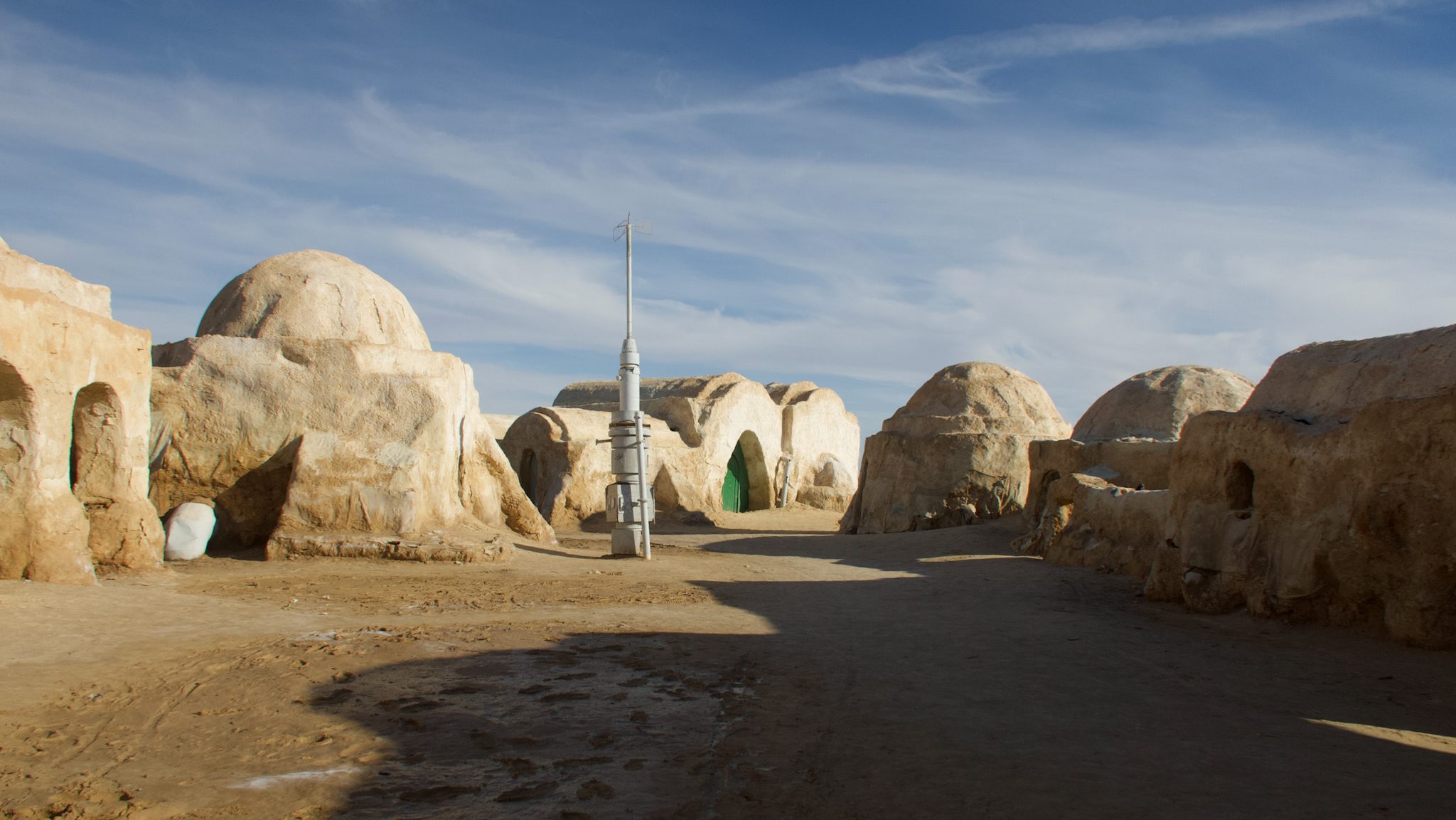
    You’ll find dozens of buildings that are not technically real, but rather hollow movie props made of plaster, fiberglass and wood. You’ll also see the iconic Tattooine moisture vaporators still standing around, affixed to the ground.

    A desert landscape intending to be the planet Tattooine in Star Wars, featuring a series of dome-shaped structures from the Mos Espa set and moisture vaporizers under a blue sky with wispy clouds.

    Overall, this is truly a deserted movie set set in a harsh desert environment. There are no people living here, no shops, and no facilities.

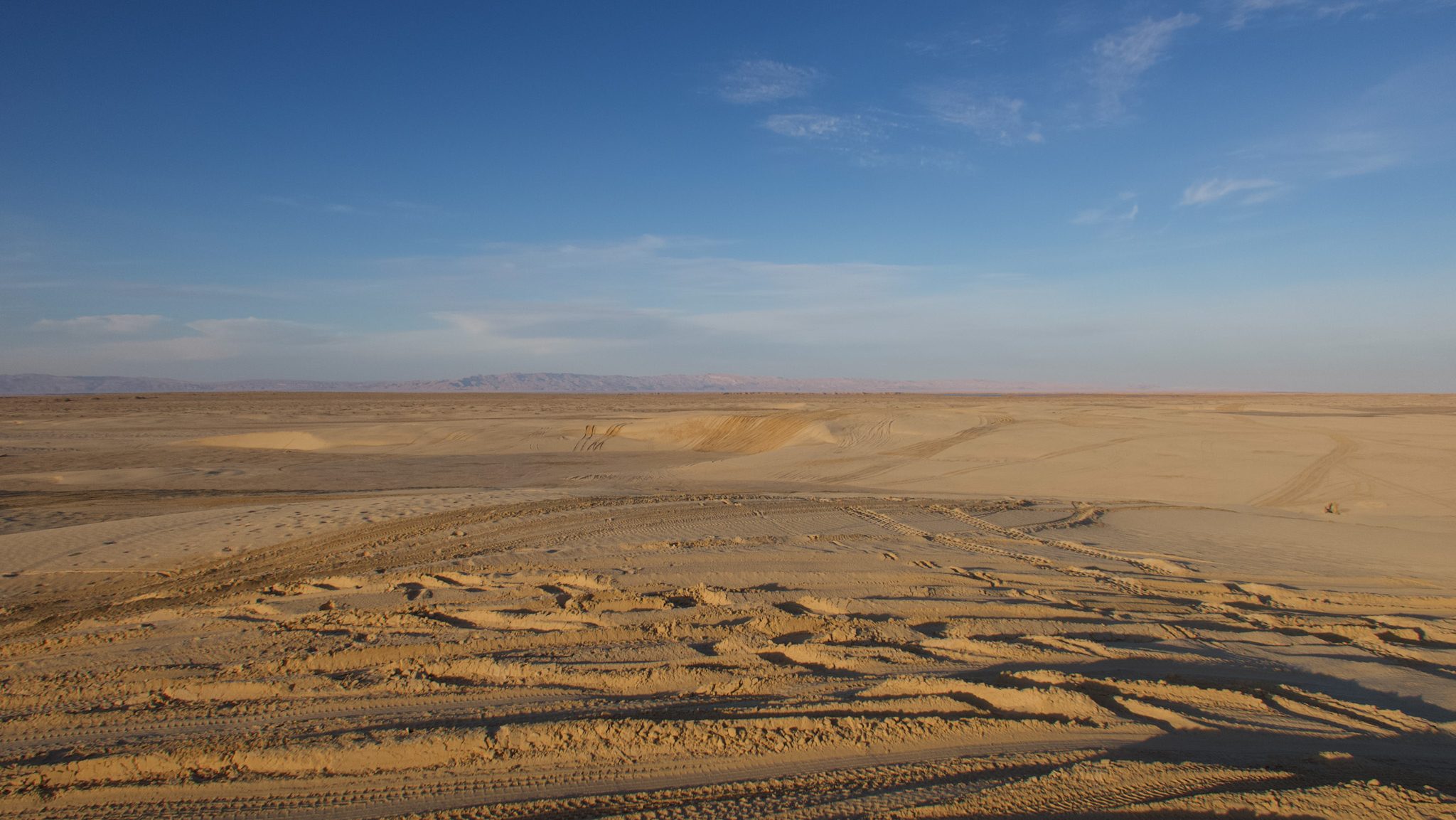
    A vast desert landscape heading towards Ong Jemel in Tunisia, with clear blue skies and gentle curves of sand dunes, featuring tire tracks across the sandy terrain.

    Still, the area is filled with local guides offering camel rides, trinkets, and ATV trips to the nearby rock formation of Ong Jemel, so be prepared for that.

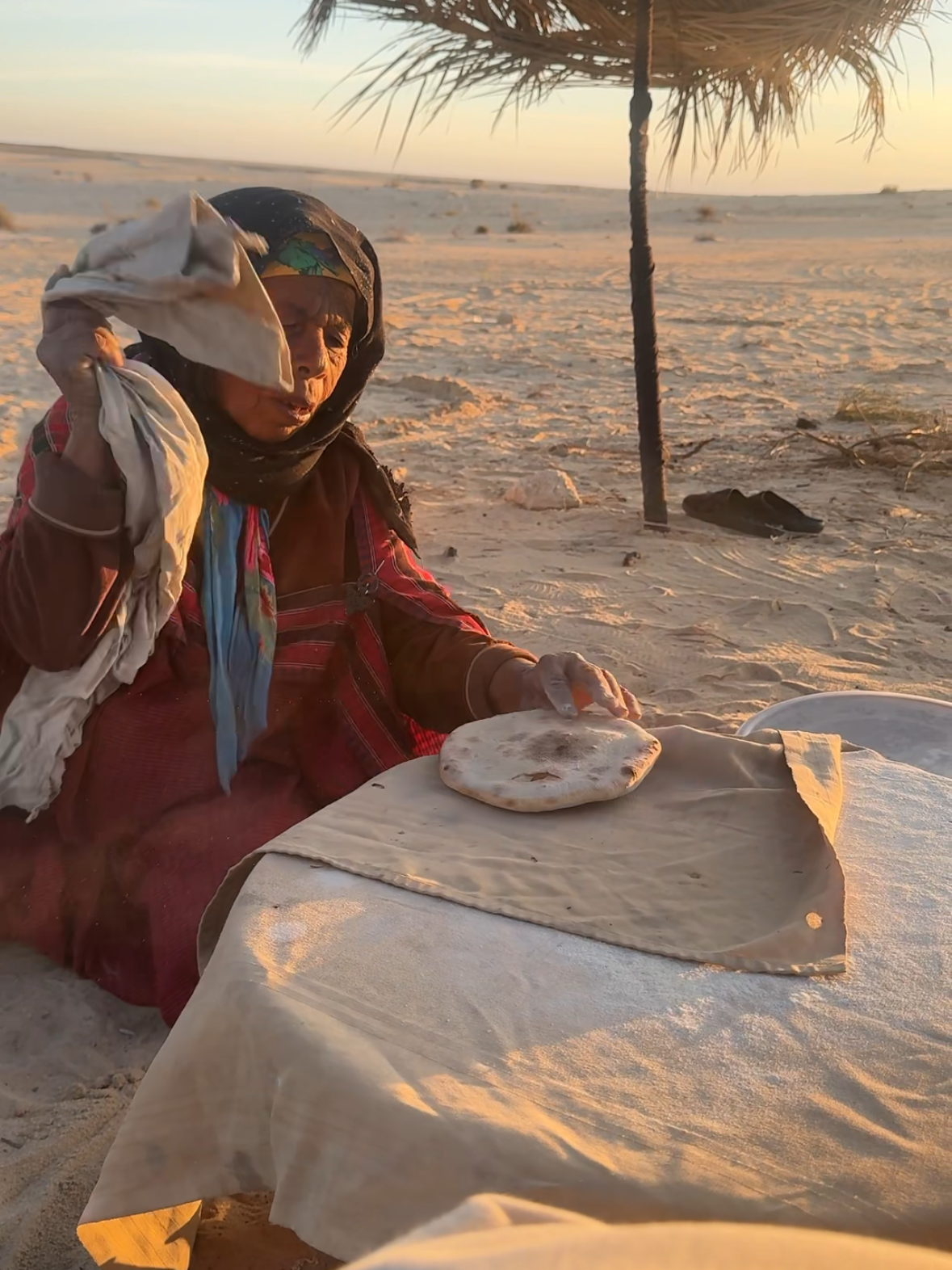
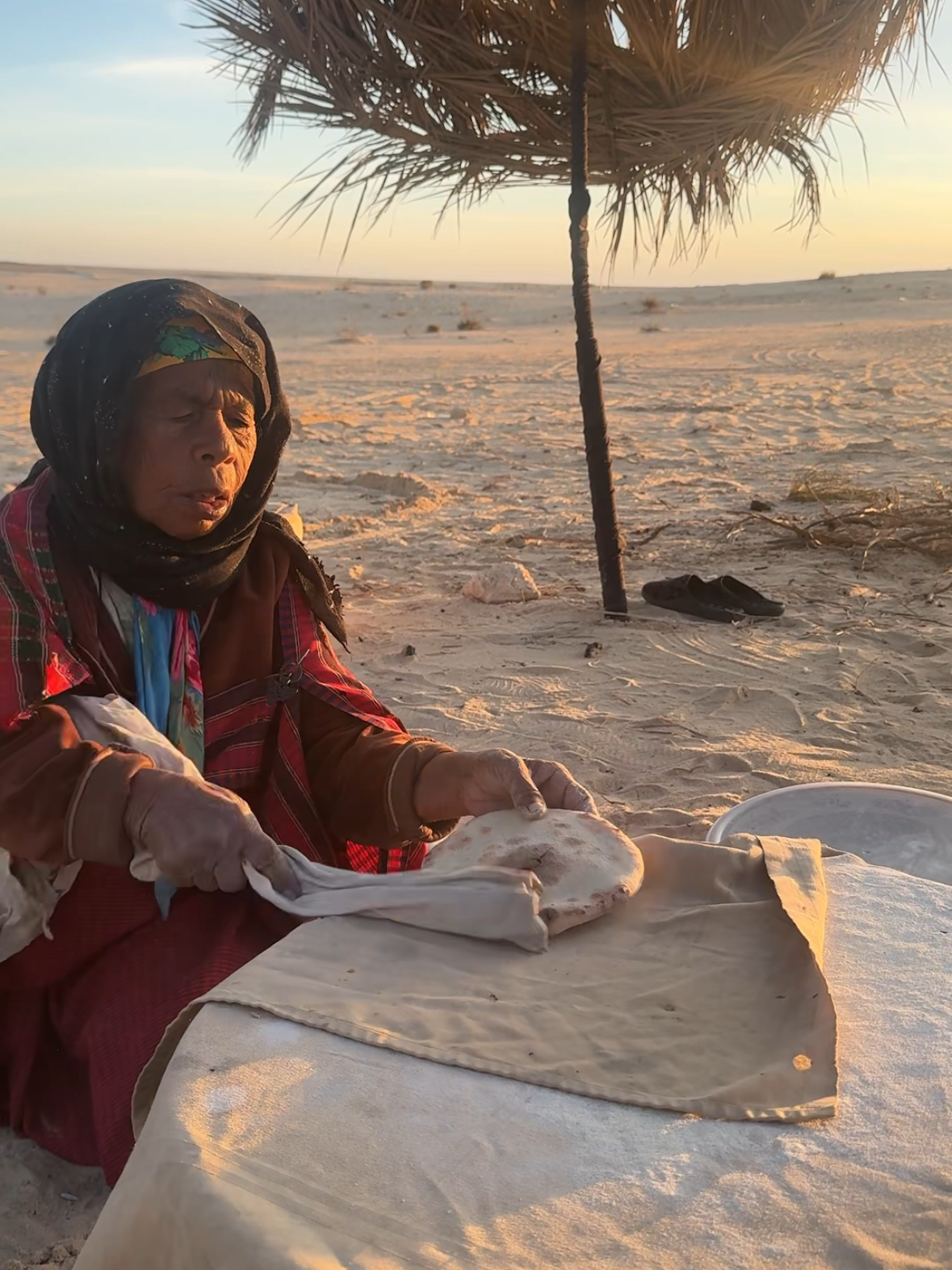
    One fun surprise for us: About 15 minutes back toward Nefta, just outside the film set, we spotted a sign for desert-baked bread and pulled over. A Berber/Amazigh woman was chatting with her friends around a fire and invited us to join them. She baked the bread directly in the sand in the traditional style of the region and offered it to us with olive oil. We ended the day sharing good company and warm bread as the sun started setting!

    Know before you go to Mos Espa

    A trip to Mos Espa requires planning, as it is truly in the middle of nowhere.

    Cost: Visiting Mos Espa is completely free, as it’s an abandoned movie set with no entry fees or official management. However, expect to be approached by self-appointed “guides” offering tours. These are usually locals hoping to make some quick money from tourists, and their information may be vague or embellished. You’re free to explore on your own without paying anyone.

    Location: The set is located in the Chott el-Gharsa, a dry salt flat region in the desert outside of the cities of Tozeur and Nefta. There is one main road that you can use to drive there.

    How to Get There: While it is possible to go with a normal sedan, it’s probably better to go with a 4×4 vehicle, especially if you want to ride around in the sandy desert terrain and enjoy a true desert experience. But you’re fine going in your normal car, too.


    Interested in visiting Mos Espa?

    Reach out to me! I am happy to help create your dream Tunisia trip itinerary for you. Just comment below or send a note via “Contact Me.”

    ,
  • Your guide to Douz, Tunisia’s gateway to the Sahara Desert

    Your guide to Douz, Tunisia’s gateway to the Sahara Desert


    The city of Douz marks where the Sahara Desert of Tunisia truly begins, which is why this peaceful oasis town is known as the “Gateway to the Sahara.”

    Located just south of the vast Chott el-Djerid salt flat, Douz lets travelers experience some of the country’s most authentic desert experiences and gives a taste of local desert life.

    Why is the city called Douz?

    Douz takes its modern name from the oasis town that grew around the traditions of the Mrazig people. While ancient records mention little about its early history, the Mrazig tribe settled here centuries ago. Their nomadic roots and desert knowledge turned Douz into a main stop along trans-Saharan caravan routes.

    What makes Douz special?

    Douz offers a direct and authentic connection to the Sahara Desert. The town borders the Grand Erg Oriental, a massive area of soft, rolling sand dunes. This is the classic “sea of sand” desert landscape that many people think of when they think of the desert.

    A vast desert landscape just outside of Douz, Tunisia with rolling sand dunes under a cloudy blue sky.

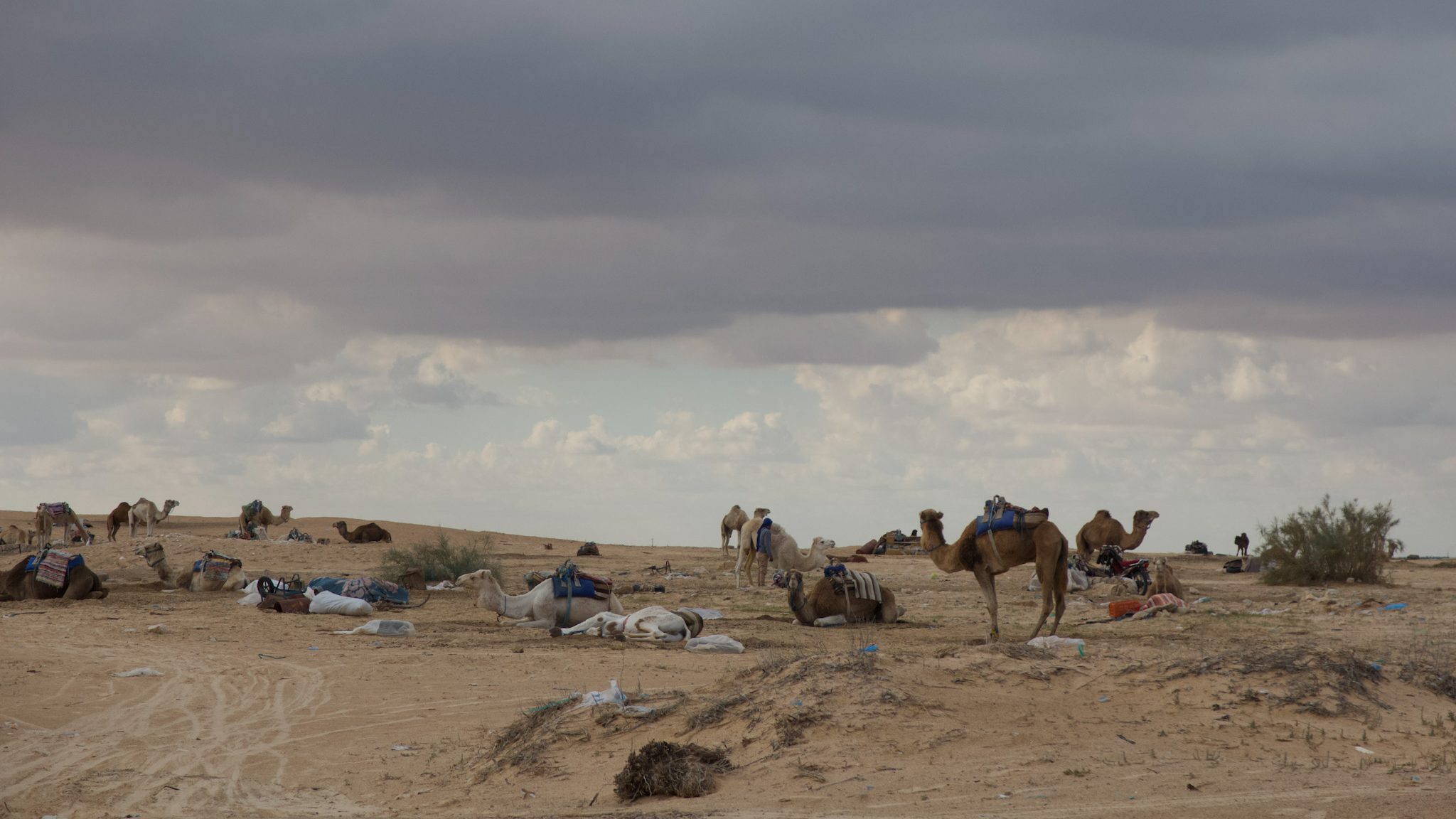
    Douz is famous for its camel market and is one of the best places in Tunisia to experience a traditional camel trek. The Mrazig people are renowned for their camel breeding and expertise.

    A group of camels resting on sandy terrain under a cloudy sky in Douz, Tunisia.
    What to see and do in Douz

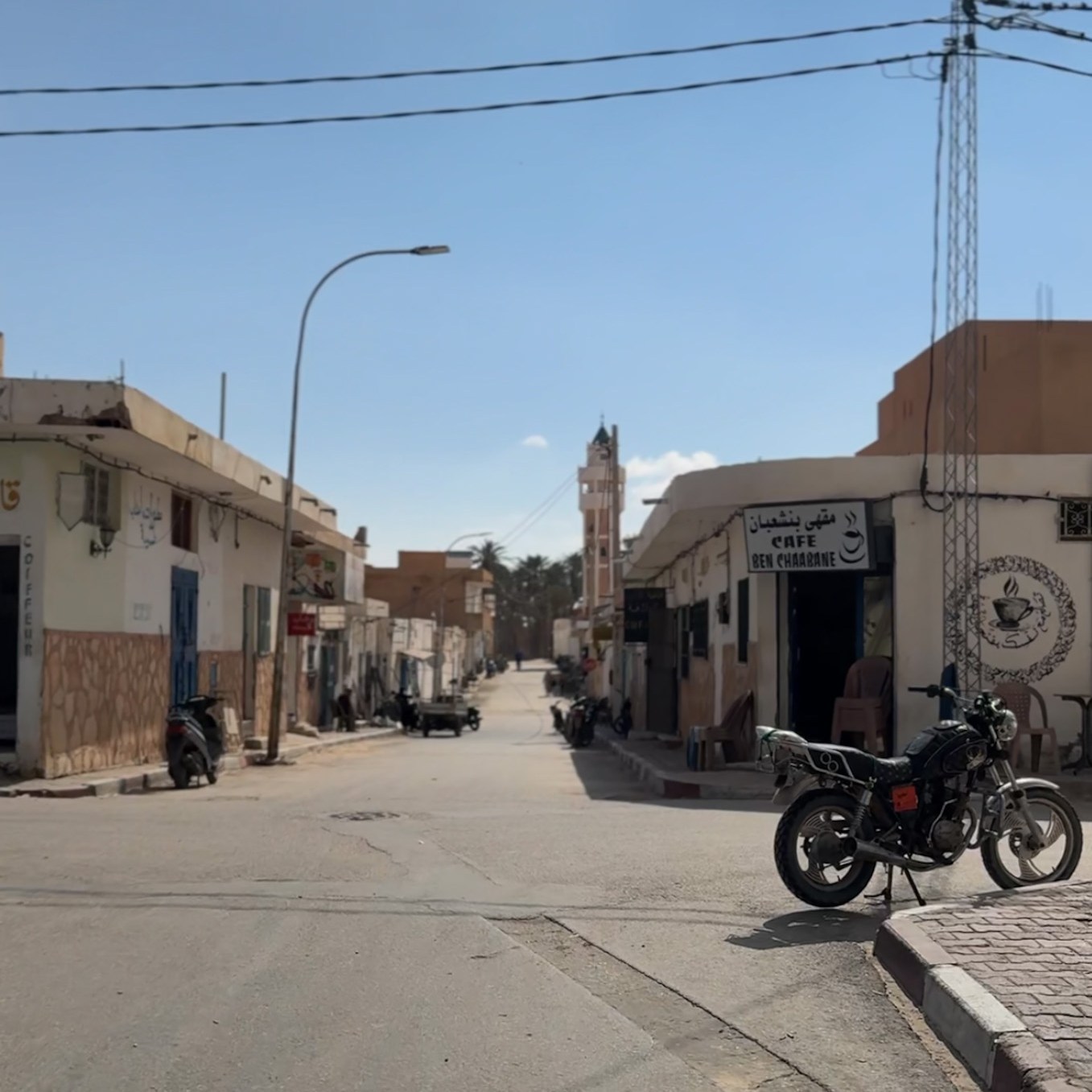
    The town of Douz itself has a dusty, frontier feel. It’s a real, working town where the desert is a part of daily life.

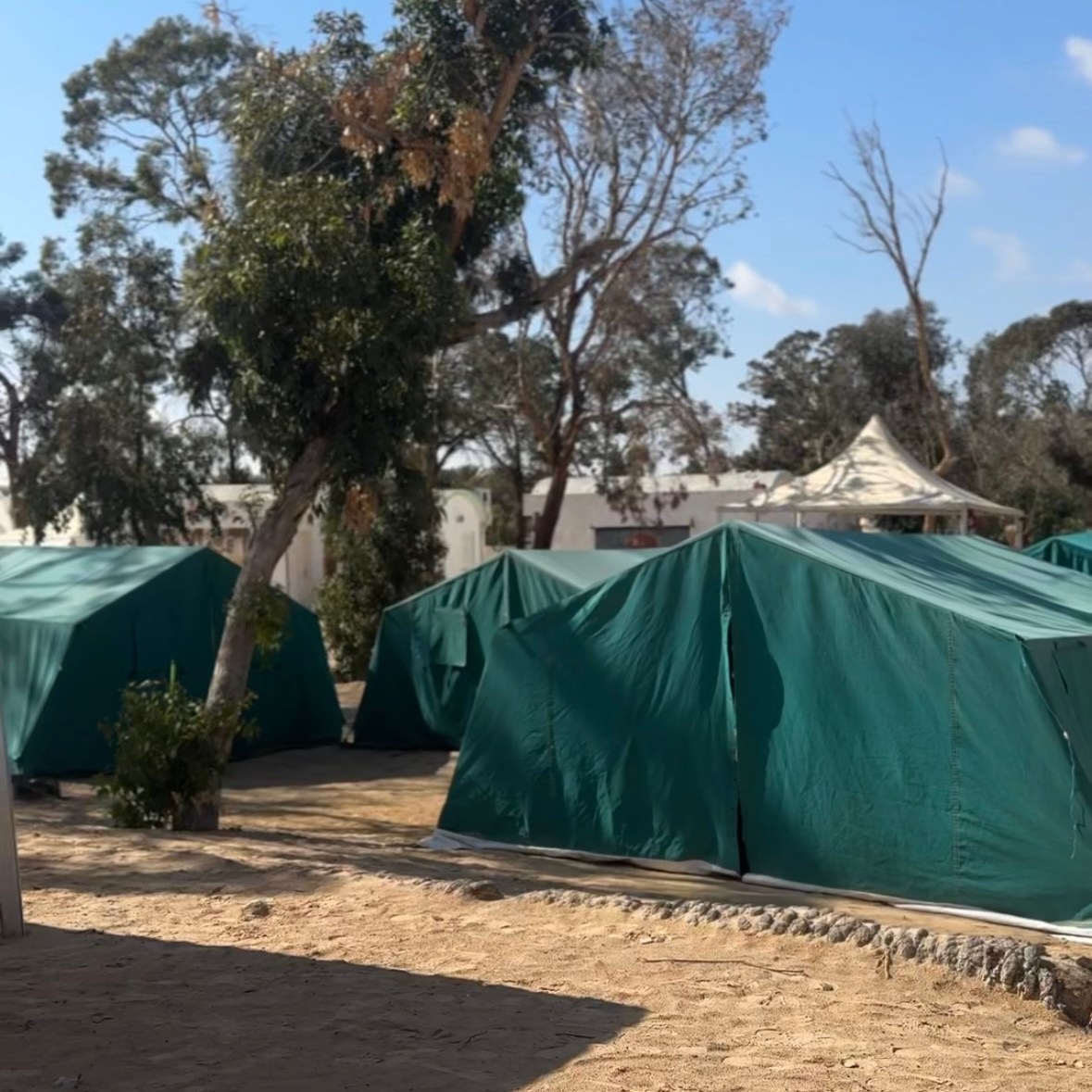
    You can sleep in a Bedouin campground during your visit. There are many options, ranging from basic to luxury options. Below is an example of a more budget-friendly option.

    You can also ride camels, quad bikes or buggies across the massive sand dunes just outside the town.

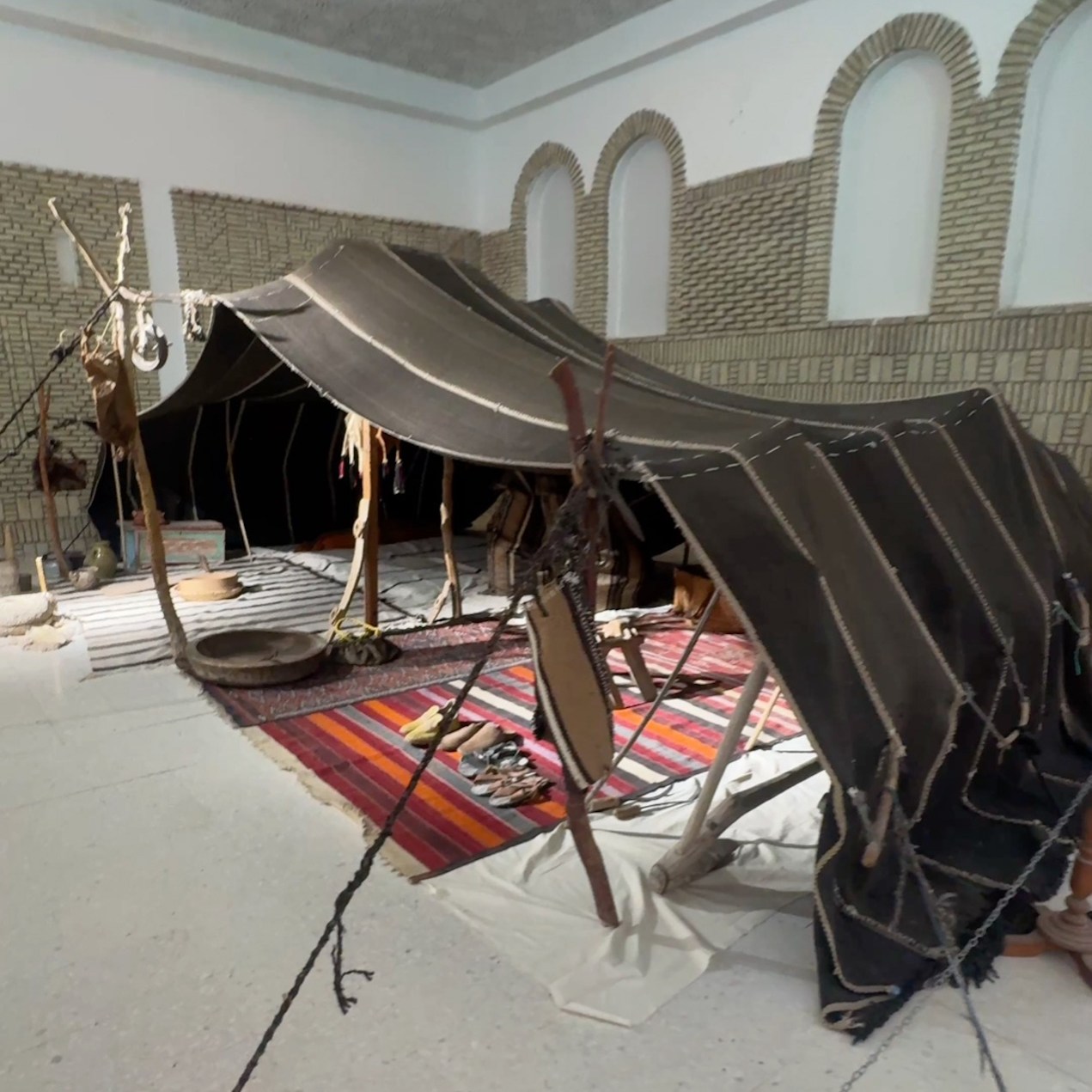
    Visit the Museum of the Sahara for a concise introduction to the Mrazig people. The exhibits cover their clothing, tools, and traditional desert life.

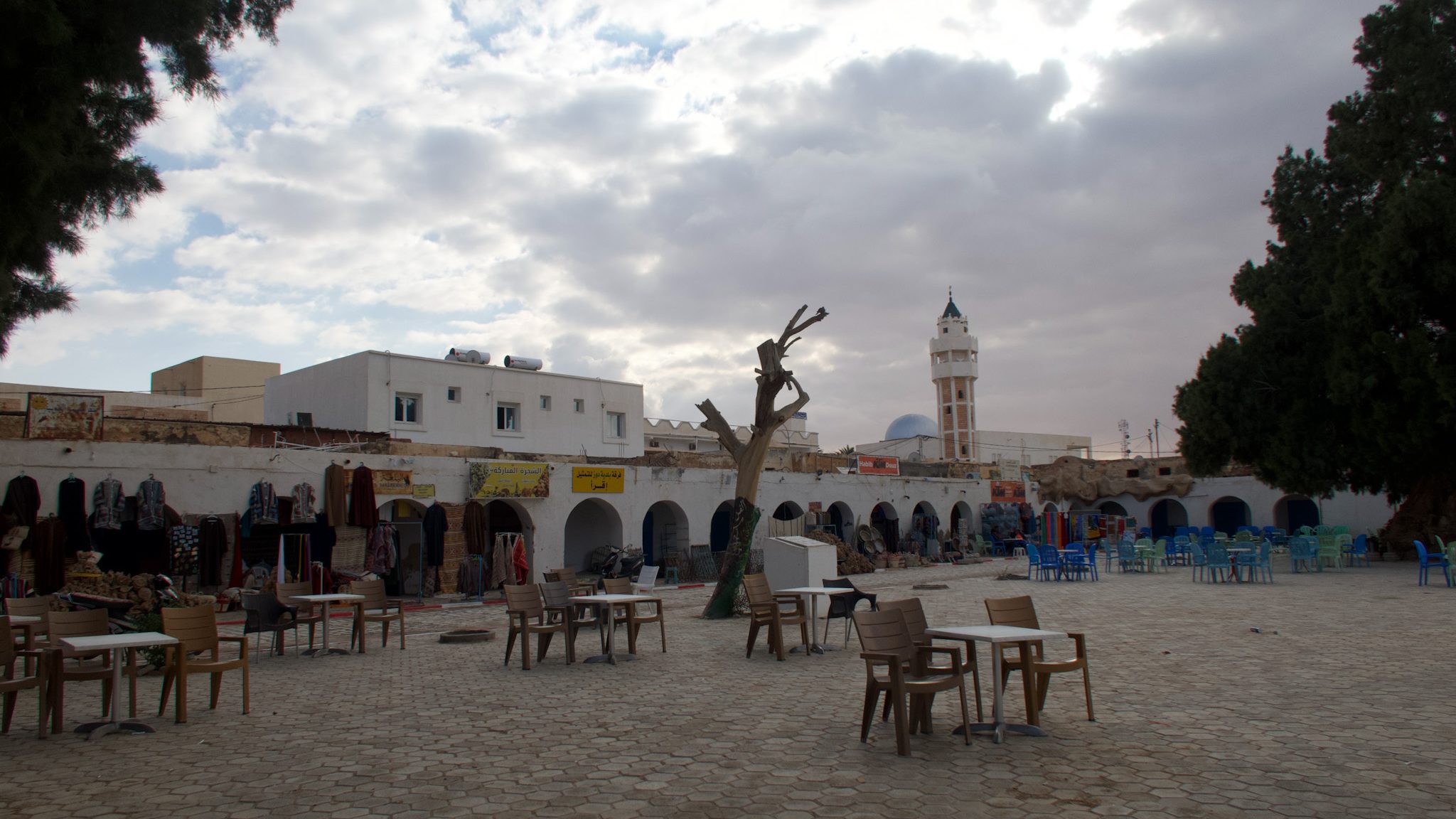
    The main square in Douz is a functional public space for the locals. It’s surrounded by cafés and a few small stores where vendors sell traditional items such as woven rugs, jewelry, and the distinctive hooded wool coats known as burnous. There’s a market every Thursday where herders, merchants, and families across surrounding towns come together to sell goods.

    An open plaza in Douz, Tunisia featuring empty tables and chairs, surrounded by traditional market stalls and buildings with a mosque tower in the background under a cloudy sky.

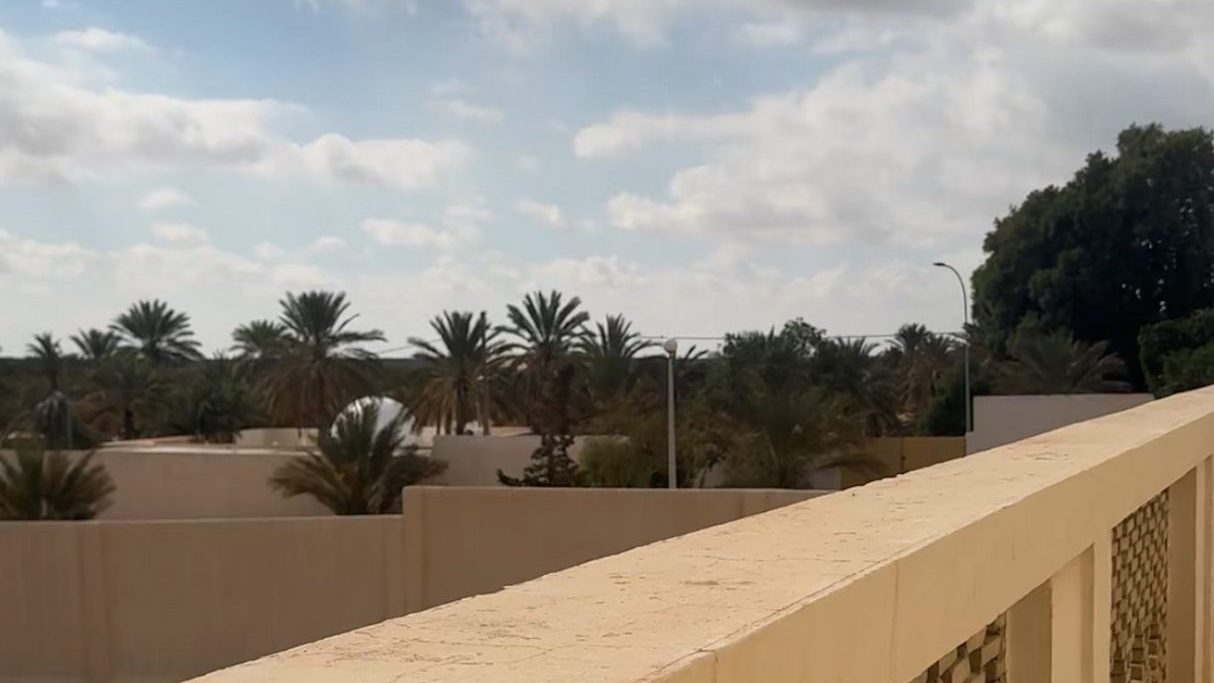
    Much of the local economy still revolves around date farming. You’ll see groves of Deglet Nour palm oases and workers preparing for the seasonal harvest.

    View of palm trees and a cloudy sky from a balcony railing in Douz, Tunisia.
    Know before you go to Douz

    Where is it? Douz is in southern Tunisia, on the southern edge of the Chott el-Djerid salt flat. It’s about a 1.5 to 2-hour drive from Tozeur.

    How to Get There: The easiest way to get to Douz is by car or as part of a tour from other major hubs like Djerba or Tozeur. Louages (shared taxis) also connect Douz to other southern towns.

    Want a guide? Consider supporting the local economy by booking a guided tour in Douz with a regional expert through a platform such as WildyNess. You’ll get authentic insight while helping sustain community-based tourism.


    Interested in visiting Douz?

    Reach out to me! I am happy to help create your dream Tunisia trip itinerary for you. Just comment below or send a note via “Contact Me.”

    ,
  • Bulla Regia: Your guide to Tunisia’s Roman ruins surrounded by greenery

    Bulla Regia: Your guide to Tunisia’s Roman ruins surrounded by greenery


    If you’re planning a trip to explore Tunisia’s historic sites, especially its Roman-era wonders, make sure you add Bulla Regia to your list.

    This ancient city in northwest Tunisia just outside of the city of Jendouba offers some of the best-preserved Roman ruins outside Italy, which gives you just a sense of the vast reach of the Roman Empire in North Africa. It joins other Roman ruins in Tunisia, including but not limited to El Jem, Dougga, Sbeitla, Haidra, Utica and more.

    This guide will show you how to visit Bulla Regia in 2025.

    Why is the town called Bulla Regia?

    The word Bulla is believed to come from either Berber or Latin roots, possibly meaning “citadel” or “fortified town.” The term Regia is Latin for “royal.” Put together, Bulla Regia likely means “Royal Bulla” or “The Royal City of Bulla,” which is fitting, as you will continue learning more about below.

    What is special about Bulla Regia?

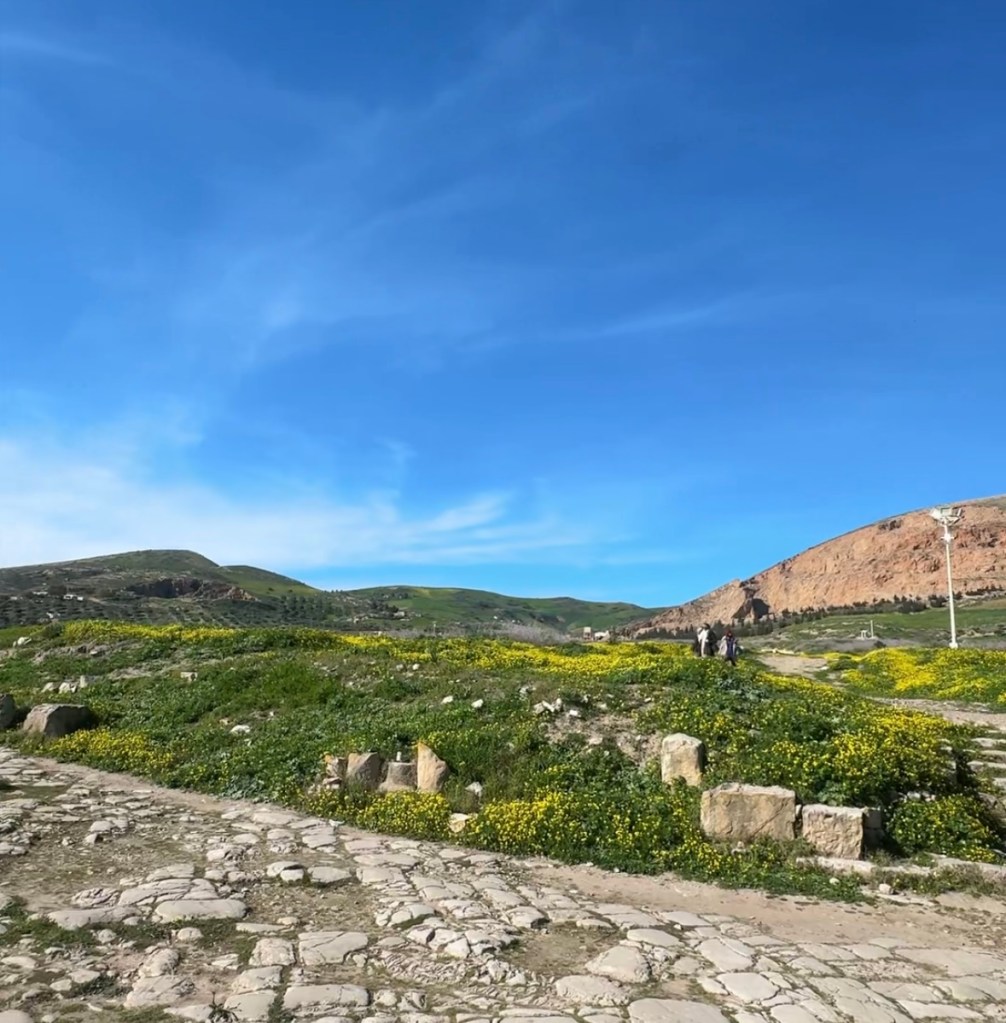
    The first thing you’ll notice in Bulla Regia is that it is surrounded by green. So much green.

    Bulla Regia’s residents grew wealthy mainly because this area thrived as an agricultural hub during Roman times. The region around Jendouba offered green, fertile land compared to other parts of North Africa.

    Bulla Regia’s land produced large quantities of grain and olive oil, which were highly valuable commodities across the empire. These goods were often exported to feed Rome and other cities, which created prosperity for local landowners and merchants. Beyond farming, Roman roads and trade routes linked the region to Europe and the Mediterranean, which expanded access to wealth and driving development.

    Who lived in the land prior to the Romans?

    Prior to the Romans, Bulla Regia was a Numidian city. Numidia was an ancient Berber/Amazigh kingdom that covered much of what is now Algeria and northwest Tunisia. The Numidians were skilled horsemen and warriors, and they had established urban centers with their own culture, social structures, and traditions. When Rome expanded into North Africa during the Punic Wars (starting in the 3rd century BCE), they gradually absorbed Numidian territories.

    Unfortunately, few traces of Numidian influence remain visible today. Most of what you see in Bulla Regia comes from the Roman era.

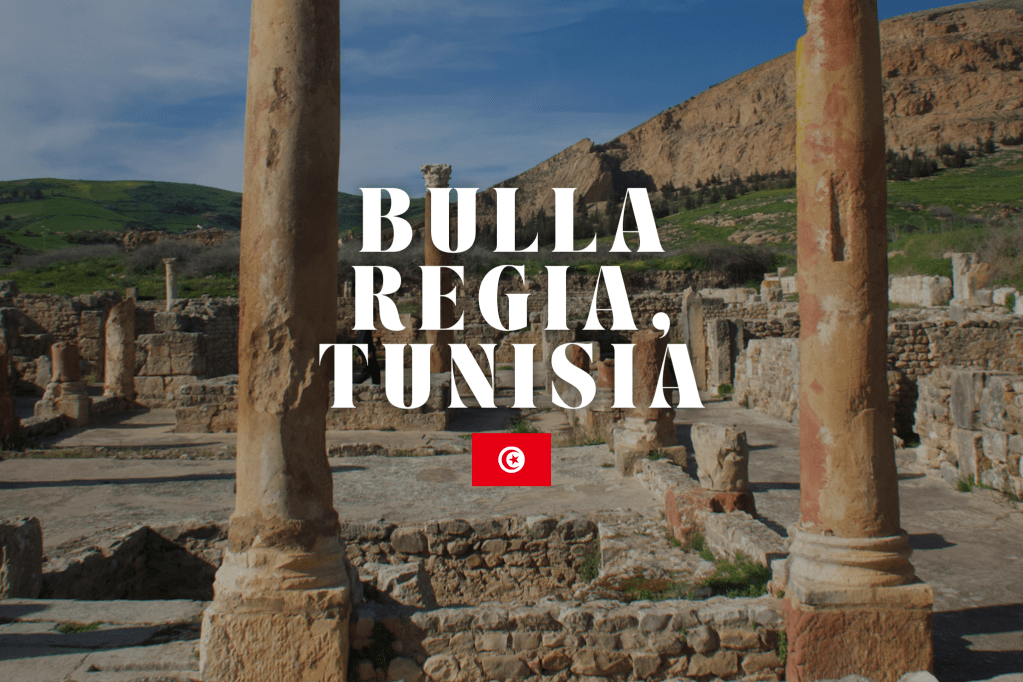
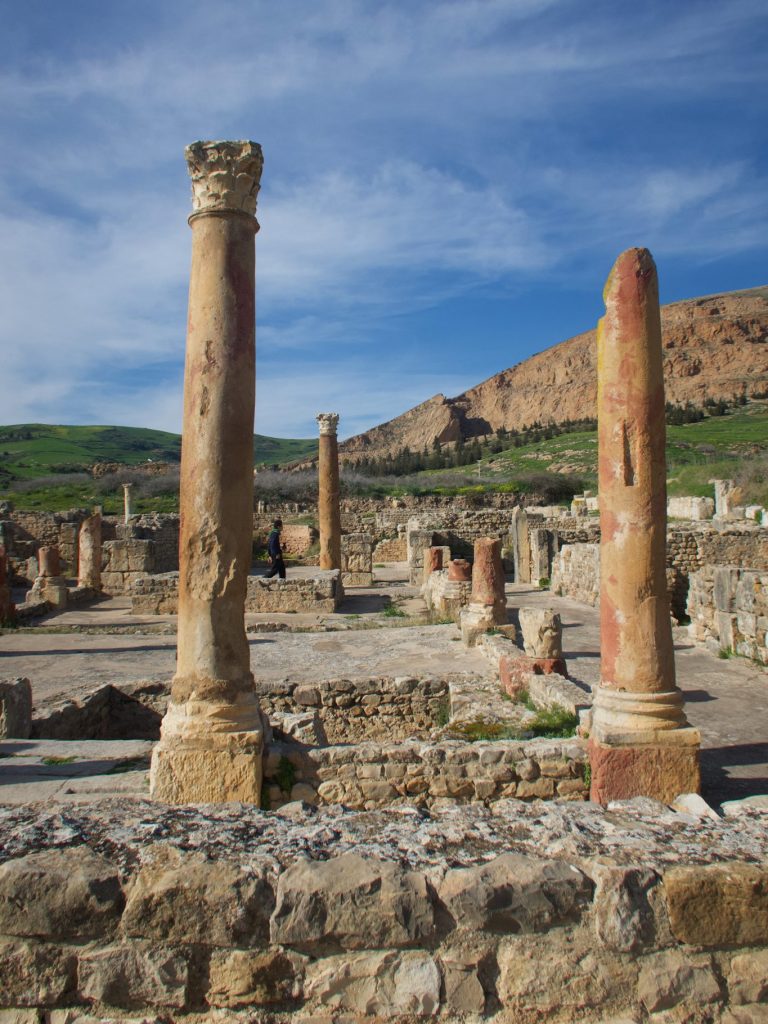
    Ruins of ancient columns set against a blue sky and mountainous backdrop at Bulla Regia.
    What should I see when I visit Bulla Regia?

    Bulla Regia offers a sprawling (and I mean truly sprawling) site with plenty to explore.

    The underground homes here stand out for their unique design that suited the wealthy Romans living in a place far from the Mediterranean coast. Summers in this part of Tunisia can get brutally hot, so Roman residents designed their homes with two levels. They used the ground floor during cooler seasons and for entertaining guests, while the family lived underground in day-to-day life. These lower rooms wrapped around an open-air courtyard that brought in sunlight and fresh air.

    Keep this in mind when you visit, because you can actually walk downstairs into the ancient homes!

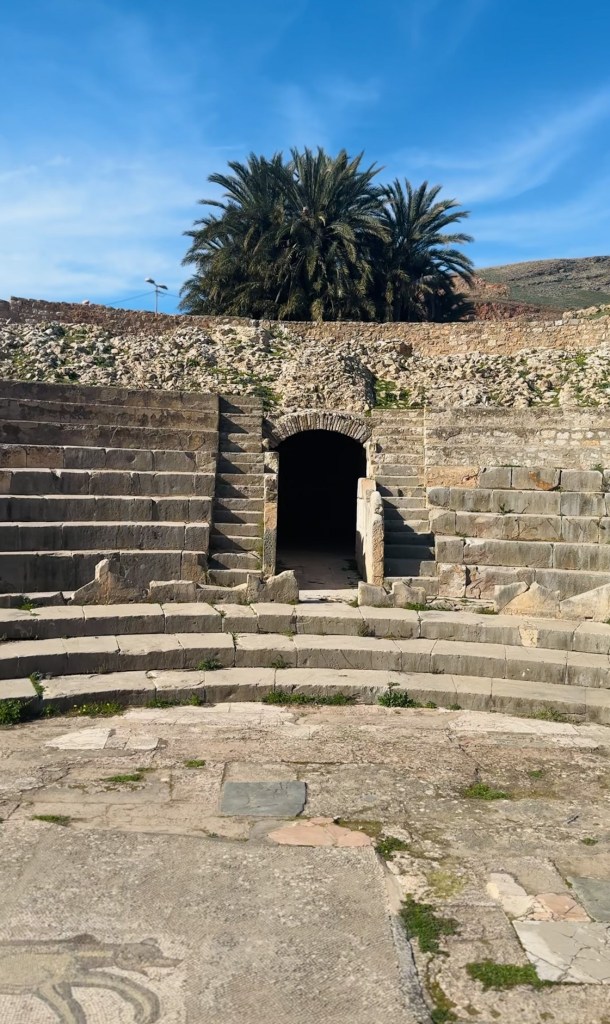
    Beyond the houses, you’ll find the remains of Bulla Regia’s public buildings. Similar to many Roman-era cities, Bulla Regia has familiar structures: an amphitheatre, a central forum, and a set of public baths.

    The Bulla Regia Museum displays artifacts from the site, adding additional valuable context. Still, I much preferred exploring the actual ruins. Seeing the ruins and the museum all together will let you imagine daily life in Bulla Regia when the city was at its prime.

    How to Visit Bulla Regia in 2025

    Ready to plan your trip to Bulla Regia? Below are some practical travel tips:

    • Location: Bulla Regia is in northwest Tunisia, a short drive from the city of Jendouba. You can easily visit it on a day trip from Tunis or combine it with a visit to the nearby ruins of Dougga.
    • How to Get There: The easiest way to get to Bulla Regia is with a private car, a taxi from Jendouba, or as part of a tour. Local platforms such as WildyNess work directly with regional experts who can offer historical context, and they also help arrange transport. Booking through WildyNess also helps sustain the local economy.
    • Tickets and Hours: As of writing this, the entrance fee is 8 TND (approximately €2.50). Check the exact opening and closing times when you’re visiting, as they can sometimes change.

    Interested in visiting Bulla Regia?

    Reach out to me! I am happy to help create your dream Tunisia trip itinerary for you. Just comment below or send a note via “Contact Me.”

    ,
  • Haidra: A guide to Tunisia’s abandoned Roman city with a Byzantine fort

    Haidra: A guide to Tunisia’s abandoned Roman city with a Byzantine fort


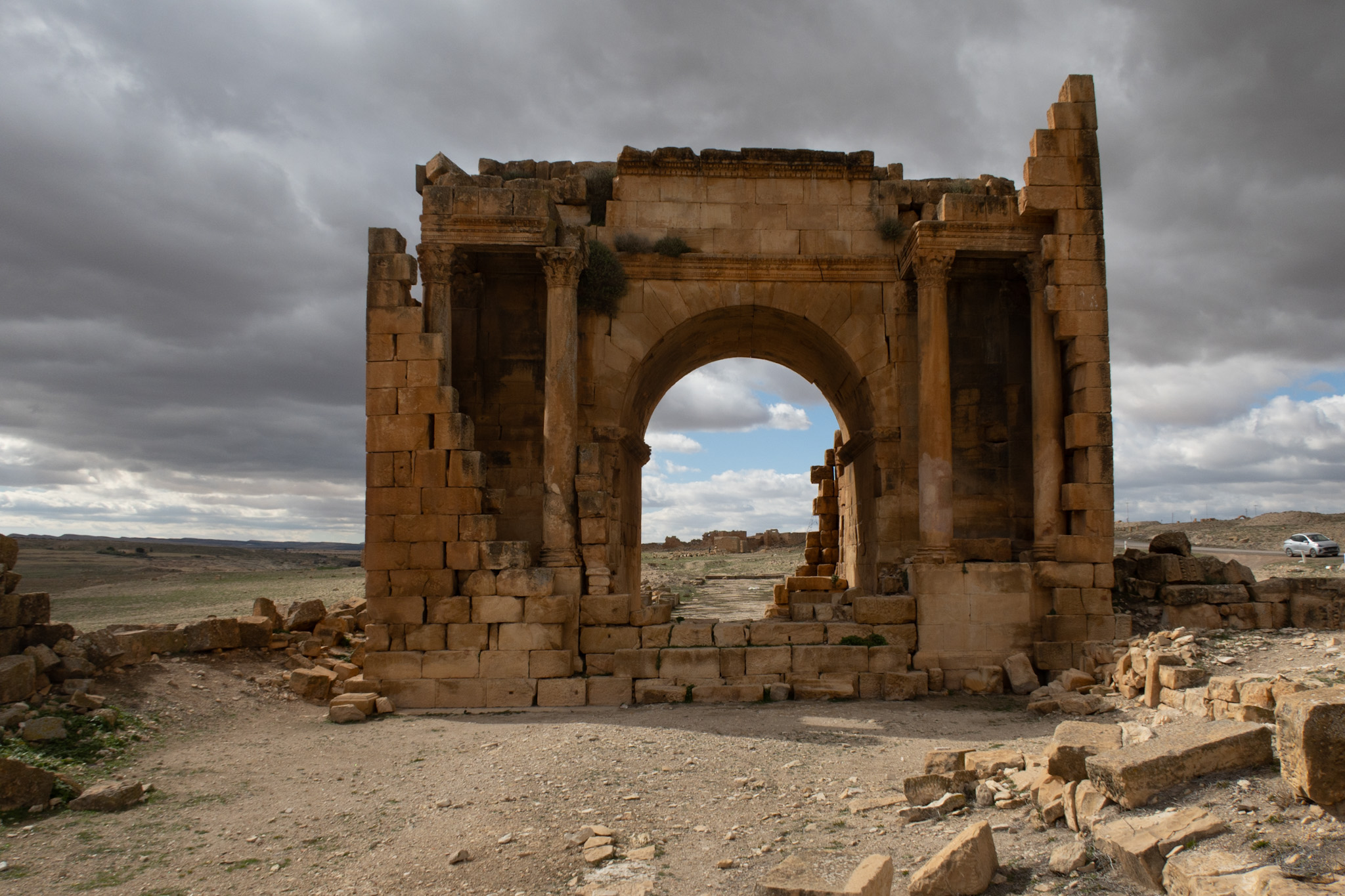
    Travelers who want to seriously get off the beaten path in Tunisia should head to the archaeological Roman city of Haidra. Located in western Tunisia near the Algerian border, Haidra is the modern name for the ancient city of Ammaedara, one of the very first Roman cities in all of Africa.

    This guide breaks down everything you need to know when you visit Haidra today.

    Ruins of an ancient stone structure with columns and walls, partially overgrown with grass and stones.
    Why is the city called Haidra?

    First, let’s clear up a potential mix-up you may have: Haidra has nothing to do with Hydra, the multi-headed serpent creature from Greek mythology slain by Hercules. (For every head Hercules cut off, two more grew back — a metaphor for the multiplying problems of life…)

    The name Haidra is a modern adaptation that likely evolved from Ammaedara, the Roman name for this settlement. While the exact meaning of Ammaedara is still debated, many historians agree it was a Romanized version of a Numidian (Berber) name that was hard to transliterate. They aren’t entirely sure when or how Ammaedara morphed into Haidra, but like many places across North Africa, names were Arabized or simplified over centuries. 

    Some people think the name Haidra might come from the Arabic root ḥ-ḍ-r, which can be connected to the word hadra, meaning “presence” or “settlement.” Others think it could be related to the word ḥaḍra, meaning something like “green place” or “civilized area.”

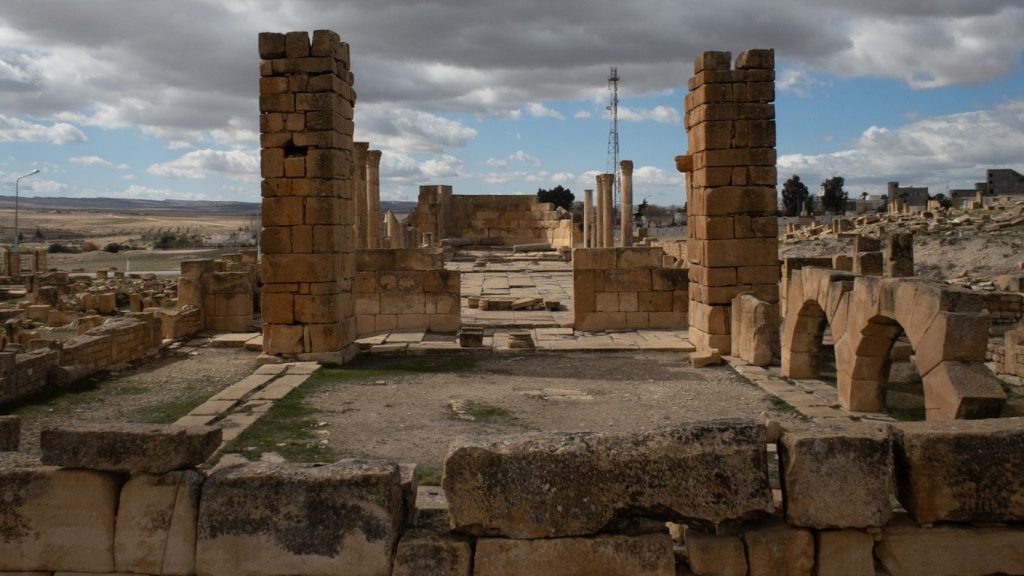
    View of the ancient archaeological Roman site of Ammaedara in Haidra, Tunisia
    Why did the Romans come to Haidra?

    The Romans came to Haidra for one reason: military control. In the 1st century B.C., they founded Ammaedara as their original military headquarters in North Africa. From this strategic location, Roman legions could monitor tribal movements and dominate the main road networks across the region.

    When the legion later relocated, Rome handed the site over to retired soldiers. These veterans transformed the old military base into a full-fledged Roman city with temples, baths, and civic structures. Then, over time, the city evolved again, this time into a major Byzantine fortress.

    Its past as a Roman garrison, a veteran settlement, and a Byzantine stronghold makes Haidra one of the most compelling ancient sites in Tunisia!

    A large, imposing stone wall of the Byzantine fortress at Ammaedara, Haïdra, Tunisia
    What to See at Haidra: Forts, Tombs, and Churches

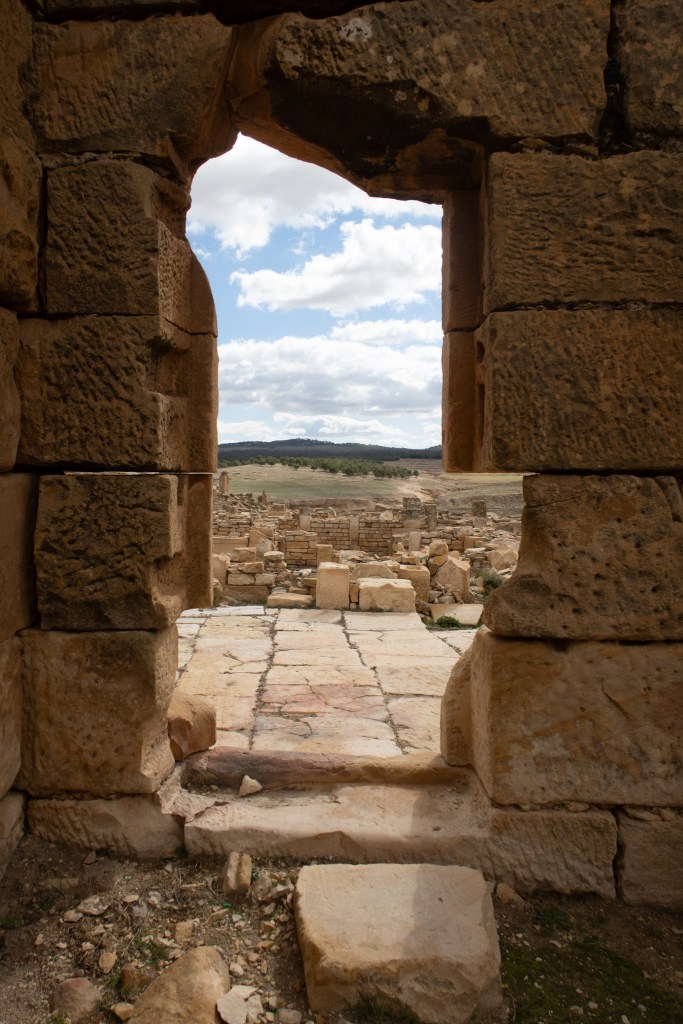
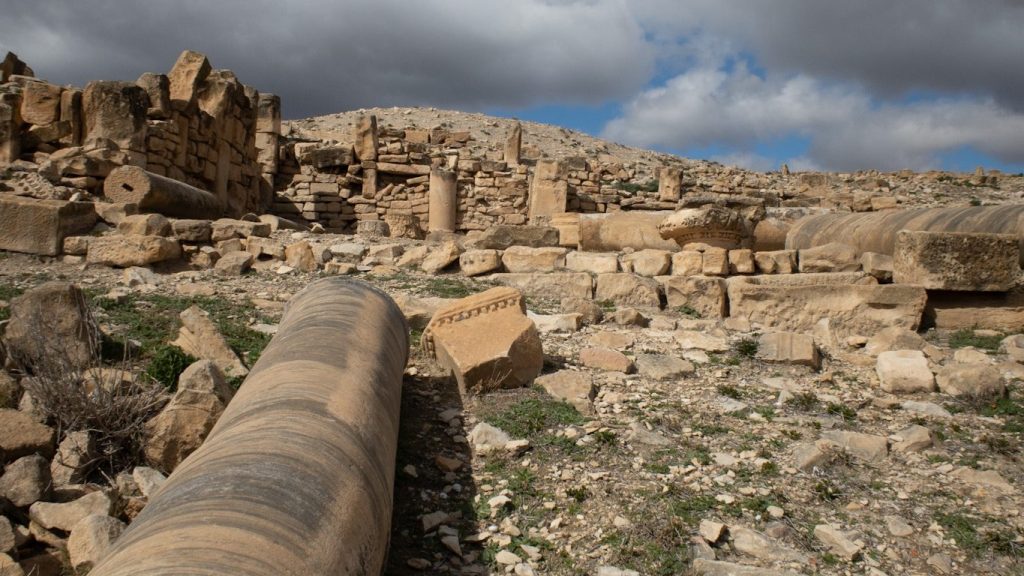
    The ruins of Haidra are vast and not fully excavated, giving a sense that you yourself are some sort of archaeologist.

    A large, fallen marble column with striped patterns lies in the foreground of extensive Roman ruins at Ammaedara in Haïdra, Tunisia

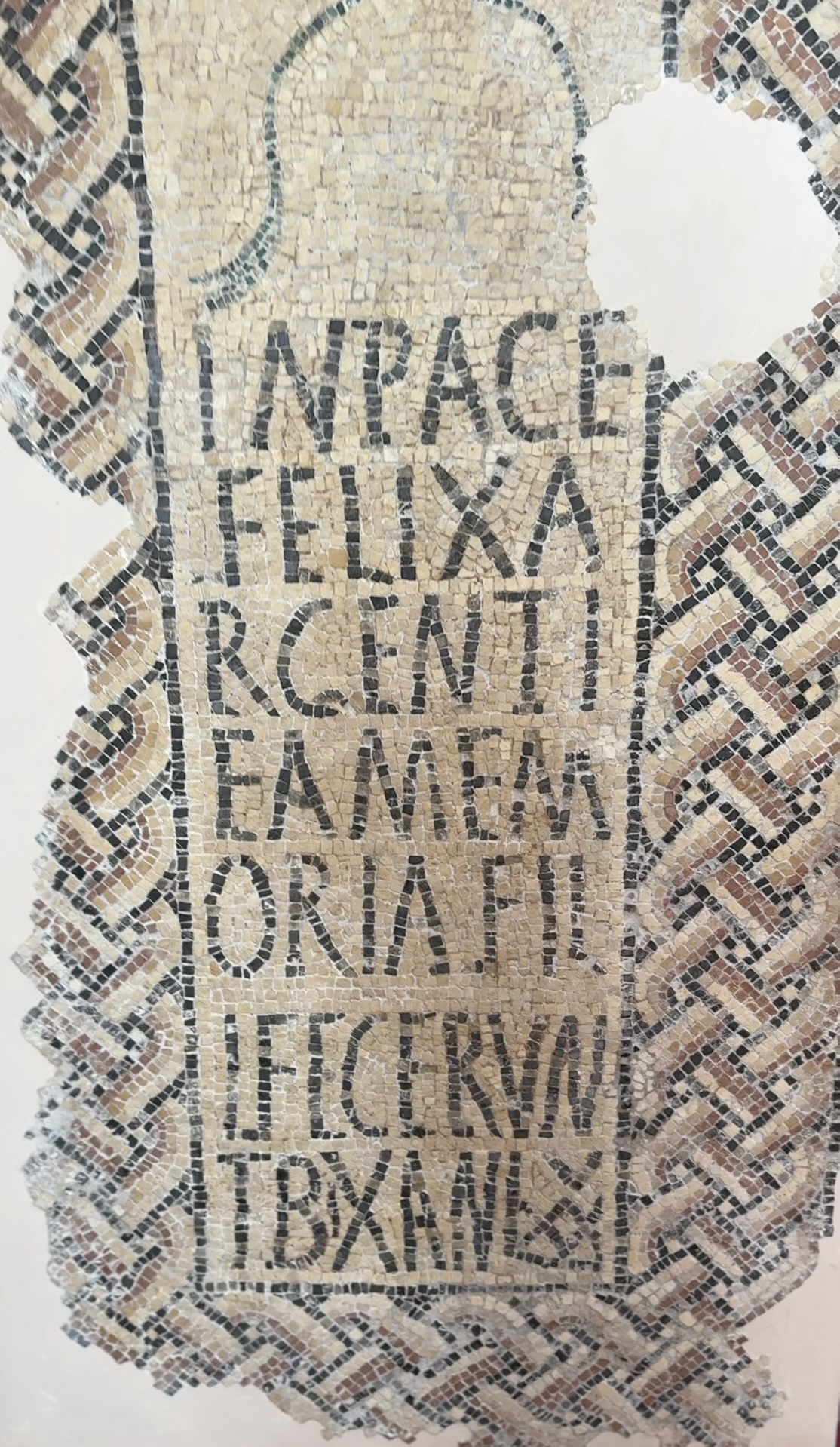
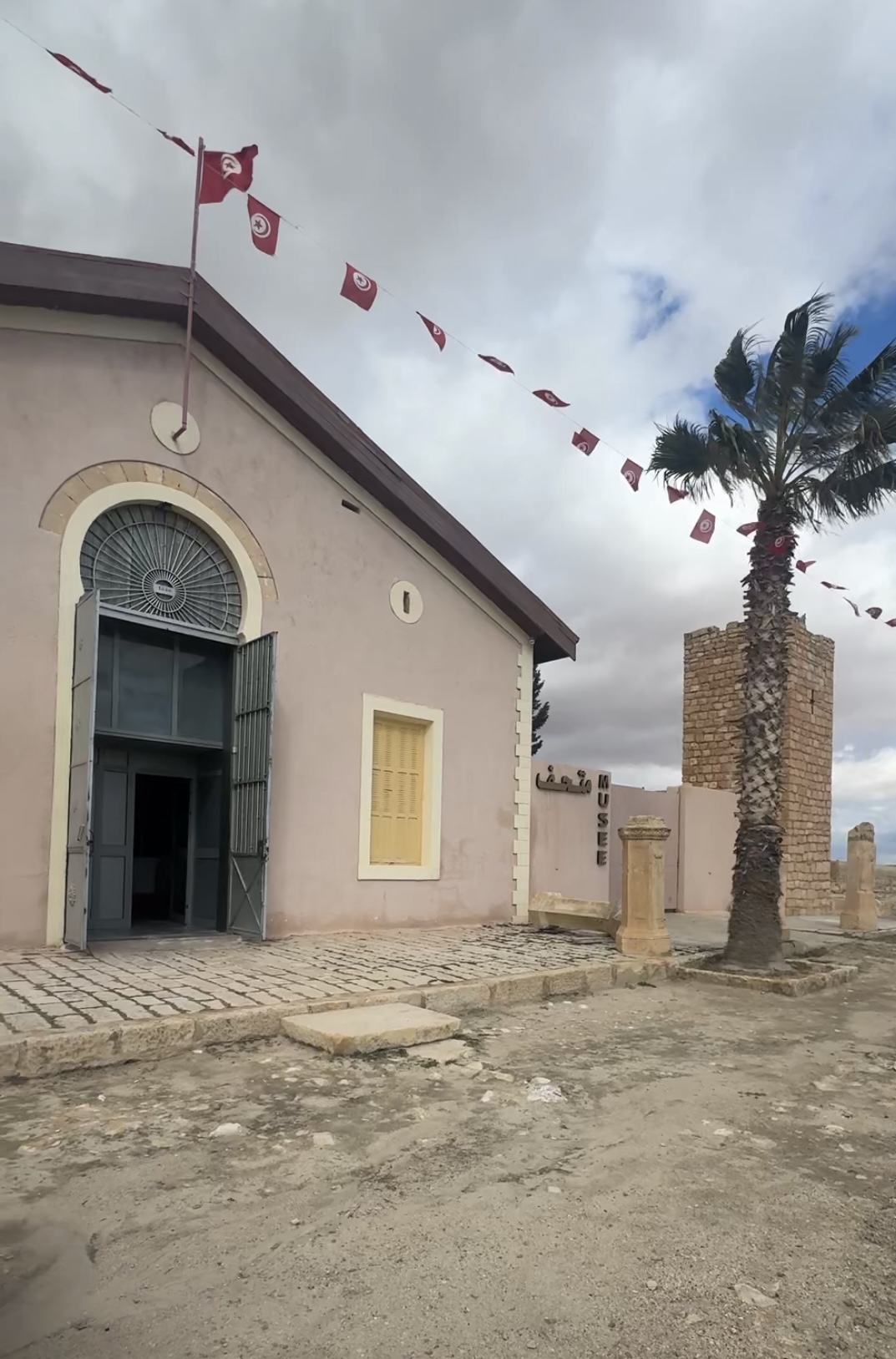
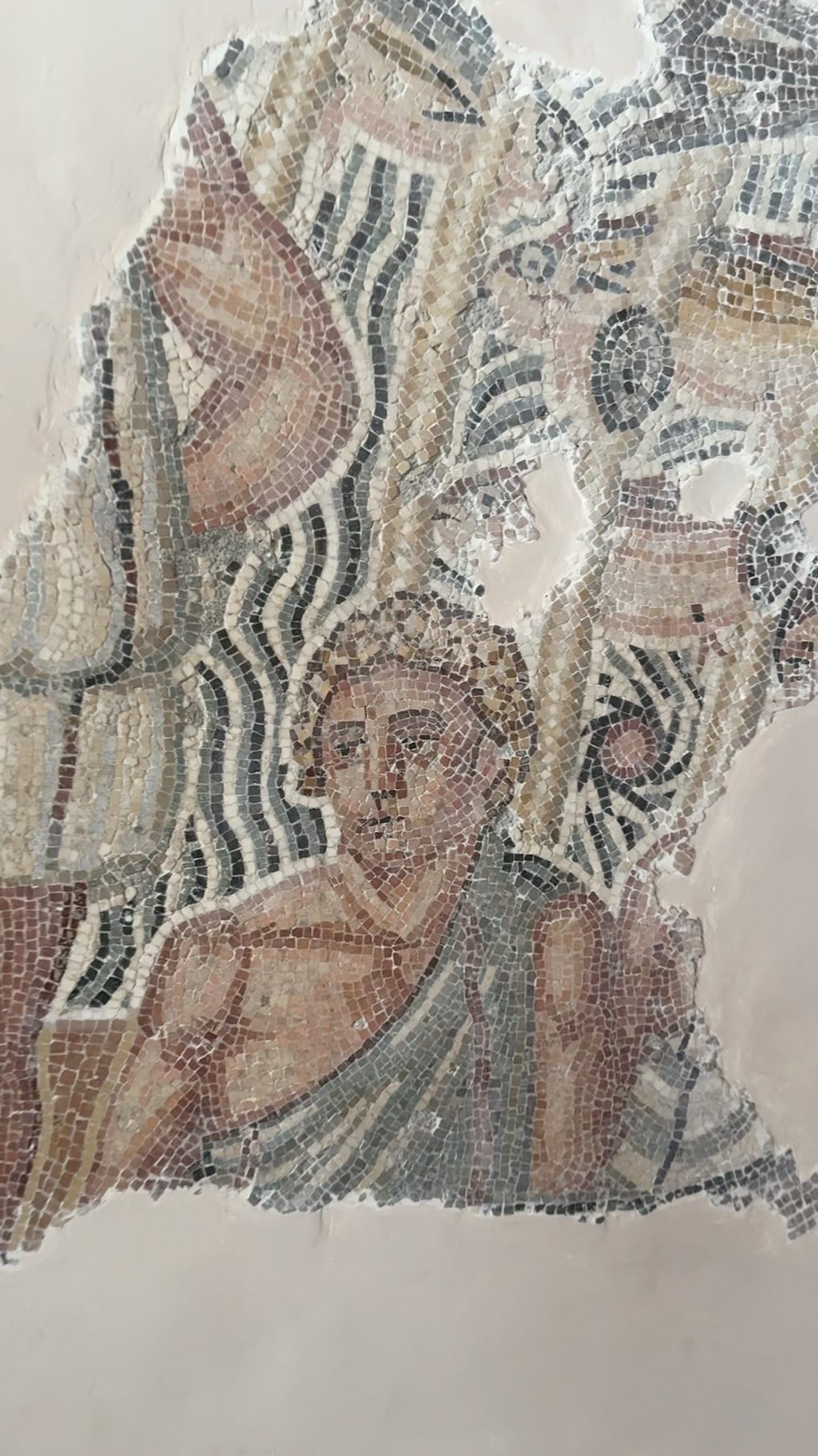
    There is very little signage. A small on-site museum helps provide some context for the ruins and also showcases some beautiful mosaics, but you’re mostly on your own.

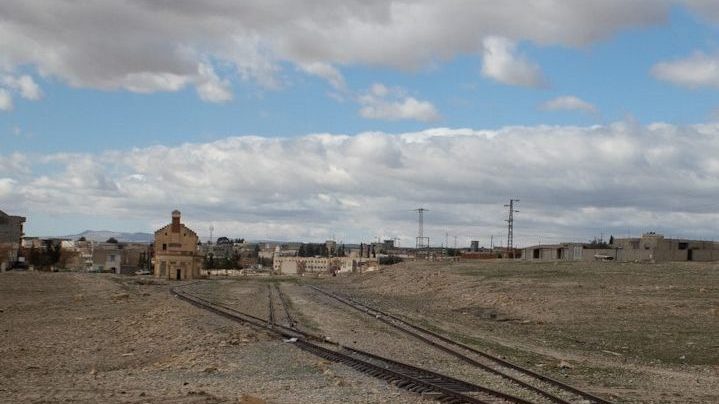
    This lack of modern tourism is part of Haidra’s unique charm, in many ways. It’s a very different feel from more popular sights such as Bulla Regia and Dougga. It feels extremely abandoned.

    A set of railroad tracks extending into the distance across a barren landscape with scattered buildings in Haïdra, Tunisia

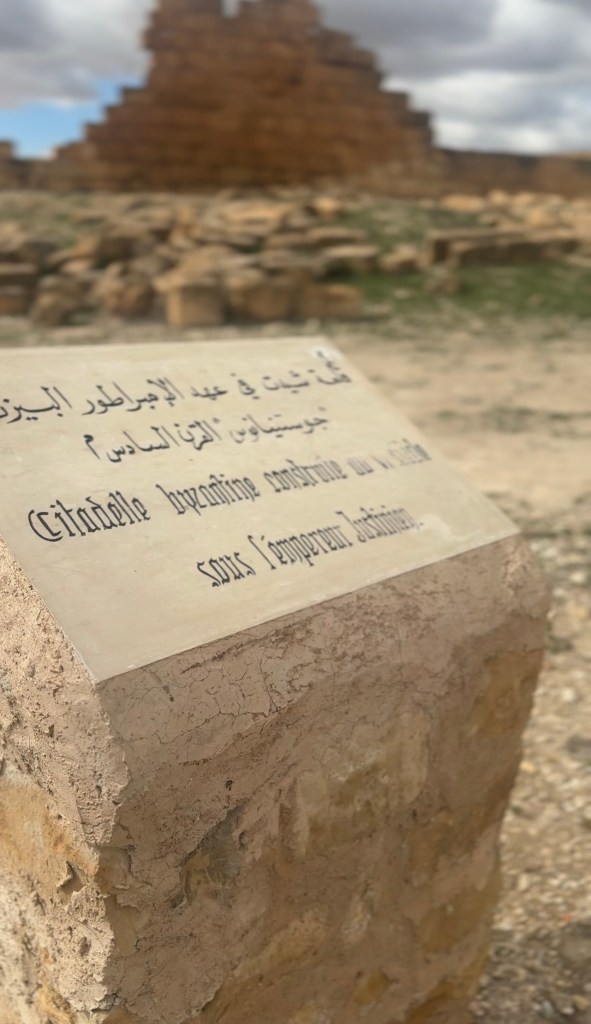
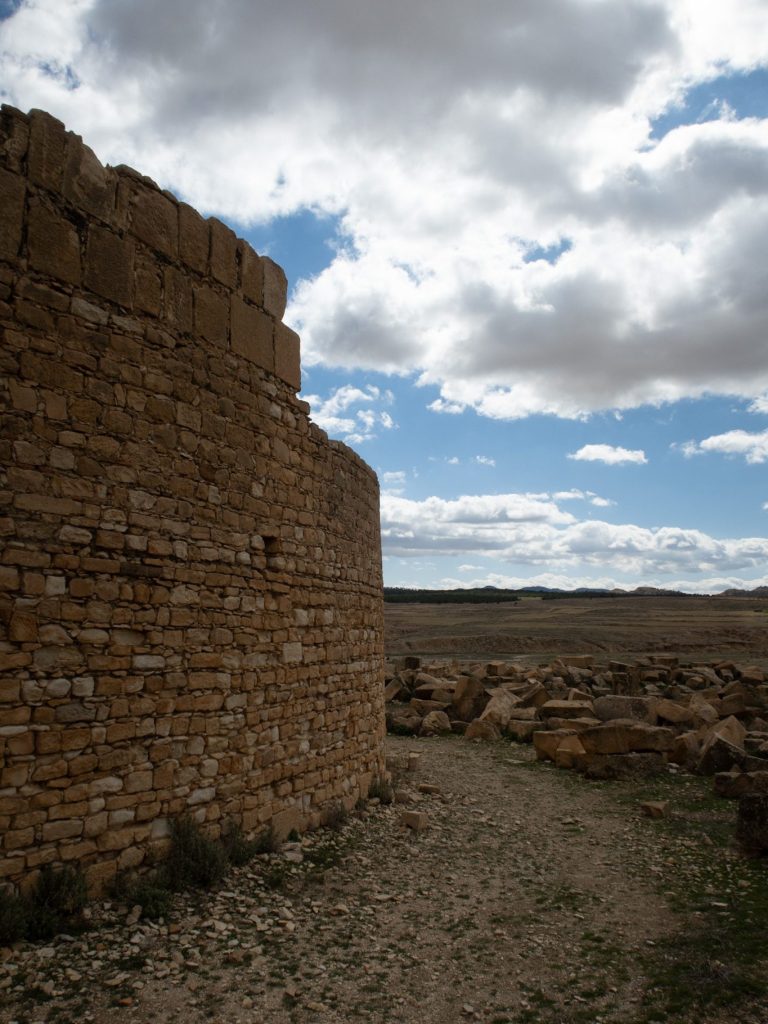
    One thing you’ll notice amongst the ruins is huge remains of a Byzantine Fortress dominating the site. Emperor Justinian ordered its construction in the 6th century, and today, it stands as one of the largest and best-preserved Byzantine forts in all of North Africa.

    Side view of a large, curved stone wall, part of the Byzantine fortress at Ammaedara in Haïdra, Tunisia, with rocky terrain

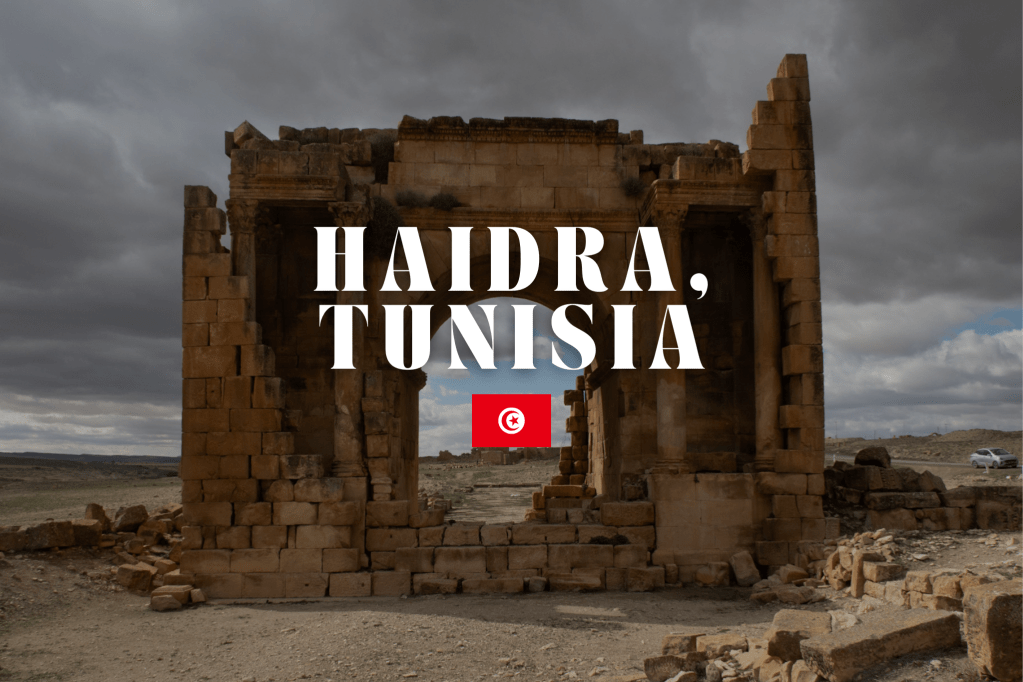
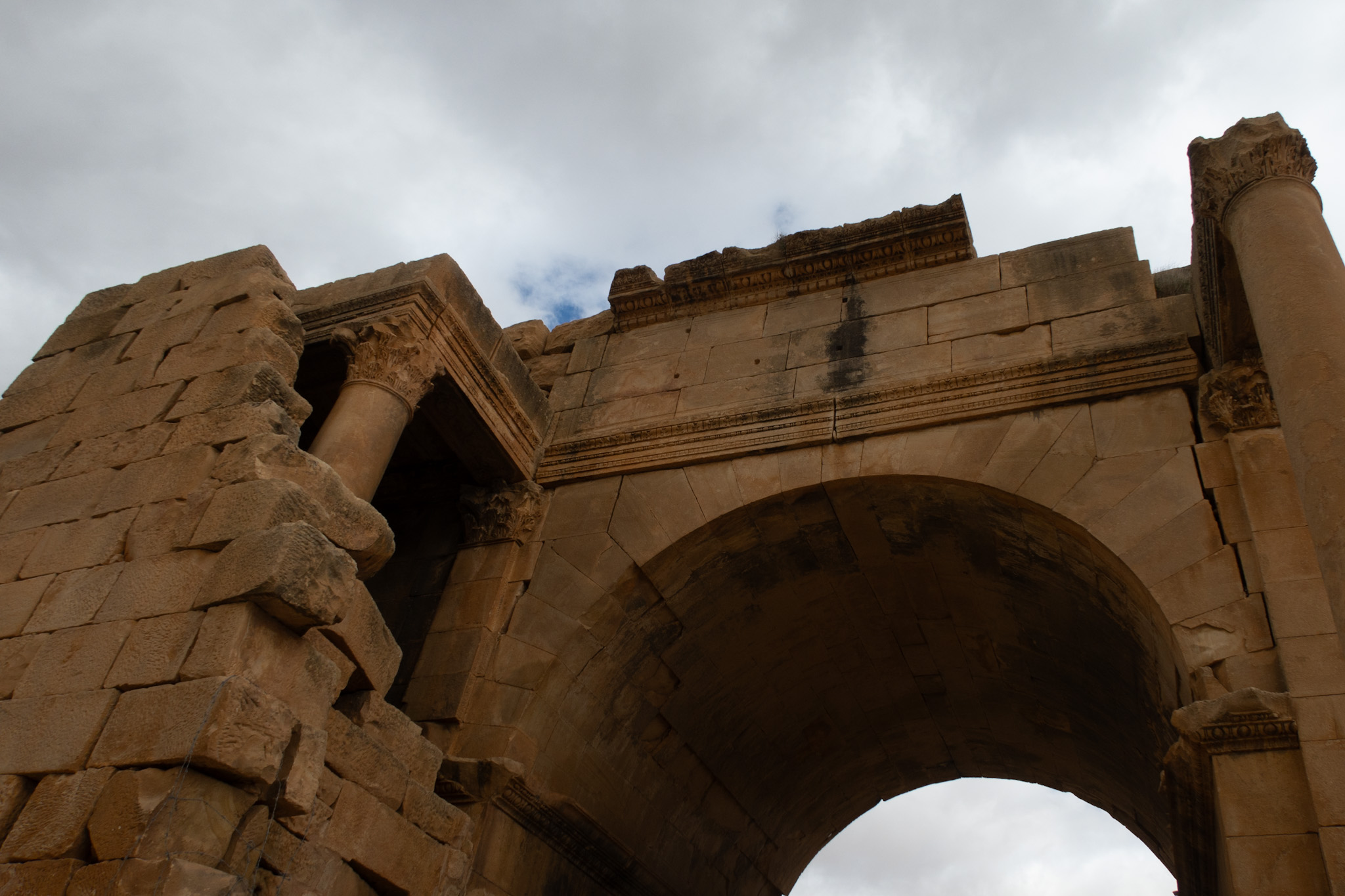
    You’ll also walk beneath the Arch of Septimius Severus, built in 195 A.D., which once marked the formal gateway into the Roman city (and no, this Severus isn’t the Potions Master at Hogwarts…)

    Haidra also has several tower-like mausoleums/tombs that stand in excellent condition. These were the elaborate burial places for the city’s wealthy Roman families.

    As a major Christian center after the Roman period, Haidra also has remains of several churches. The most interesting is the Basilica of Melleus, where you can see tombs of Vandal and Byzantine-era bishops set into the floor.

    Roman ruins of a church in the site of Ammaedara in Haïdra, Tunisia

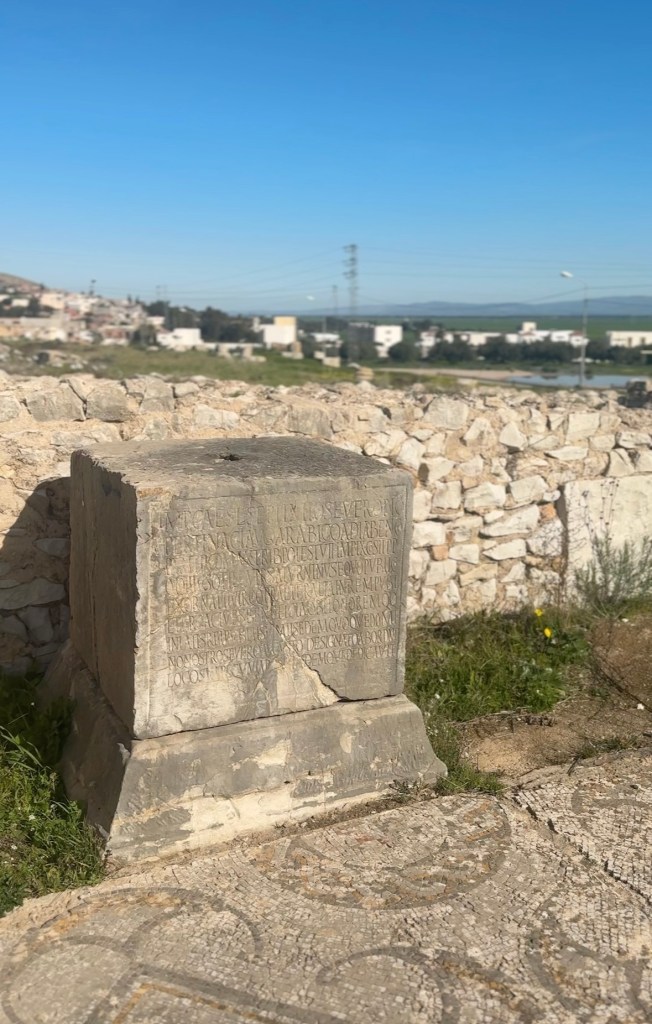
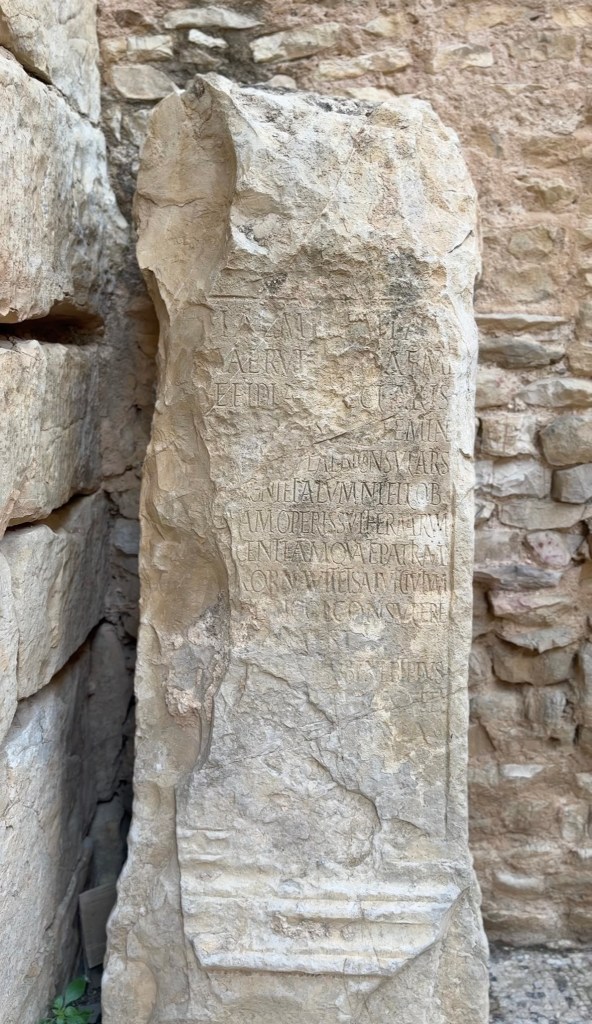
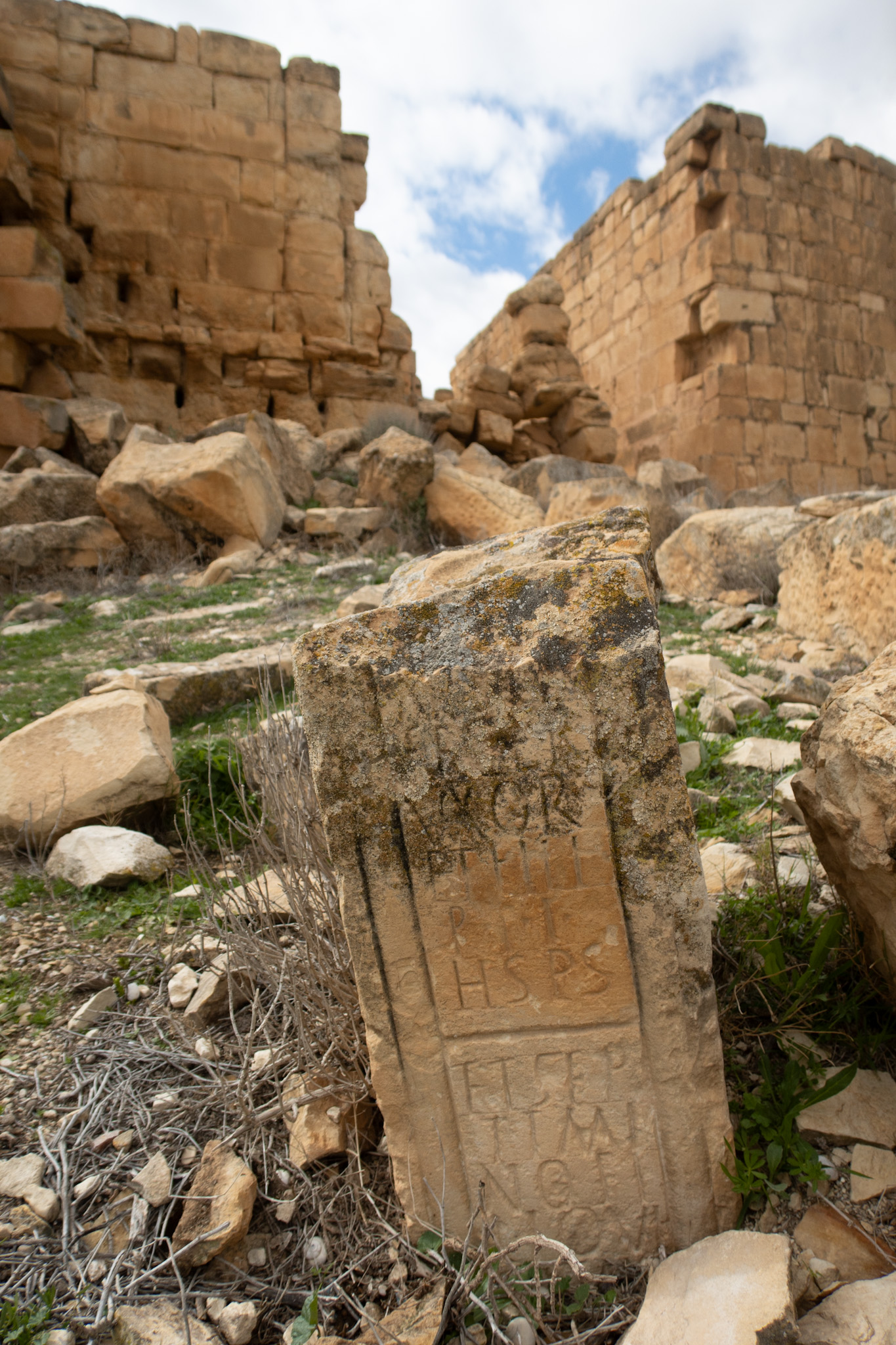
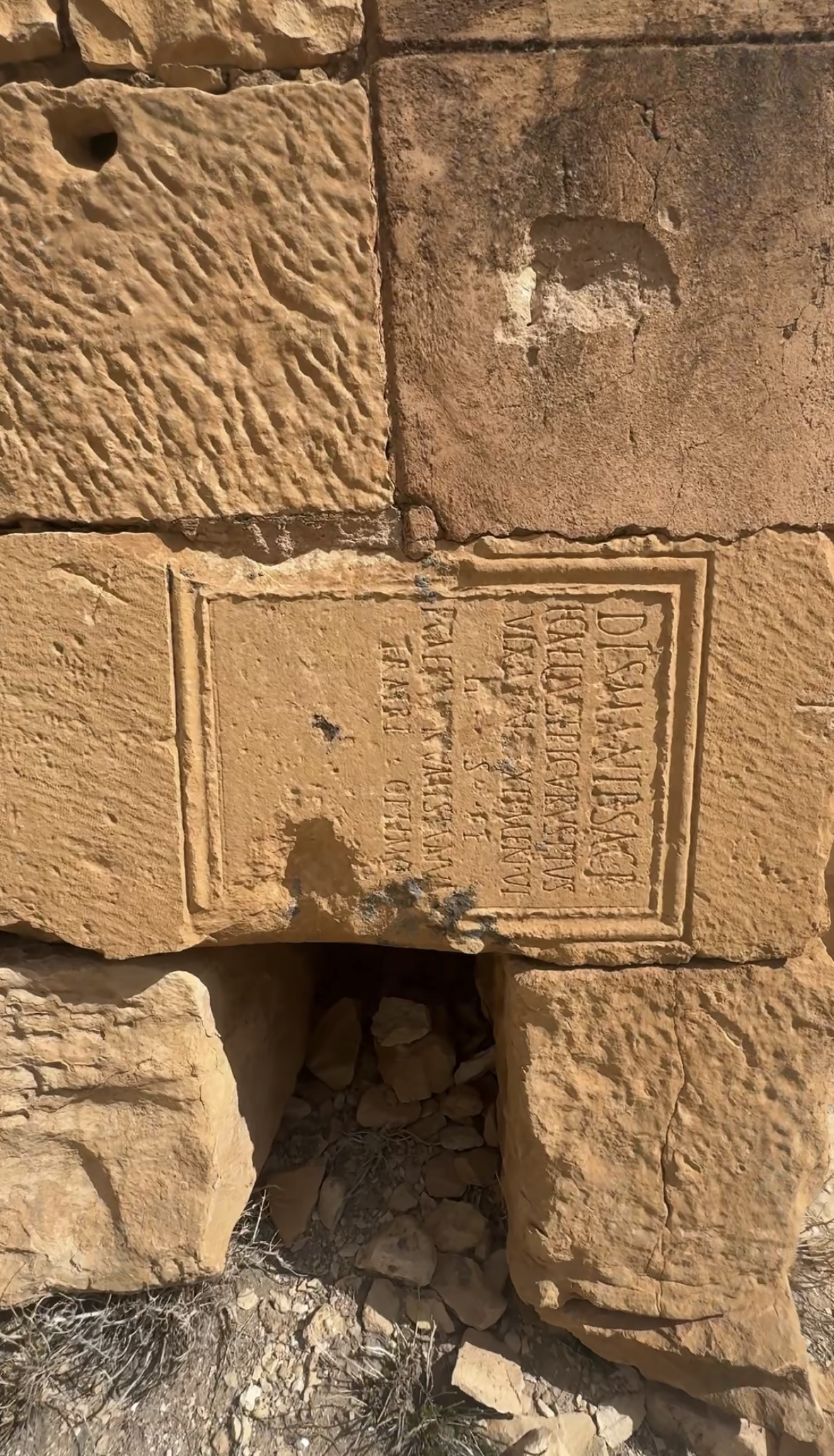
    The entire structure functions as a vast open-air museum. One fun thing we did when exploring was use generative AI to try translating some of the ancient Latin inscriptions on the stones! And it worked!

    2025 Travel Guide: Know before you go to Haidra

    Visiting Haidra is far from the main tourist hubs.

    Location: Haidra is in the Kasserine Governorate of western Tunisia, very close to the border with Algeria, which borders right down the road.

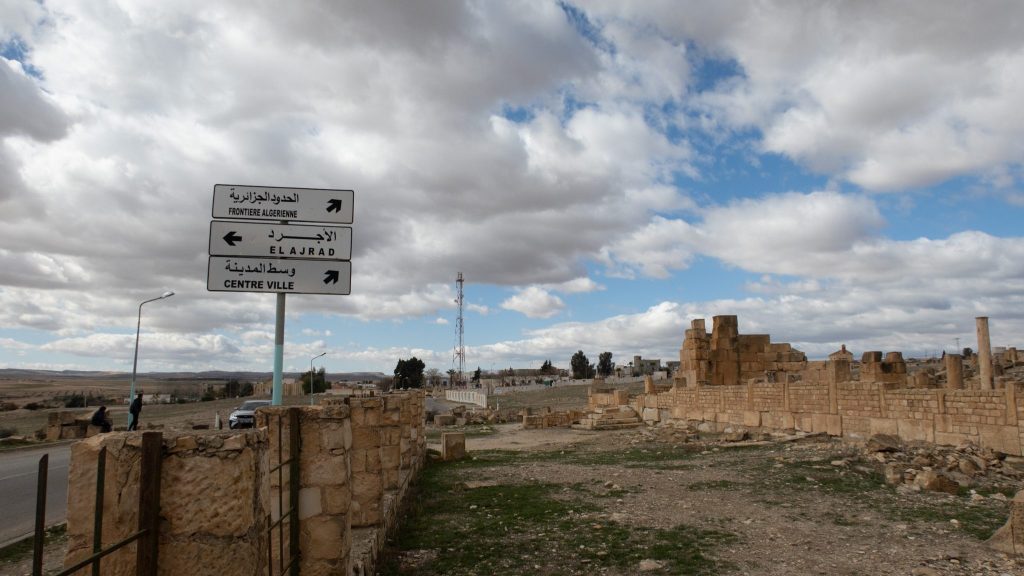
    Road sign in Arabic and French pointing to 'Algerian Border,' 'El Ajrad,' and 'Centre Ville,' with ancient ruins and a cloudy sky in the background at Haïdra, Tunisia

    How to Get There: To visit Haidra, it’s advised that you hire a private car and driver or join a specialized historical tour, as public transport isn’t a realistic option for tourists. Consider booking through a trusted platform such as WildyNess, which connects travelers with experienced local guides. You’ll support sustainable tourism and directly contribute to the local economy, while gaining deeper context about Haidra!

    Travel note: While American and Canadian travel advisories recommend avoiding areas near the Algerian border, the reality on the ground is more stable than those notices suggest. That said, Haidra is remote, and traveling with a local guide is recommended for both logistics and peace of mind.


    Interested in visiting Haidra?

    Reach out to me! I am happy to help create your dream Tunisia trip itinerary for you. Just comment below or send a note via “Contact Me.”

    , ,